


Victorian Cutlery Set
A victorian cutlery set brings the weight of nineteenth-century dining tables directly into modern service, offering fitted wooden canteens, velvet-lined cases, and solid silver or plated utility.
Victorian Cutlery Set
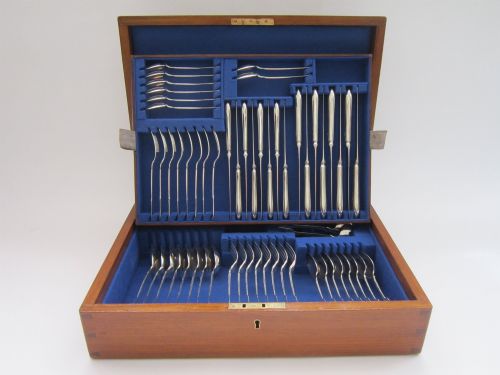
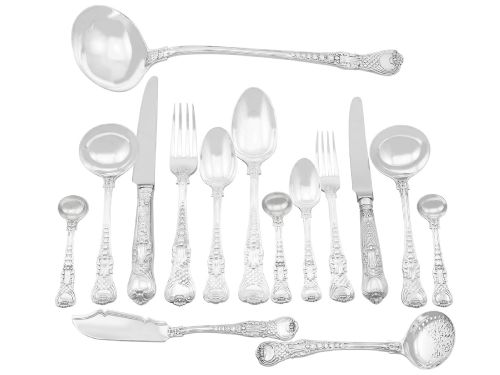
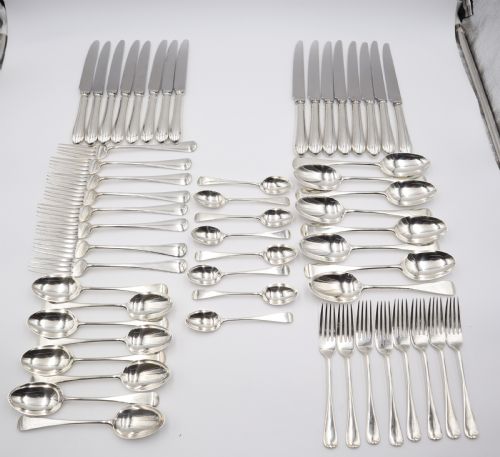
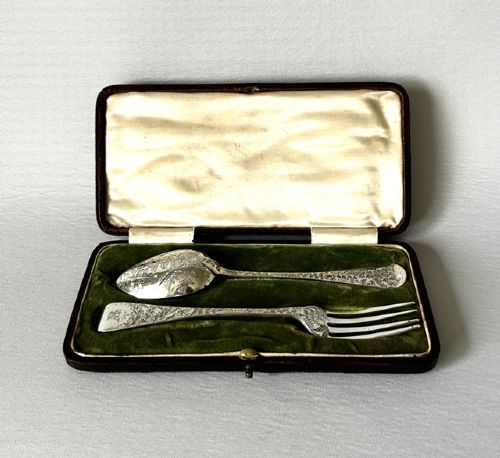
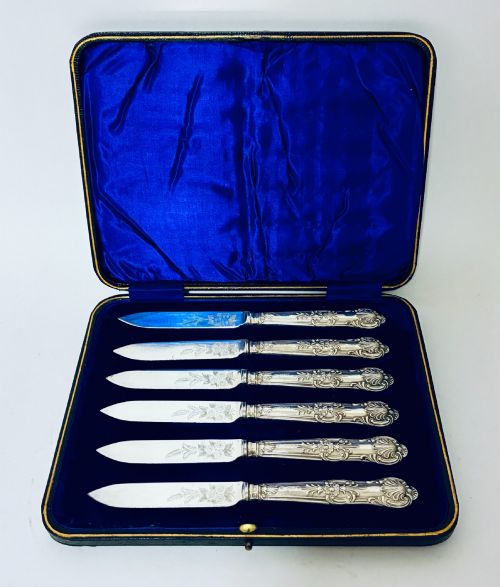
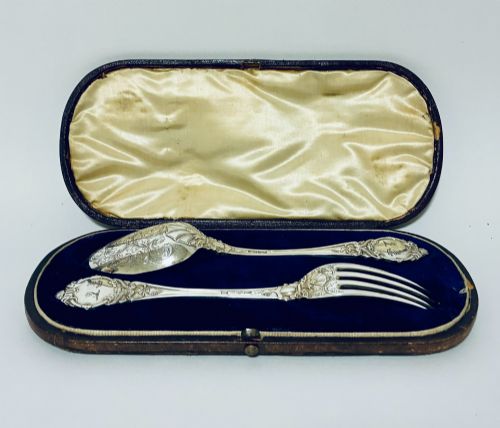
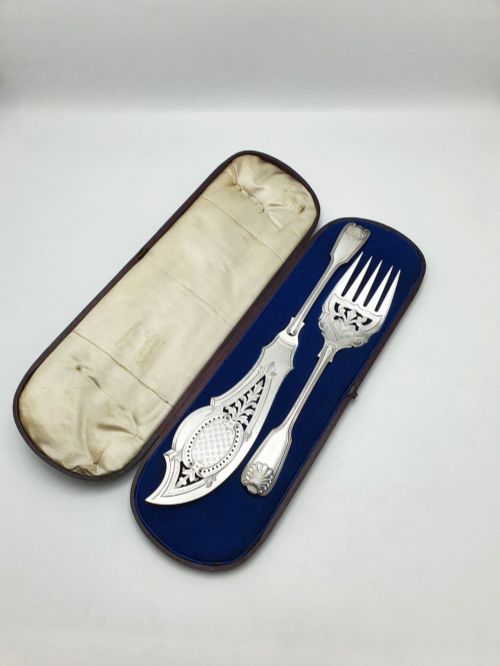
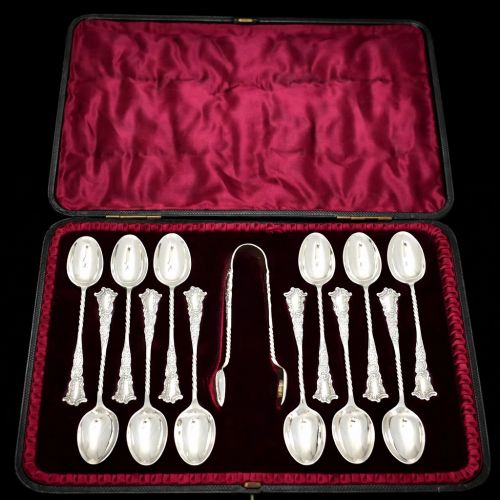
A victorian cutlery set comprises matching or fitted assemblages of knives, forks, spoons, and specialised servers intended for specific courses, from fruit and fish to dessert and tea. These pieces range from substantial canteens designed for large households to intimate christening sets and travelling configurations.
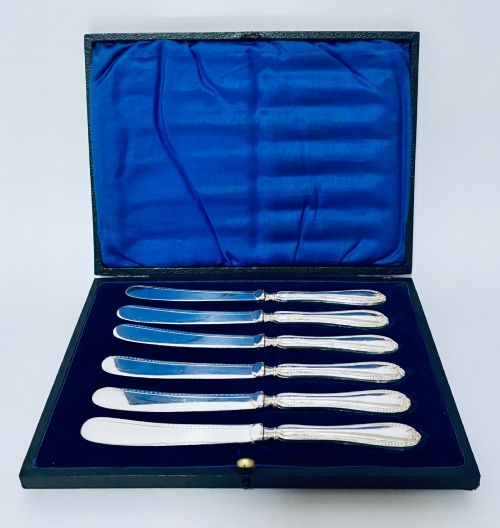
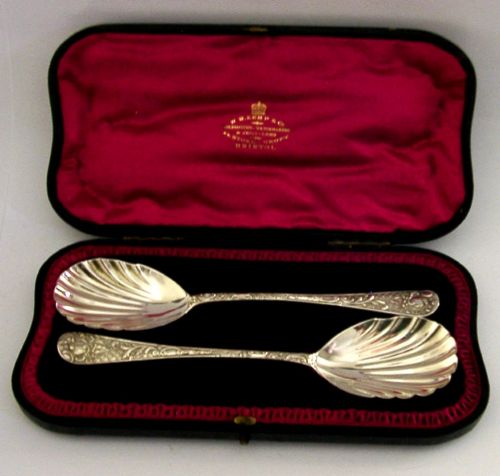
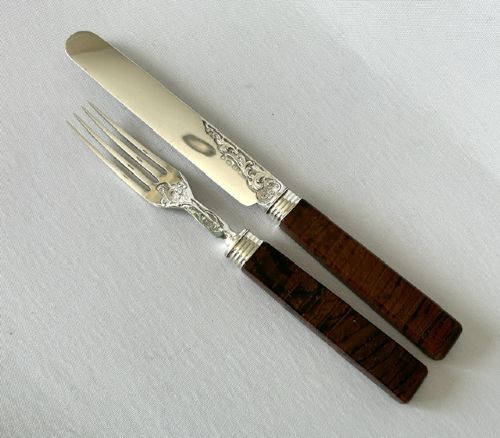
The most common iterations on this page are canteens of flatware for multiple persons, fish serving sets, and dessert knives paired with mother-of-pearl or silver handles. Many survive alongside their original fitted presentation boxes lined with silk or velvet.
Originating largely from the nineteenth century and the Edwardian transition, these groupings reflect formal dining habits where distinct implements were required for every stage of a meal. They bridge domestic utility with decorative craftsmanship through engraved bowls and shaped handles.
Materials and technique
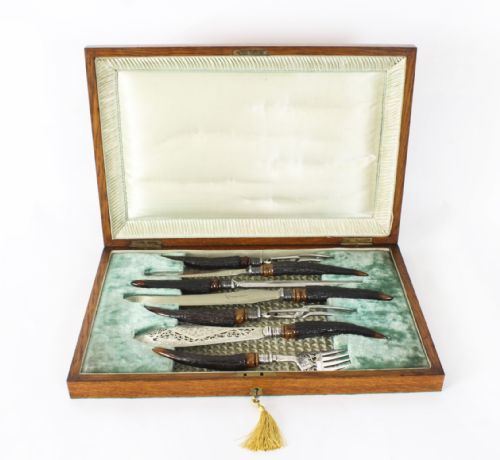
Makers utilised sterling silver and silver plate for handles, bowls, and tines, frequently combining them with natural elements such as mother-of-pearl, stag antler, horn, and porcelain. Steel was employed for cutting blades, while precious metals provided the decorative exterior.
Techniques relied upon manual silversmithing, stamping patterns like Fiddle and Queens, and intricate hand engraving or piercing on fish servers and berry spoons. Fitted cases involved woodworking in oak and mahogany, finished with leatherette, velvet, satin, and morocco leather linings.
Stag antler handles bring a touch of the nineteenth-century Scottish moor straight into the dining room.
The spectrum of quality
Quality rests upon the purity of the metal and the integrity of the fitted container. Solid sterling silver sets command greater appreciation than silver-plated counterparts, though exceptional plating thickness and heavy gauge metal elevate individual pieces.
The survival of original fitted cases lined with silk and velvet influences desirability. Consistency across a canteen, matching hallmarks, and the preservation of natural handle materials like mother-of-pearl or antler in unbroken condition distinguish standard utility ware from finer examples.
Carrington·Walker & Hall·Mappin & Webb·Martin Hall & Co·Aaron Hadfield
The Victorian Cutlery Set Glossary
- Canteen
- A fitted box or chest designed to house a complete set of cutlery in dedicated slots. These wooden cases protect the flatware from tarnishing and damage.
- Fiddle Pattern
- A traditional nineteenth-century flatware design characterised by a stem that widens toward the terminal in a shape resembling a fiddle. It remains a standard form in silver canteens.
- Queens Pattern
- An ornate, heavily embossed flatware style featuring shell and scroll motifs along the borders. This decorative pattern is associated with formal Victorian dining.
- Server
- A larger implement such as a fish slice, carving knife, or berry spoon designed for portioning food at the table. These often feature pierced and engraved decoration.
- Hallmark
- An official stamp applied to precious metals indicating the standard of purity, the assay office, and the date of manufacture. These marks provide definitive historical context.
Victorian Cutlery Set: Frequently Asked Questions
How do I clean tarnished silver cutlery?
Silver pieces benefit from gentle cleaning using a specialised silver cloth or a mild polishing paste designed for antiques. Harsh chemical dips should be avoided, particularly on items with delicate engraving or organic handles.
After cleaning, rinse the cutlery in warm water and dry it immediately with a soft cloth before returning it to its lined case. Proper storage in a dry environment minimises future tarnishing.
What is the difference between flatware and cutlery?
Flatware traditionally refers to spoons and forks that lie flat on the table, while cutlery encompasses items with cutting blades like knives and carving sets. In modern collecting, the terms are often used interchangeably.
Sets designated as canteens frequently contain a complete service of both flatware and cutlery intended for twelve or more persons.
How do I date a set without hallmarks?
Dating relies upon stylistic clues such as handle shapes, engraving styles, and the materials used for the fitted cases. Fiddle and Queens patterns follow established nineteenth-century timelines.
The presence of original velvet or morocco leather packaging often points directly to Victorian or Edwardian manufacturing periods.