


Victorian Cut Glass Jug
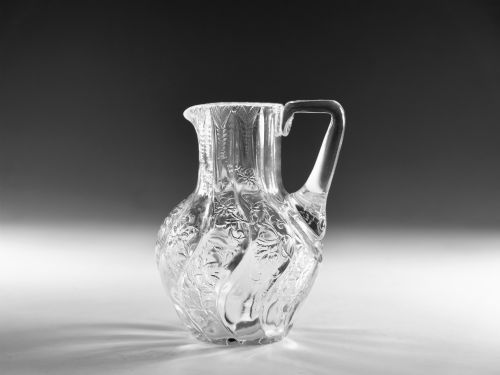
A victorian cut glass jug brings heavy refraction and polished metal to the dining table, serving wine and water with period weight.
Victorian Cut Glass Jug
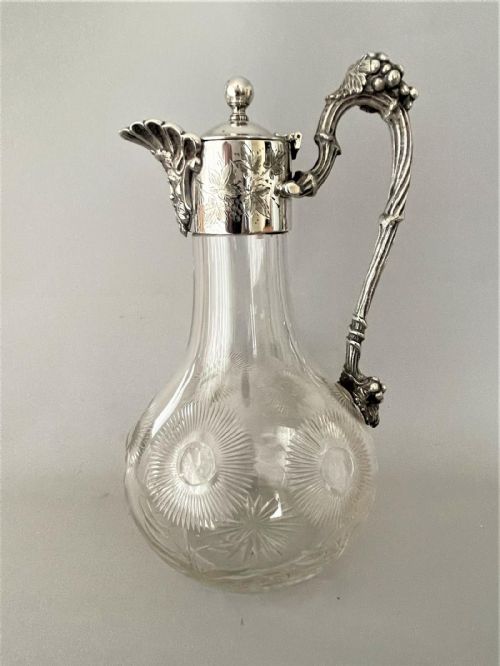
A buyer searching for a victorian cut glass jug encounters vessels designed primarily for wine, claret, water, and lemonade service across the nineteenth and early twentieth centuries. The most common format on this page combines a heavy glass body with a silver-plated or sterling silver mount, hinged lid, and handle.
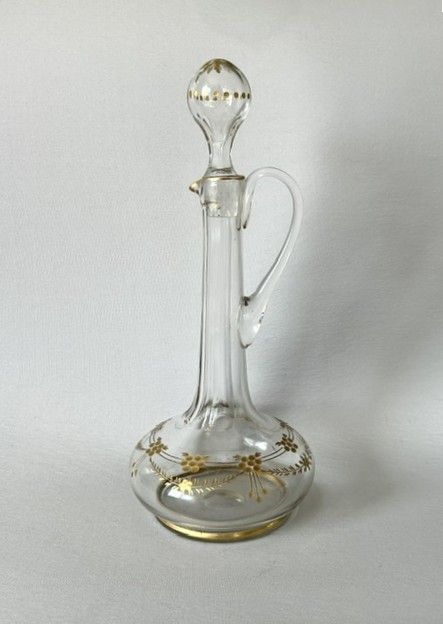
Pieces span the mid-Victorian era through the Edwardian period, incorporating stylistic influences from the Aesthetic Movement, Arts and Crafts, and French Rococo Revival. Alongside British hallmarked examples, Bohemian glassmakers contribute coloured overlays and gilded wine ewers to the available selection.
Standards of Execution
The distinction between standard production and top-tier examples lies in the crispness and depth of the glass cutting, where superior pieces exhibit sharp facet edges that refract light cleanly without softening. The weight and thickness of the lead crystal indicate the grade of raw material employed by the maker.
Metalwork quality separates workshops, visible in the snug fit of the silver-plated or sterling mounts against the glass neck and the precise tension of the hinged thumbpiece lid. Maker attributions to established firms such as Hukin & Heath or Elkington introduce additional refinement in both design execution and silver deposition.
Listings feature lead crystal, sterling silver, and silver plate across periods spanning from mid-Victorian 1860 examples to Edwardian production.
Stevens & Williams·Mappin & Webb·Richardsons·Elkington & Co·Hukin & Heath·Dr Christopher Dresser·Edgar Finley & Hugh Taylor
The Victorian Cut Glass Jug Glossary
- Claret jug
- A vessel specifically formed for serving red wine at the dining table. These typically feature an elongated body with a pouring spout and a hinged metal lid operated by a thumbpiece.
- Lead crystal
- Glass containing a high proportion of lead oxide, which increases the weight, clarity, and refractive index of the material. This composition permits deeper and sharper cutting by the artisan.
- Silver plate
- A base metal, commonly copper or nickel silver, coated with a thin layer of silver through electroplating or older fusion methods. It provides the appearance of solid silver while maintaining structural rigidity for large mounts.
- Ewer
- A large jug with a wide spout and a curved handle, historically rooted in washing vessels but adapted in the nineteenth century as an ornamental wine or water server.
- Ice tube
- A sealed metal cylinder suspended inside the jug to chill beverages without diluting the liquid with melting ice. This fitting is encountered in lemonade and Pimms serving vessels.
Victorian Cut Glass Jug: Frequently Asked Questions
What is a claret jug used for?
A claret jug serves red wine from the bottle at the dining table, allowing the wine to breathe before pouring. The hinged lid keeps contents covered between pours.
Many examples feature handles and spouts proportioned specifically for steady, controlled decanting during formal meals.
How do I clean a cut glass jug?
Warm water and mild washing liquid remove interior residue safely, while a soft bottle brush reaches the base of narrow necks. Avoid abrasive scourers that scratch the polished glass facets.
Silver mounts require separate polishing with a soft cloth, keeping cleaning creams away from the glass surface to prevent residue buildup in the cut grooves.
Are these jugs made of solid silver?
The glass bodies consist of lead crystal or clear glass, while the mounts, handles, and lids are typically silver-plated base metal or sterling silver. Hallmarks stamped on the metal parts indicate the standard of silver and the assay office.
Silver-plated versions display unmarked or maker-stamped metal collars rather than official assay office hallmarks.
How can I date a victorian jug?
Hallmarks on sterling silver mounts provide exact assay dates and maker marks for English pieces. Stylistic cues such as Aesthetic Movement engraving or Arts and Crafts simplicity further narrow the production period.
Glass cutting depth and mount construction styles also help distinguish mid-Victorian production from later Edwardian variants.