

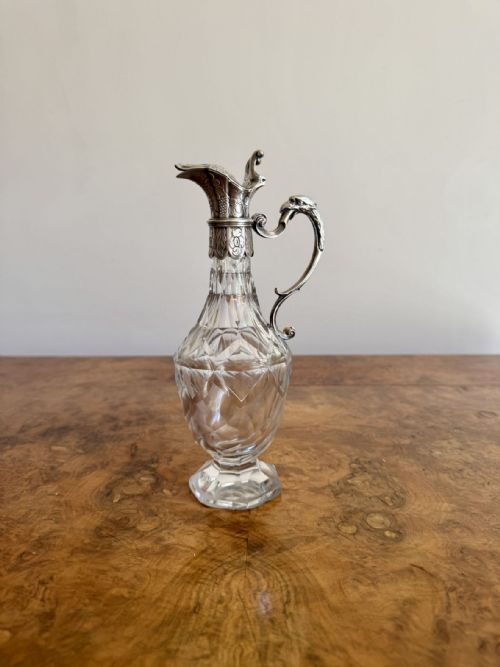


Antique Glass Wine Ewer
An antique glass wine ewer brings classical form and poured brilliance to the table, uniting historic glassmaking with spirited service.
Antique Glass Wine Ewer
An antique glass wine ewer serves as a decorative vessel for decanting and serving wine at table, combining a pinched spout, an applied handle and a bulbous body. The selection centres on Victorian and Edwardian examples alongside continental interpretations from the nineteenth and early twentieth centuries.
Buyers encounter distinct regional interpretations, ranging from English cut glass mounted in silver plate to Venetian lattico glass and French pieces embellished with ormolu or silver. Forms span single serving jugs and matched sets featuring goblets and stands.
The materials and styles cross late nineteenth century Italian, French Second Empire and Art Nouveau aesthetics. Functional drinking vessels merge decorative ambition with historic utility.
What varies in quality
Quality rests upon the clarity of the glass and the crispness of any wheel-cut faceting, where sharper edges and heavier lead crystal distinguish superior work from lighter pressed alternatives. The integration of metal mounts, whether silver plate or ormolu, requires precise fitting to the glass body.
The artistic ambition of the vessel dictates its standing, marked by complex techniques such as latticinio cane work or hand-painted enamel rather than plain blown forms. Preservation of original matching components, including stoppers, stands or companion goblets, elevates the integrity of the piece.
Antique Glass Wine Ewer Retail Price Guide 2026
Typical asking prices for glass wine ewer among the pieces listed under this phrase on Sellingantiques today, from the lower quarter to the upper quarter. They describe what is for sale here now, not the wider market.
Continental workshops in France, Italy and Germany contributed heavily to the styles seen here, including latticinio decoration and ormolu mounts.
Baccarat
The Antique Glass Wine Ewer Glossary
- Ewer
- A large jug with a wide spout and a handle, traditionally used for holding and pouring wine or water. It evolved from metal utility into an ornate glass display piece.
- Latticinio
- A decorative glass technique featuring fine opaque white threads embedded within clear glass in spiral or latticed patterns. It originated on Murano and spread across nineteenth-century Europe.
- Silver Plate
- A thin layer of silver bonded to a base metal foundation, frequently utilised for the mounts, handles and hinged lids of serving vessels.
- Ormolu
- Gilded bronze applied as decorative mounts, feet or handles on nineteenth-century decorative items. It provided a rich golden contrast to clear or coloured glass bodies.
- Cut Glass
- Glass decorated by abrasive wheels that grind facets, flutes and geometric patterns into the surface. Deeper cutting reflects more light and denotes heavier material.
Antique Glass Wine Ewer: Frequently Asked Questions
What is an antique glass wine ewer?
An antique glass wine ewer is a decorative pouring vessel designed for wine, featuring a handle, spout and bulbous body. These items date primarily from the Victorian and Edwardian eras.
Craftsmen produced them in various regions including England, France, Italy and Germany, employing techniques like cutting, blowing and metal mounting.
How were these ewers used historically?
These vessels served to decant and pour wine at the dining table, combining practical utility with formal presentation. Wealthy households displayed them during dinners and dessert courses.
Some pieces functioned as part of matched drinkware sets that included matching goblets and stands for social gatherings.
How do I care for antique glass?
Wash glass ewers gently by hand in warm water using mild soap, avoiding abrasive scrubbers that might scratch the surface. Metal mounts require specific cleaning agents suited to silver plate or ormolu.
Store the pieces securely away from direct sunlight and temperature fluctuations to protect any delicate applied handles or gilt decoration.
How do I identify Victorian and Edwardian examples?
Victorian ewers often display heavy cut glass, ornate silver plate mounts or coloured glass styles like Mary Gregory decoration and Venetian latticinio. Edwardian pieces tend toward crisp, bright cut glass with balanced proportions.
Stylistic cues such as Art Nouveau curves or French Rococo Revival cast metal mounts help place pieces within the nineteenth and early twentieth centuries.