

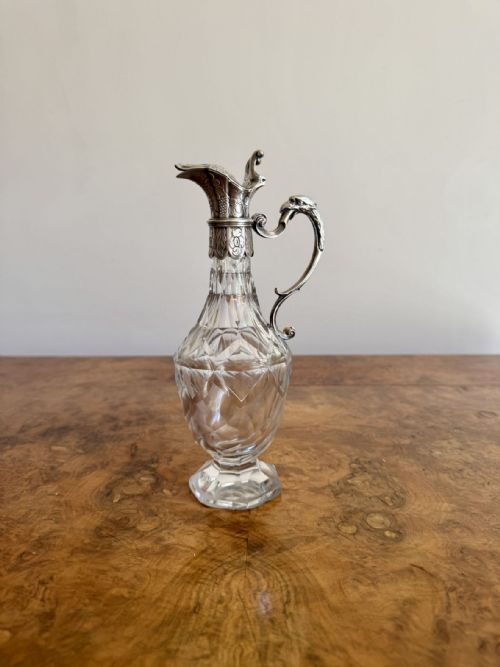


Cut Glass Ewer
These cut glass ewer pieces combine brilliant faceted surfaces with serving utility, offering a decorative centrepiece for the table.
Cut Glass Ewer
A cut glass ewer takes the form of a handled vessel designed for serving wine, water, or oil at the dining table. These pieces emerge primarily from the Victorian and Edwardian eras, alongside French Rococo Revival examples.
The objects listed here span the nineteenth century up to nineteen hundred, including English and French origins. Collectors encounter forms ranging from claret jugs and dessert wine jugs to oil and vinegar bottles.
Makers combine the primary glass body with mounts of silver plate, sterling silver, or plain glass handles. Each piece serves both a functional pouring role and a decorative display purpose.
How they were made
Artisans form the vessels using clear glass, lead crystal, or standard crystal, shaping the body through blowing and moulding techniques. The exterior receives deep facet cutting and geometric patterns carved directly into the material.
Silver plate and sterling silver mounts are fitted to the rims, necks, and handles of many examples to provide structural reinforcement and decorative contrast. French and English workshops execute these metalwork additions to secure the pouring spout and handle.
Cut Glass Ewer Retail Price Guide 2026
Typical asking prices for cut glass ewer among the pieces listed under this phrase on Sellingantiques today, from the lower quarter to the upper quarter. They describe what is for sale here now, not the wider market.
Some nineteenth-century vessels included built-in ice chambers to keep claret cool without diluting the wine.
What varies in quality
The clarity and weight of the crystal body determine the foundational substance of the piece, distinguishing heavy lead crystal from lighter glass. Deeper, crisper facet cutting creates sharper light refraction and a more resonant ring when struck.
The execution and metal composition of the silver plate or sterling silver mounts influence the overall refinement of the design. Heavier metalwork and integrated French Rococo Revival detailing elevate the decorative presence of the vessel.
The Cut Glass Ewer Glossary
- Cut Glass
- Glass decorated by grinding facets or patterns into the surface using rotating wheels. This technique enhances the sparkle and texture of the material.
- Lead Crystal
- Glass containing a high proportion of lead oxide, which increases weight, brilliance, and workability for deep cutting. It forms the heavier vessels in this collection.
- Silver Plate
- A base metal coated with a thin layer of silver used for mounts and spouts. This material provides the appearance of solid silver while remaining durable for handling.
- Sterling Silver
- An alloy of silver containing ninety-two point five percent pure silver by mass. It appears on finer Victorian mounts and structural collars.
- Claret Jug
- A specialised pouring vessel designed specifically for serving red wine at the table. These often feature hinged metal lids and elaborate handles.
Cut Glass Ewer: Frequently Asked Questions
What is a cut glass ewer used for?
These vessels serve liquids such as claret, dessert wine, water, or oil during formal dining and entertaining. Their handled design allows hosts to pour directly at the table.
Beyond functional service, they function as decorative display objects on sideboards or serving tables, catching the light through their faceted surfaces.
How do I date a cut glass ewer?
Dating relies on stylistic clues, mounting materials, and cutting patterns associated with specific periods like the Victorian and Edwardian eras. French Rococo Revival pieces display distinct ornamentation compared to simpler English serving jugs.
Examining the construction of the silver plate or sterling silver mounts also helps narrow down the production decade between eighteen fifty and nineteen hundred.
How should I clean a antique ewer?
Gentle hand washing with warm water and mild soap preserves the delicate glass and silver plate mounts. Avoid abrasive sponges that might scratch the polished surface.
Dry the metal mounts promptly to prevent tarnishing, and use a soft cloth to restore the sparkle of the cut facets.