



Antique Wine Carafe Handle
These antique wine carafe handle pieces connect you directly to the refined dining rituals of the Victorian and Edwardian eras, offering functional elegance for modern entertaining.
Antique Wine Carafe Handle
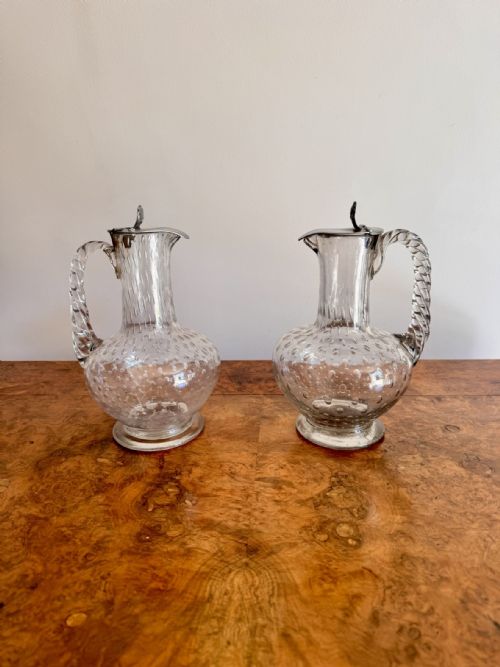
When searching for an antique wine carafe handle, you are looking at sophisticated glass and metal vessels designed for serving claret, wine, and spirits during formal meals. The examples on this page primarily span the Victorian and Edwardian periods, stretching from the mid-nineteenth century into the early twentieth century.
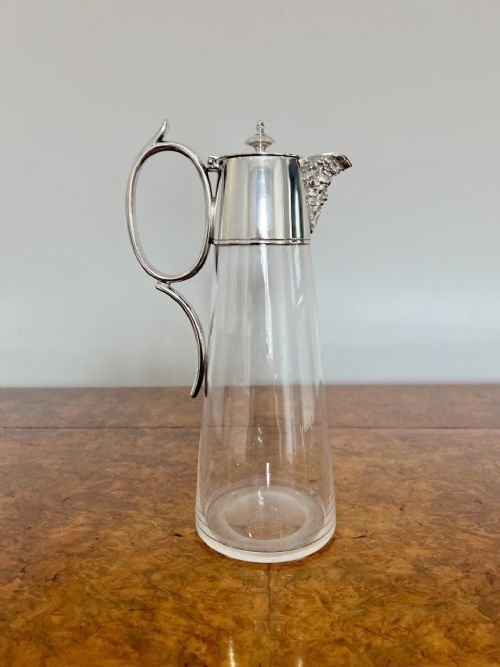
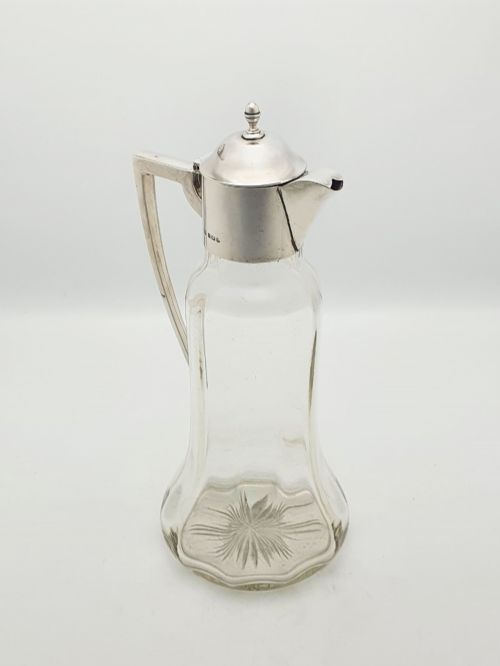
The most common forms you will encounter here are claret jugs, decanters, and ewers. These domestic pieces combine glass bodies with metal mounts and handles, reflecting the decorative tastes of the Aesthetic Movement, Art Nouveau, and Art Deco styles.
Vessels range from clear cut glass and crystal to striking cranberry glass bodies. Handles are integrated into mounts made from silver plate or sterling silver, creating durable and visually appealing tableware for contemporary homes.
What varies in quality
The calibre of these pieces rests largely on the clarity and depth of the glasswork, alongside the weight and detail of the metal mounts. Heavier crystal bodies and crisply defined cut glass demonstrate a higher standard of manufacture.
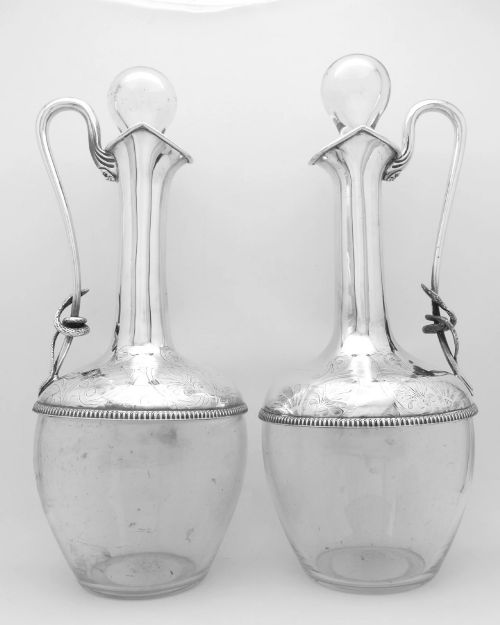
Design sophistication also sets examples apart, particularly where makers employed distinct stylistic elements such as serpent handles or specific aesthetic designs. The harmonious integration between the glass body and the silver or plated handle dictates the overall success of the piece.
Antique Wine Carafe Handle Retail Price Guide 2026
Typical asking prices for wine carafe handle among the pieces listed under this phrase on Sellingantiques today, from the lower quarter to the upper quarter. They describe what is for sale here now, not the wider market.
The material selection spans clear glass, crystal, and cranberry glass combined with sterling silver mounts.
Hukin & Heath·Dr Christopher Dresser
The Antique Wine Carafe Handle Glossary
- Claret jug
- A specialised vessel designed specifically for serving red Bordeaux wine at the dining table. These pieces typically feature a hinged lid and a secure side handle.
- Cranberry glass
- A type of transparent red glass created by adding gold to the molten mixture. It became particularly popular during the Victorian period for decorative tableware.
- Silver plate
- A thin layer of silver fused to a base metal foundation, such as copper or brass. This technique allowed makers to produce elaborate mounts at a lower cost than solid silver.
- Cut glass
- Glass decorated by grinding facets and patterns into the surface using a rotating wheel. This process enhances the brilliance and light refraction of the material.
- Ewer
- A large jug with a wide spout and a prominent handle, traditionally used for holding water or wine. In later periods, they served decorative and functional roles on the dining table.
Antique Wine Carafe Handle: Frequently Asked Questions
Can I use these for serving wine today?
These vessels remain fully functional for decanting and serving wine at modern gatherings. Ensure the interior is thoroughly cleaned and inspected before introducing any beverages.
Handle the pieces with care during pouring, supporting both the base and the handle. Avoid subjecting the aged glass to sudden temperature changes.
How do I identify a Victorian piece?
Victorian examples often display heavier glass bodies with deep cut patterns or vibrant cranberry colouring. Look for maker marks and design registrations stamped onto the silver or plated mounts.
Stylistic cues such as ornate floral chasing or Aesthetic Movement motifs point toward the nineteenth-century origins of the object.
What is the difference between a claret jug and a decanter?
Claret jugs specifically feature an attached handle and a hinged lid operated by a thumbpiece for easy pouring at the table. Decanters generally rely on a stopper and may lack a dedicated side handle.
Both forms belong to the broader category of serving vessels but serve slightly different functional needs during formal dining.