

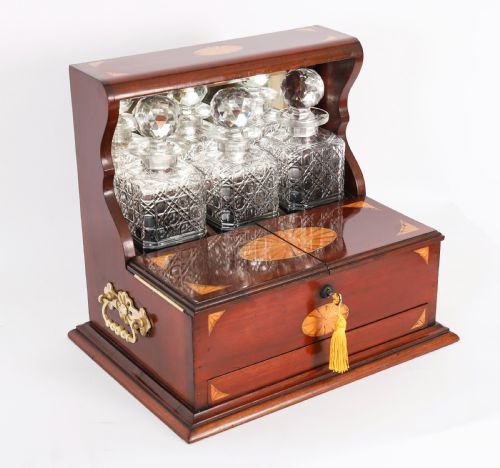


Victorian Cut Crystal Tantalus
A victorian cut crystal tantalus secures your finest spirits behind a clever locking mechanism that keeps guests at bay while showing off the brilliant glass.
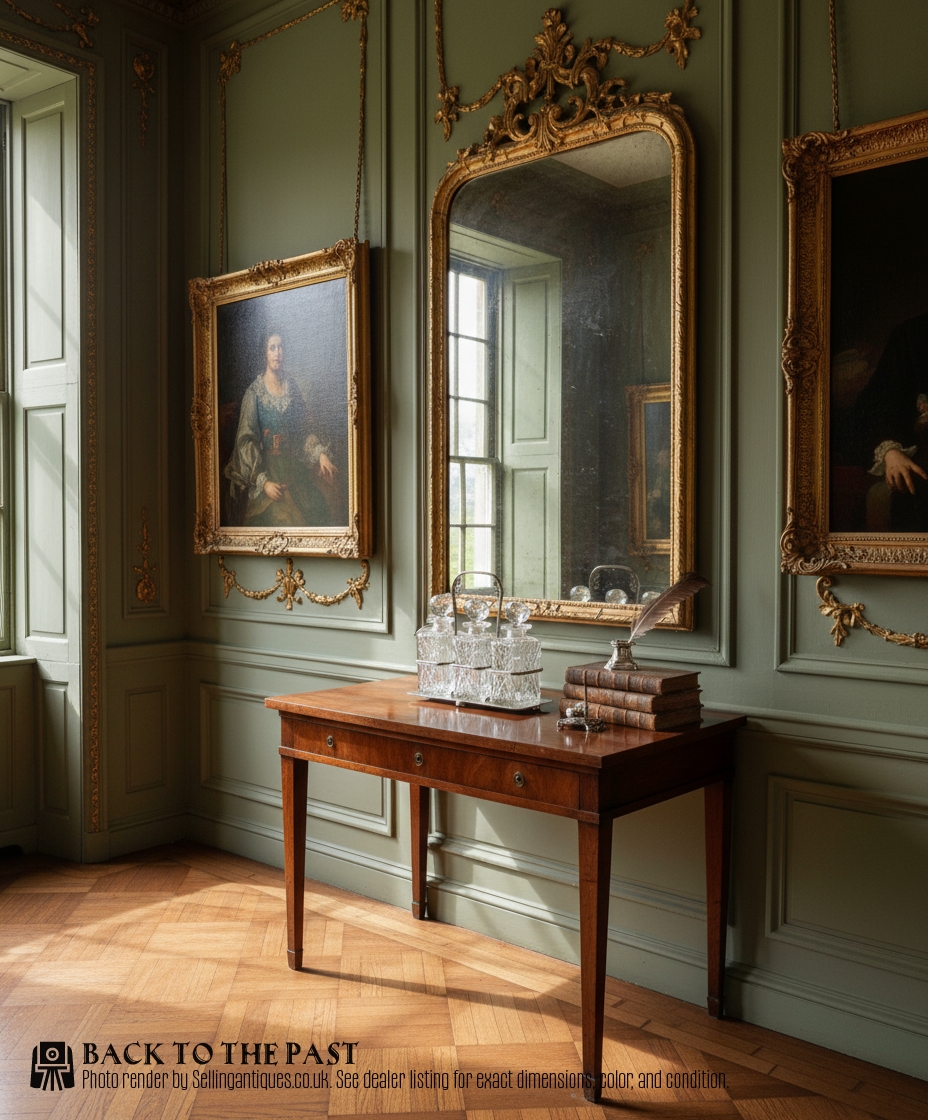
Victorian Cut Crystal Tantalus
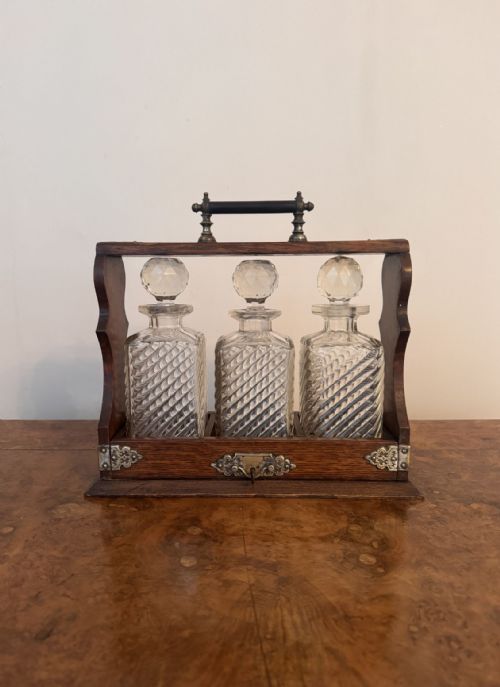
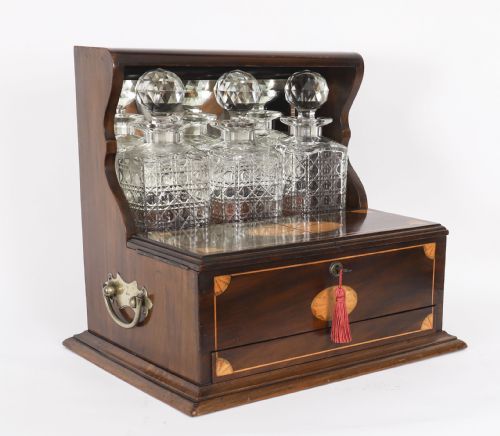
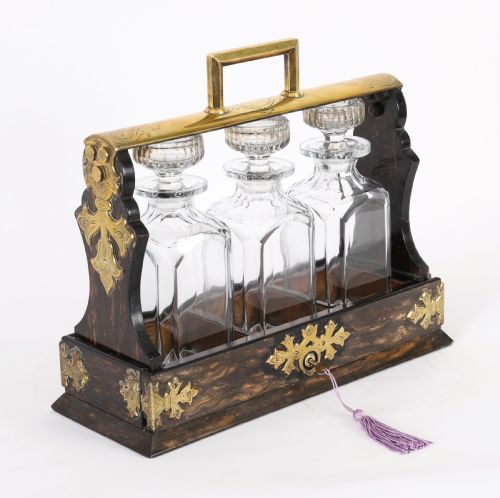
A victorian cut crystal tantalus serves as a secure after-dinner drinks cabinet, designed to hold heavy decanters safely in place beneath a locking bar. The pieces on this page appear predominantly in oak, mahogany, and coromandel, housing matching spirit bottles.
Most examples found here contain either two or three cut crystal decanters, frequently accompanied by games compartments or integrated humidor sections. These barware sets date from the mid-nineteenth century through the Edwardian transition.
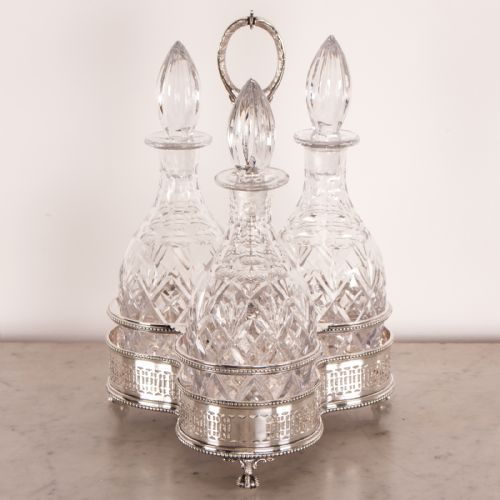
Makers housed these locking frames in polished timber boxes or silver-plated stands, combining practical security with display value for the Victorian dining room.
Assessing Quality
Quality reveals itself in the depth and clarity of the glass cutting on the decanters and the precision of the timber cabinetwork. Heavier silver plating on the mounts and intricate marquetry inlay distinguish the finer workshop output from standard production.
The sophistication of the internal mechanism dictates the grade of the piece, with complex combinations incorporating games boxes or humidor drawers demanding higher craftsmanship.
Victorian hosts kept the tantalus key in their own pocket, ensuring the port stayed untouched until the proper hour.
Walker and Hall·Elkington·Betjemann Brothers·The Goldsmith Co·Hukin and Heath·Philip Ashberry
The Victorian Cut Crystal Tantalus Glossary
- Cut Crystal
- Heavy glass formed with deep geometric facets that refract light. This material gives the decanters their characteristic brilliance.
- Coromandel
- A dense, dark exotic timber with contrasting figure work. Makers used this prestigious wood for luxury cabinet exteriors.
- Silver Plate
- A layer of silver fused to a base metal foundation. It provides the bright finish seen on the carrying handles and locking bars.
- Humidor
- A moisture-controlled storage compartment for cigars. These frequently appear built into the base of larger drinks compendiums.
Victorian Cut Crystal Tantalus: Frequently Asked Questions
How does the locking mechanism work?
Turning the key raises a hinged side bar or allows the top handle to slide free of the decanter stoppers. When the bar is lowered and locked, the stoppers cannot be removed.
This prevents the bottles from being lifted out of their fitted base while still allowing the contents to be viewed clearly.
Were these used for wine or spirits?
They were designed specifically for strong spirits like whisky, brandy, and liqueurs served after dinner. The decanters held the host's expensive imports safely away from servants.
Wine was served differently from larger vessels and rarely found a place inside these locking frames.
How do I date an antique tantalus?
Dating relies on timber choices, patent marks, and style shifts between the mid-Victorian and Edwardian eras. Earlier examples from the 1850s and 1860s often feature heavy silver plating and coromandel.
Later pieces from around 1900 lean toward simpler oak frames with integrated games boards or compartment boxes.
Can replacement decanters be fitted easily?
Finding exact replacements is challenging because cut crystal bottles were ground to fit specific cabinet bases. The stopper heights and body diameters must match the clearance of the locking bar precisely.
Most collectors prefer pieces retaining their original matched set of decanters.