


Victorian Cut Crystal Jug
A victorian cut crystal jug combines heavy lead glass with silver or silver-plated mounts to serve wine and water with considerable weight and brilliance.
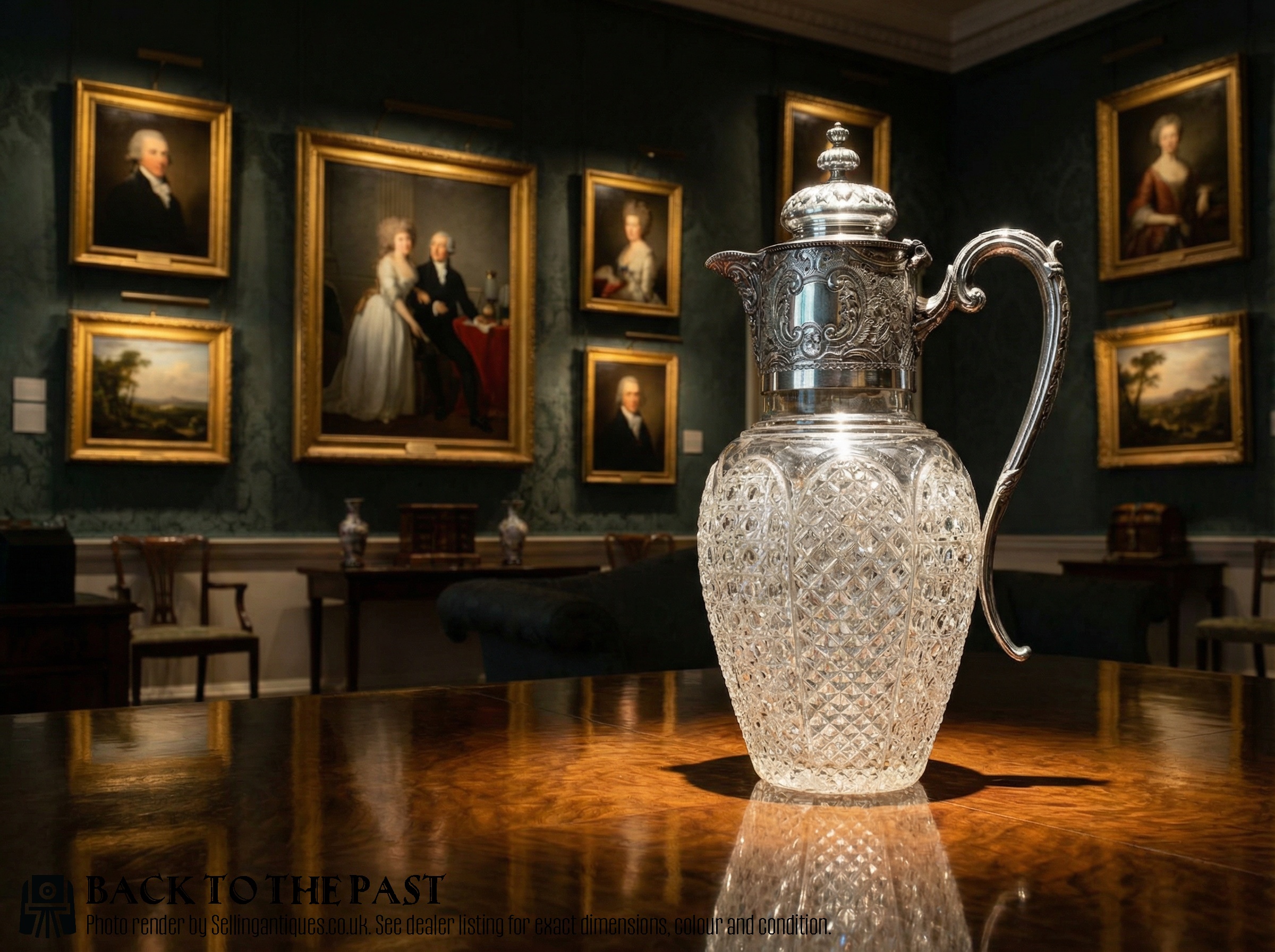
Victorian Cut Crystal Jug
When you search for a victorian cut crystal jug, you encounter heavy serving vessels designed for claret, wine, champagne, and water. The selections span the Victorian and Edwardian periods, stretching from the mid-nineteenth century into the early twentieth century.
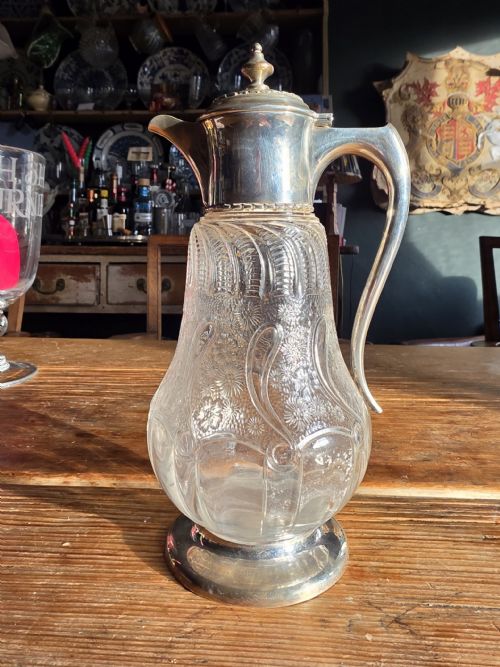
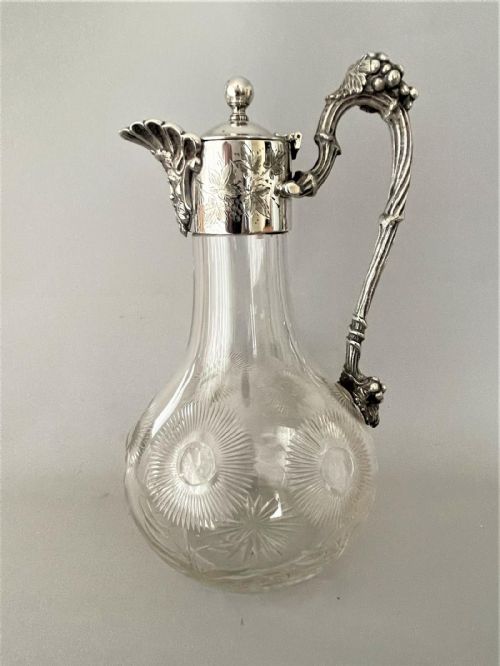
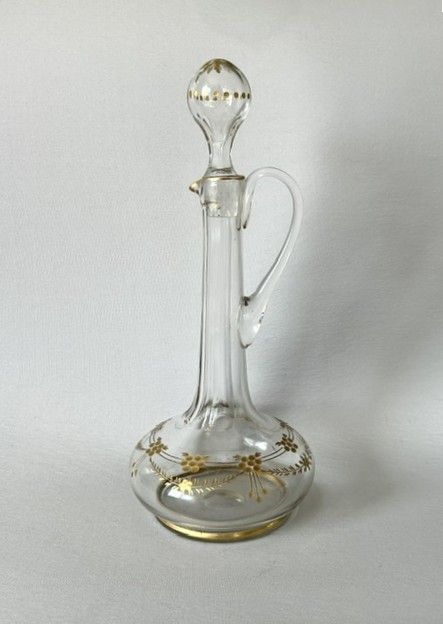
The most common forms on this page are claret jugs and decanters fitted with hinged silver or silver-plated covers, handles, and collars. Examples also appear as ewers and water pitchers, occasionally featuring engraved motifs or novelty shapes such as ducks.
Pieces originate predominantly from English workshops, alongside examples from Bohemian makers. They range from modest pint-sized vessels to large presentation pieces bearing hallmarks from London and Birmingham.

How they were made
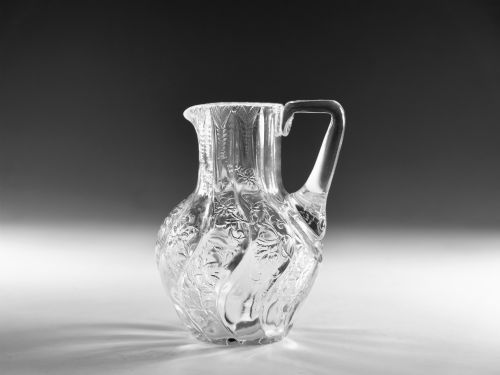
The body of a victorian cut crystal jug starts as heavy lead crystal or clear glass, shaped by blowing or moulding before craftsmen cut geometric patterns into the surface using rotating wheels. Final polishing creates the sharp facets and contrasting matte textures seen on hobnail and star designs.
Metal mounts in sterling silver or silver plate secure the handle and form the spout and hinged lid. Silversmiths cast or stamp these mounts, often adding bright-cut engraving, gilding, or figural details like face spouts and animal heads.
Some Victorian silversmiths fitted jugs with unusual face spouts, allowing a stern metal visage to pour your evening claret.
What varies in quality
The depth and precision of the glass cutting dictate the visual impact of a victorian cut crystal jug, with crisper facets refracting light more sharply than softer, shallower wheel work. The weight of the lead crystal itself signals the substance of the piece.
The metalwork provides a further distinction, where substantial sterling silver mounts with clear assay office hallmarks distinguish high-end commissions from standard silver-plated utilitarian wares. Integrated design between the glass body and the silversmith's handle and spout marks the finest examples.
William Comyns·Stevens & Williams·Richardsons Birmingham·Hukin & Heath·Edgar Finley & Hugh Taylor·Elkington & Co
The Victorian Cut Crystal Jug Glossary
- Claret jug
- A specialised vessel designed for serving red wine at the dining table. These pieces typically feature a pouring spout and a hinged lid operated by a thumbpiece.
- Hobnail cut
- A dense surface pattern of small, pointed pyramidal facets resembling hobnails on boots. This technique maximises light refraction across the body of the glass.
- Silver plate
- A layer of silver fused to a base metal, commonly used for the mounts and handles of serving vessels. This technique offered the appearance of solid silver at a lower cost.
- Sterling silver
- An alloy consisting of ninety-two point five percent silver and seven point five percent other metals, chiefly copper. British pieces feature hallmarks indicating the standard, town, and year of assay.
- Ewer
- A large jug with a wide spout and a curved handle, traditionally used for holding water. In nineteenth-century dining, these often functioned alongside claret jugs as part of the suite on the sideboard.
Victorian Cut Crystal Jug: Frequently Asked Questions
What is the difference between a decanter and a claret jug?
A decanter usually possesses a fitted glass stopper designed to seal the contents for storage. A claret jug incorporates a hinged metal lid and an integral handle for immediate pouring at the table.
While both appear in lead crystal, the claret jug relies on its silver or plated mount to facilitate serving wine during meals.
How do I date a silver-mounted glass jug?
Sterling silver mounts carry hallmarks that indicate the assay office, the maker, and the exact year of production through a date letter. Checking the metal components provides a reliable date.
Unmounted glass relies on stylistic cues, cutting patterns, and registry marks impressed directly into the material for chronological placement.
Can I use these antique jugs for serving wine today?
These vessels were built for functional use at the dining table and remain entirely suitable for holding and pouring wine or water. Modern handling requires simple hand washing rather than dishwasher cycles to protect the historic metal mounts and glass.
Careful attention to the handle and silver plating preserves the integrity of the piece during regular service.
What does hobnail cutting look like on glass?
Hobnail cutting creates a textured surface of closely set pyramidal points that catch the light from every angle. This heavy geometric style was favoured in the Victorian period to showcase the clarity and weight of lead crystal.
Run your fingers across the body to feel the sharp definition of the individual diamond facets.