


Victorian Cranberry Paraffin Lamp
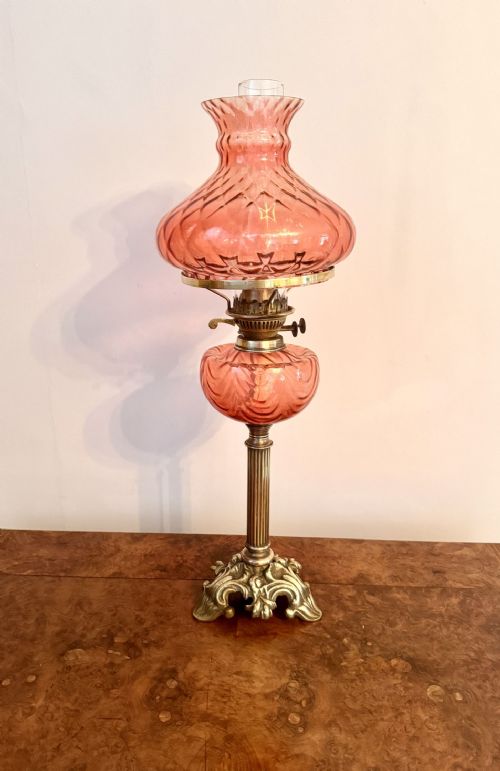
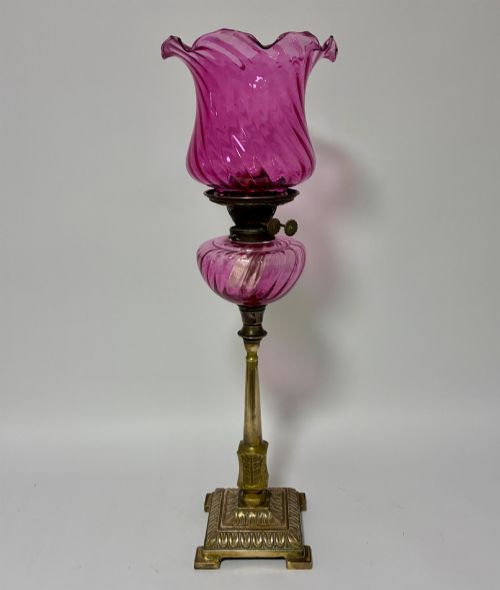
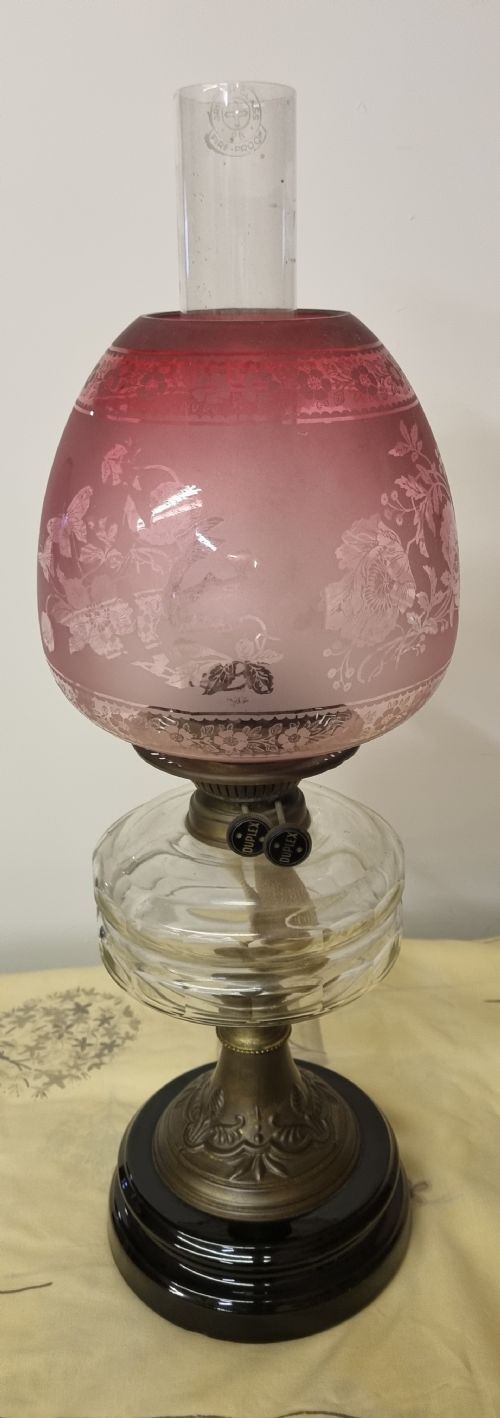
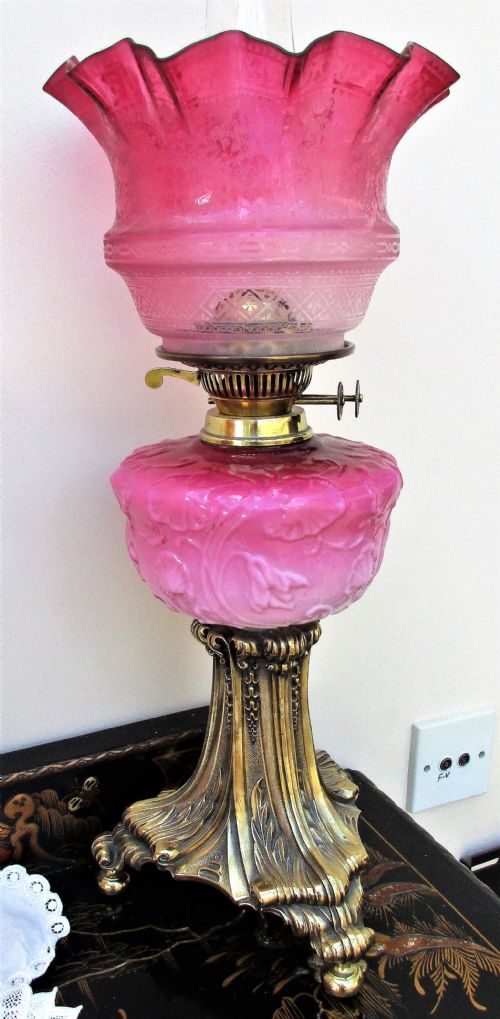
These Victorian cranberry paraffin lamps bring a rich, warm glow to a room through their striking coloured glass and heavy metal mounts.
Victorian Cranberry Paraffin Lamp
A Victorian cranberry paraffin lamp combines a functional nineteenth-century lighting device with decorative coloured glass components. When someone searches for this phrase, they encounter table lamps and columns designed to burn paraffin oil for domestic illumination.
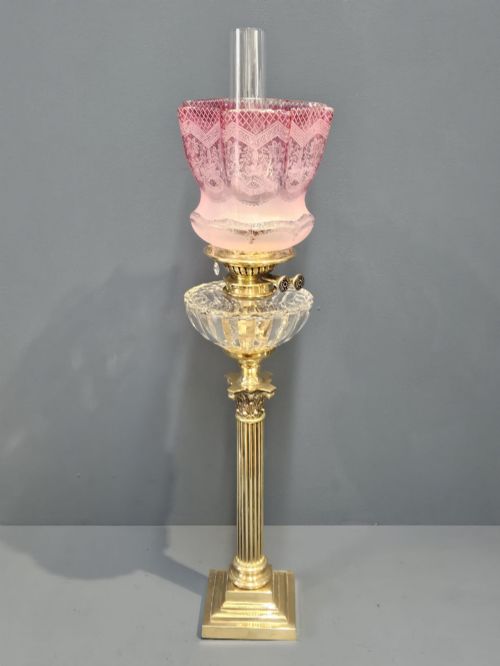
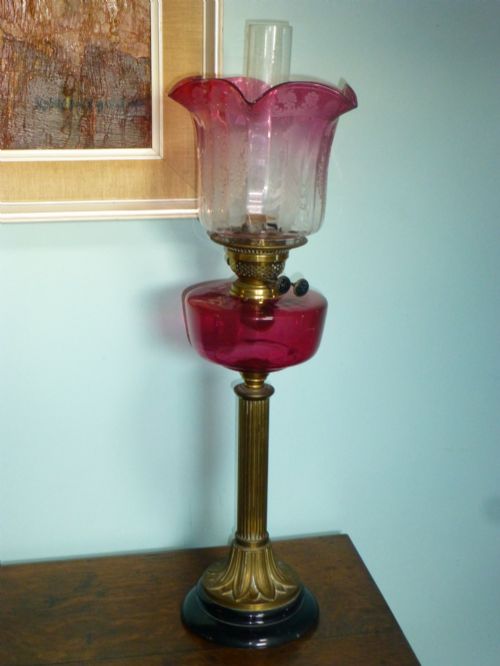
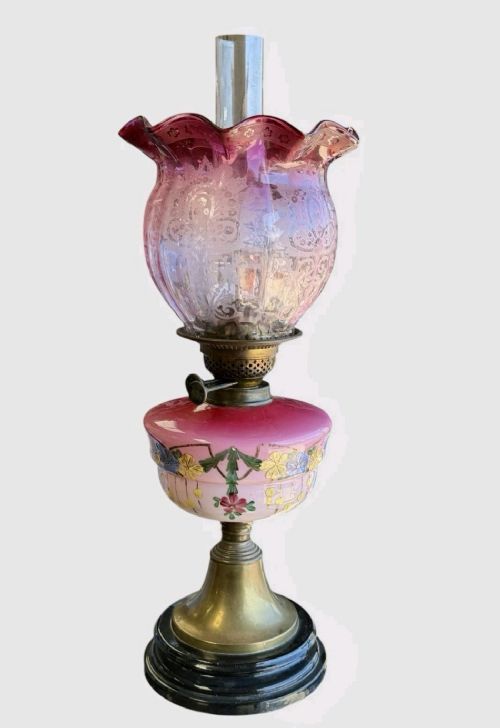
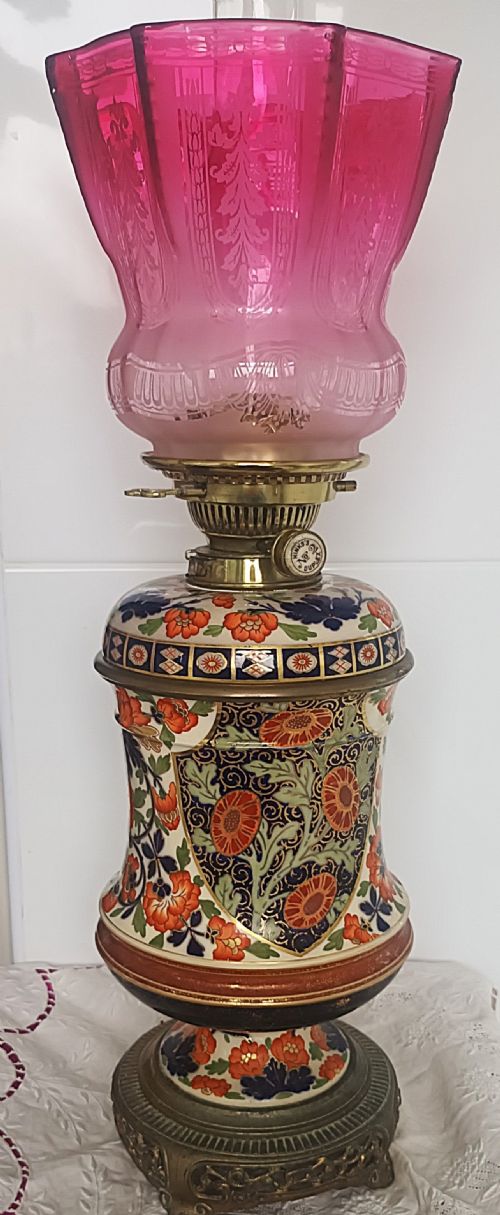
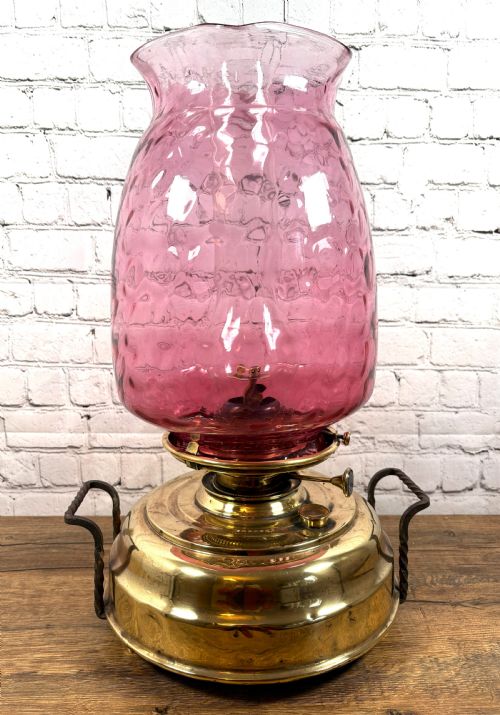
The pieces on this page span the nineteenth and early twentieth centuries, featuring notable variations in height and mounting style. Most examples pair a vibrant cranberry glass font or shade with sturdy brass columns, ceramic bases, or cast metal stands.
Makers and workshops across England and continental Europe produced these lamps in various configurations, from simple domestic models to elaborate tall duplex burners. Buyers frequently find tall Corinthian column designs alongside hand-painted fonts and wall-mounted variants.
Manufacturing methods and materials
Glassmakers created the distinctive cranberry colour by adding gold chloride to the molten glass mixture before blowing or pressing the shades and fonts. Metalworkers shaped brass through casting and turning, often forming classical columns or heavy weighted bases to support the glass vessels safely.
Ceramic and porcelain elements, sometimes painted by hand, were fired in kilns before assembly with brass burner mechanisms and twin-wick duplex systems. Craftspeople combined these disparate materials with threaded fittings and collars to secure the fragile glass reservoirs to sturdy metal stands.
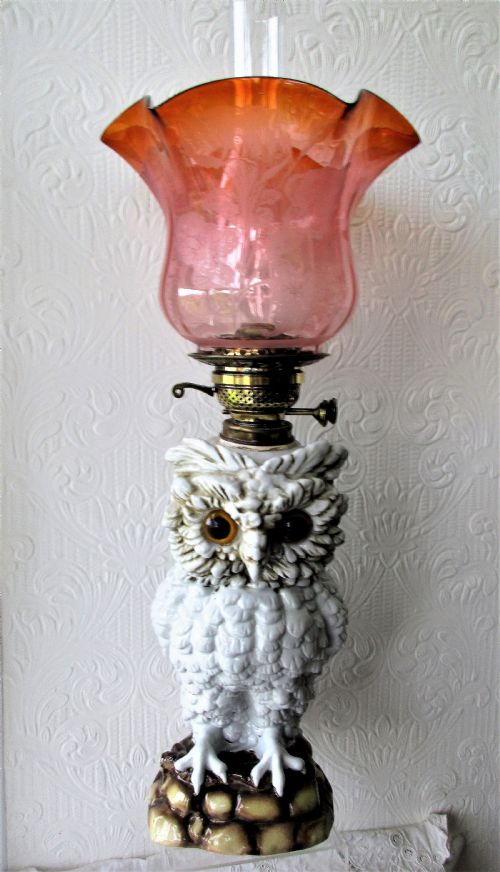
Several lamps feature hunting themes or hand-painted owls peering out from porcelain bodies, keeping watch over the parlour long after dark.
Assessing quality and craftsmanship
Quality rests in the weight of the brass mountings, the crispness of any classical detailing on columns, and the depth of colour in the cranberry glass. Superior examples exhibit heavy, stable bases and well-defined casting work on burners and collars rather than light, thin pressings.
The integrity of the glass components and the presence of original matching shades and fonts separate standard domestic pieces from finer display examples. Better lamps maintain intact hand-painted decoration and original burner mechanisms stamped with maker names.
Hinks·Taylor Tunnicliff·Sitzendorf
The Victorian Cranberry Paraffin Lamp Glossary
- Font
- The oil reservoir of the lamp, usually made of glass or ceramic and positioned above the base. This container held the paraffin fuel required for lighting.
- Duplex burner
- A double-wick mechanism that produced a brighter flame than single-wick designs. These fittings often carry maker stamps from period manufacturers.
- Corinthian column
- A classical architectural column style frequently utilised for the tall brass stems of these lamps. The capitals feature decorative acanthus leaf carvings.
- Peg lamp
- A small oil lamp fitted with a narrow metal peg designed to drop directly into a candlesticks socket or wall bracket.
- Cranberry glass
- A transparent pinkish-red glass produced by introducing gold into the batch during melting. It remains the defining visual characteristic of these pieces.
Victorian Cranberry Paraffin Lamp: Frequently Asked Questions
Were these lamps converted to electricity?
Many period lighting pieces undergo conversion to electricity to allow safe daily use in modern homes without burning paraffin. Wiring is typically run through the central column without damaging the original metalwork.
Unconverted examples retain their original brass burners and mechanisms for display or restoration purposes. Buyers should check individual listings to confirm whether a piece retains its original oil-burning hardware.
How do I distinguish Victorian from Edwardian lamps?
Victorian models frequently incorporate ornate brass casting, heavy classical columns, and deep cranberry glass shades produced during the nineteenth century. The transition into the Edwardian era brought slightly lighter brass mounts and simpler silhouettes.
Exact dating often relies on burner patents, maker marks, and stylistic clues within the metalwork and ceramic components rather than the glass colour alone.
Can I use modern replacement shades?
Replacement cranberry glass shades are available if an original component has suffered damage over the decades. Matching the fitter size to the original brass gallery is essential for a secure fit.
Collectors generally prefer pieces that retain their matching period shades, though replacement globes allow damaged lamps to be displayed safely.