




Victorian Duplex Oil Lamp
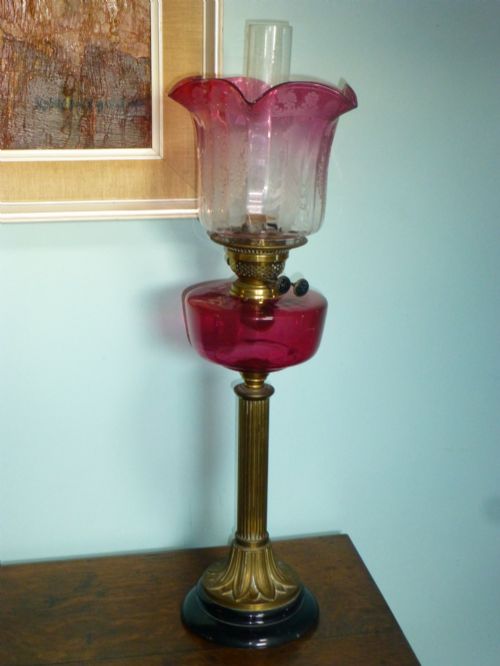
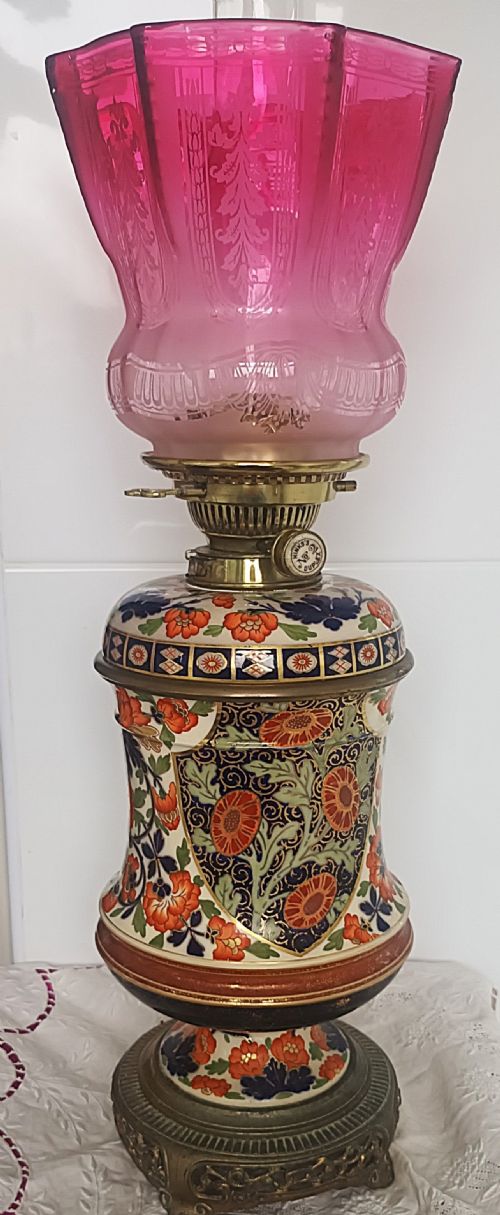
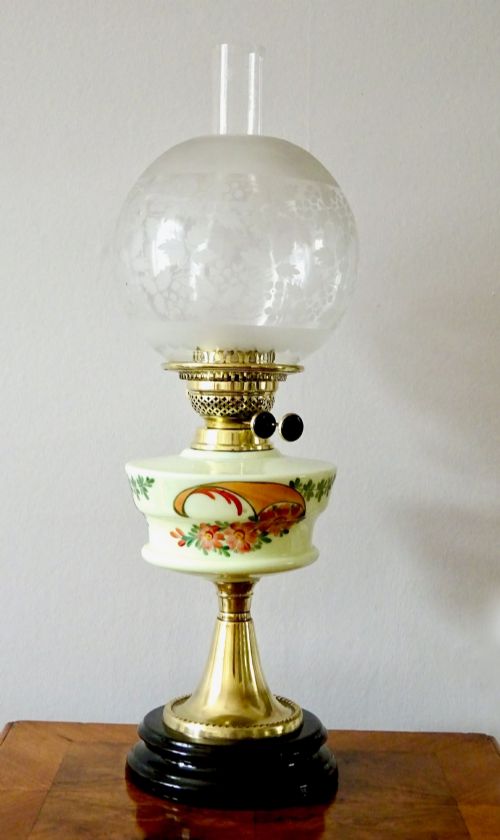
A victorian duplex oil lamp brings bright twin-flame illumination and period character to a room through heavy brass and coloured glass.
Victorian Duplex Oil Lamp
A victorian duplex oil lamp uses two parallel flat wicks beneath a single chimney to produce a brighter light than standard single-wick lighting. These pieces date principally from the nineteenth century, with examples spanning from the eighteen-sixties through the Edwardian era.
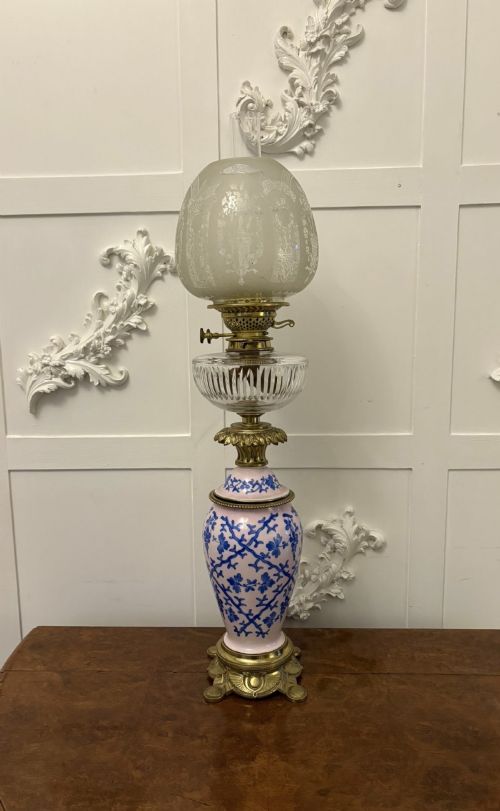
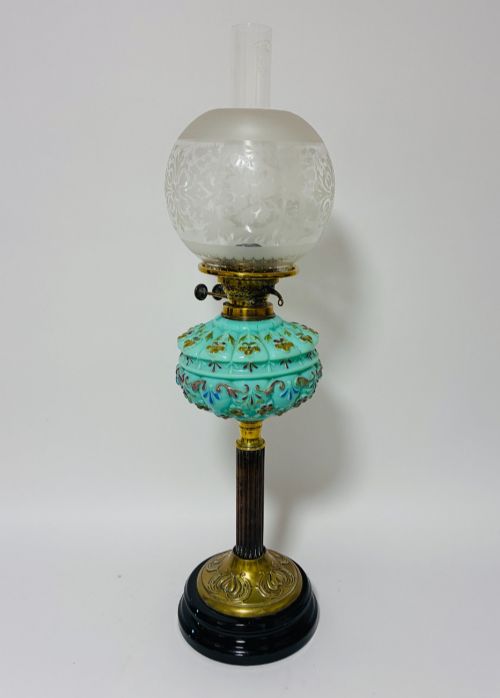
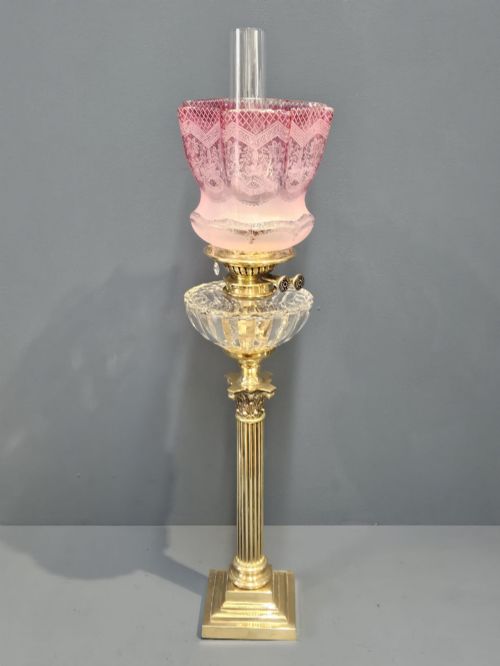
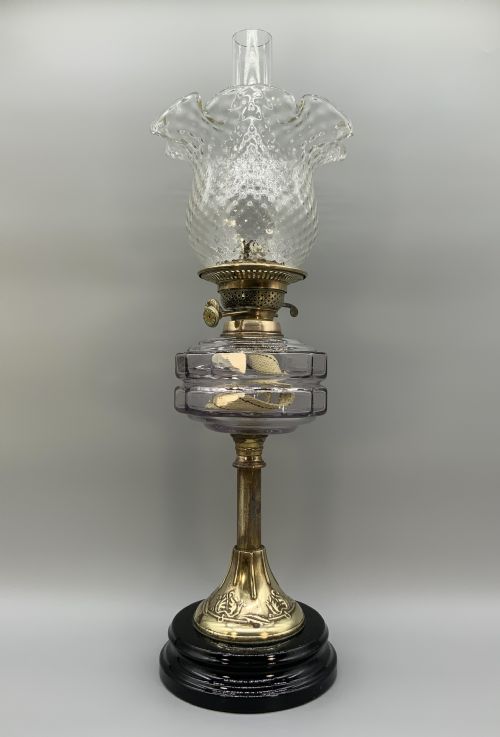
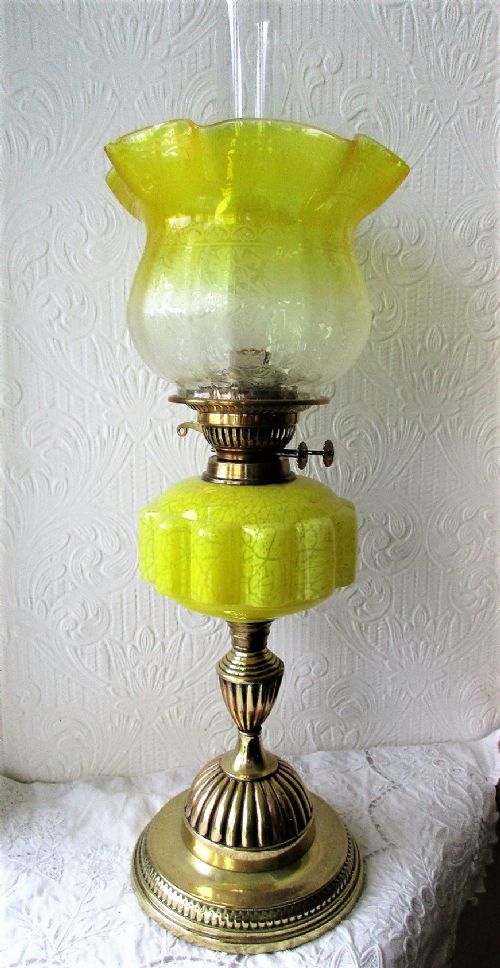
Most pieces seen here combine a heavy metal stand with a decorative glass or ceramic font. Formats range from simple reeded columns to ornate Corinthian pillars and telescopic adjustable stands.
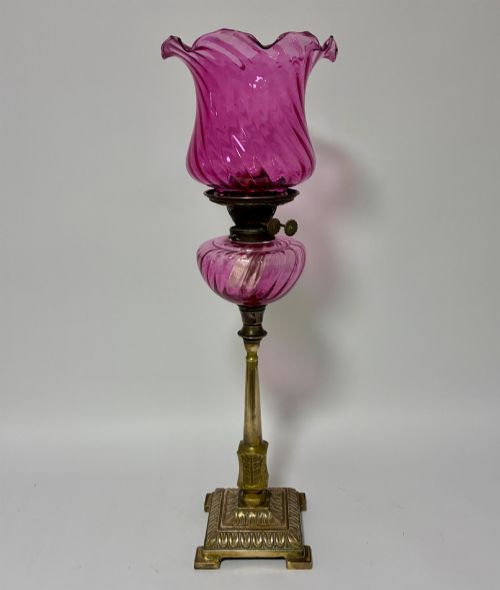
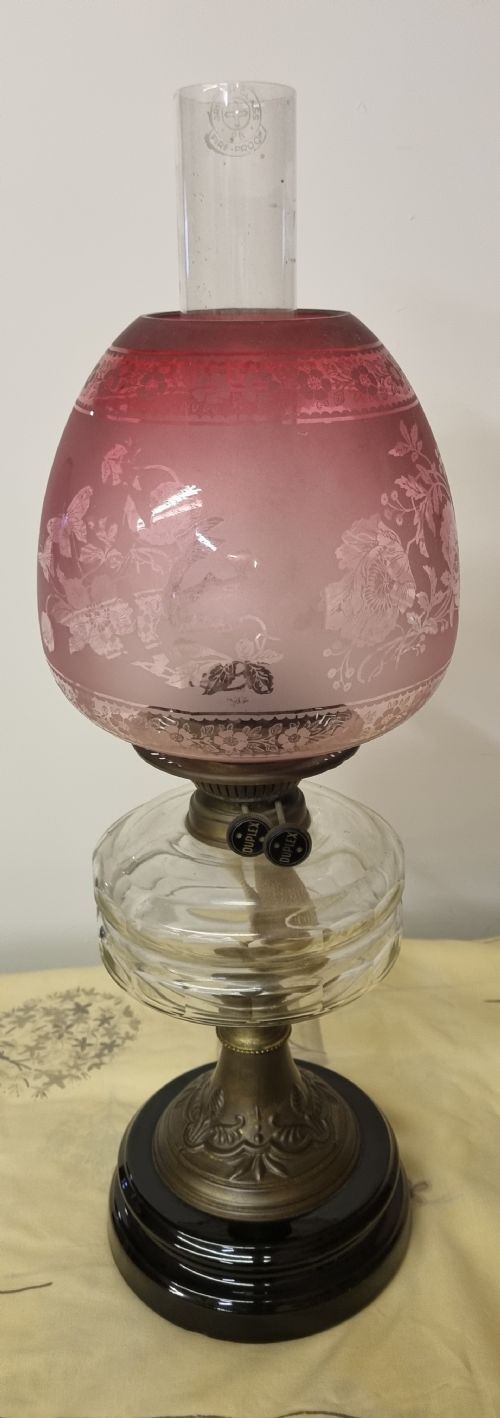
The shade is a defining feature of the type, appearing in forms such as etched tulip globes, frilled cranberry glass, and hand-blown art nouveau shapes.
Materials and Construction
Brass forms the structural core of many pieces, often paired with ceramic reservoirs or cast metal bases that provide stability for the tall burner assembly. Glass is worked in multiple finishes, including opaline, cut crystal, and flashed cranberry colours.
Makers utilised specialised twin-burner mechanisms, such as Hinks, Veritas, and Messenger systems, designed to feed two wicks simultaneously for an even flame. Shades were frequently hand-blown or etched with botanical and floral motifs before being fitted to the brass gallery.
Some Victorian burners bear patents boasting that their twin flames rival the brightness of municipal gas lighting.
Assessing Quality and Execution
The distinction between standard domestic lighting and superior examples lies in the weight of the casting and the crispness of the brass work. Corinthian columns with deeply fluted shafts and substantial stepped bases sit at the higher end of the range.
The quality of the glass font and matching shade dictates overall visual success, with deep cranberry hues, layered casing, and intricate acid-etched patterns representing the best artistry of the period.
Hinks·Taylor Tunnicliff·Stevens and Williams·Doulton Lambeth·Messenger
The Victorian Duplex Oil Lamp Glossary
- Duplex burner
- A double-wick mechanism that burns two flat wicks side by side to generate increased light intensity. This system requires specific twin-wick winders to operate correctly.
- Chimney
- The tall, narrow glass tube placed over the burner to steady the flame and create the draught necessary for clean combustion.
- Opaline glass
- An opaque, milky-white glass often tinted in pale shades and used for lamp shades and fonts during the nineteenth century.
Victorian Duplex Oil Lamp: Frequently Asked Questions
How do duplex burners work?
A duplex burner houses two flat wicks running parallel through the brass mechanism, controlled by a shared or paired set of thumbwheels. Raising both wicks creates a wider, combined flame that produces significantly more illumination than a single wick.
Air is drawn up through the central draught tube to feed the flames evenly beneath the glass chimney.
Are these lamps safe to use with oil?
While these pieces were engineered for paraffin or kerosene use during the Victorian period, modern collectors generally treat them as decorative objects. Using them requires careful inspection of the burner and font to ensure no leaks or structural weaknesses exist in the metal or soldered joints.
Many owners choose to display them with their matching shades intact without operating the fuel reservoir.
How do I match a shade to a base?
Matching a shade to a Victorian duplex oil lamp depends on the fitter size, which is the metal ring diameter where the shade rests on the burner gallery. Cranberry, etched glass, and opaline shades should also complement the colour of the ceramic or glass font below.
Proportion is key, as a large botanical shade requires a heavy brass or column base to remain visually balanced.