




Victorian Cranberry Glass Decanter
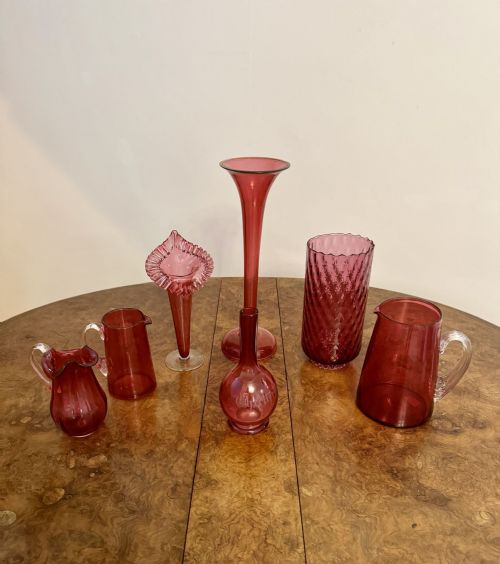
These Victorian cranberry glass decanter pieces bring rich colour and refined nineteenth-century craft to the table.
Victorian Cranberry Glass Decanter
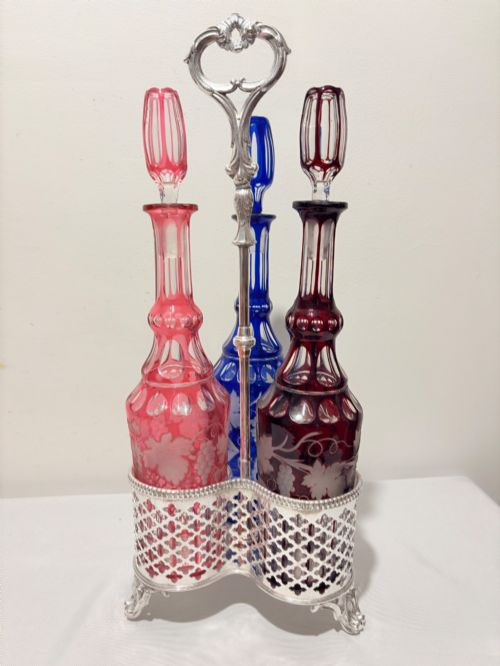
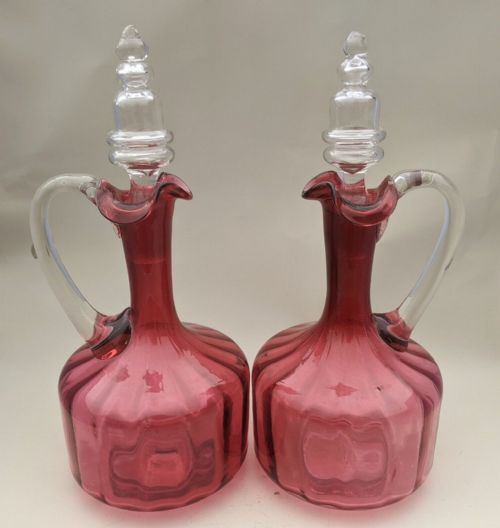
Most examples originate from the Victorian and Edwardian eras, spanning periods from the mid-nineteenth century through to the early twentieth century. Buyers often meet single bottles as well as matched pairs, sometimes accompanied by matching wine glasses or held securely within decorative stands.
Makers and producers worked across English and Bohemian centres, creating both plain vessels and elaborate colour-over-crystal versions. The primary function remains the serving or display of wine, spirits, and liqueurs within period dining rooms.
Materials and Technique
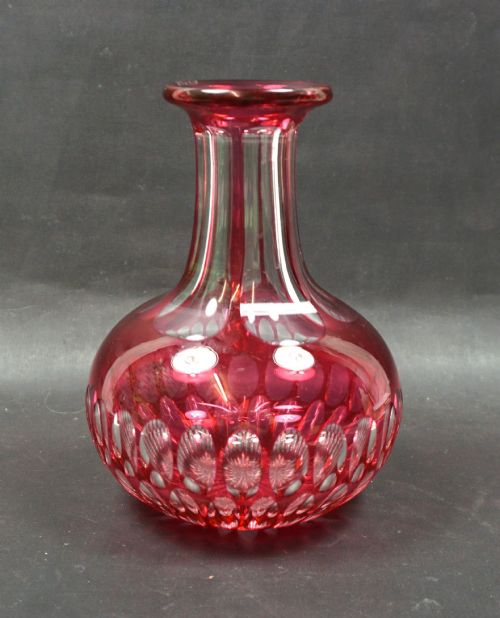
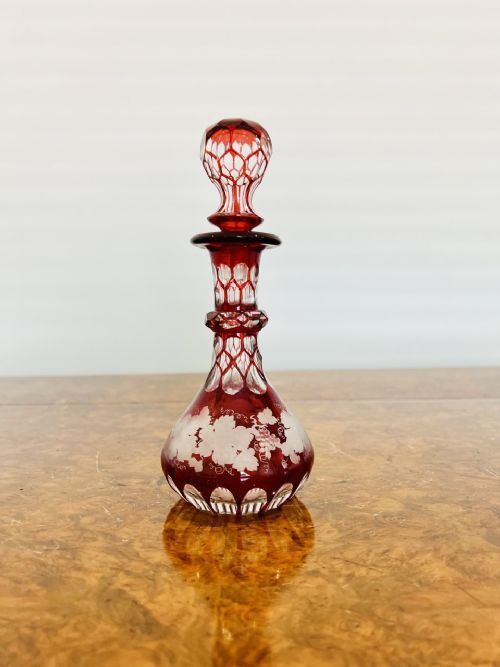
The primary material is cranberry glass, produced by adding gold chloride to molten glass to achieve its distinctive rich hue. Many pieces utilise a colour-over-crystal technique, overlaying the coloured glass onto clear glass before cutting through the outer layer to expose patterns beneath.
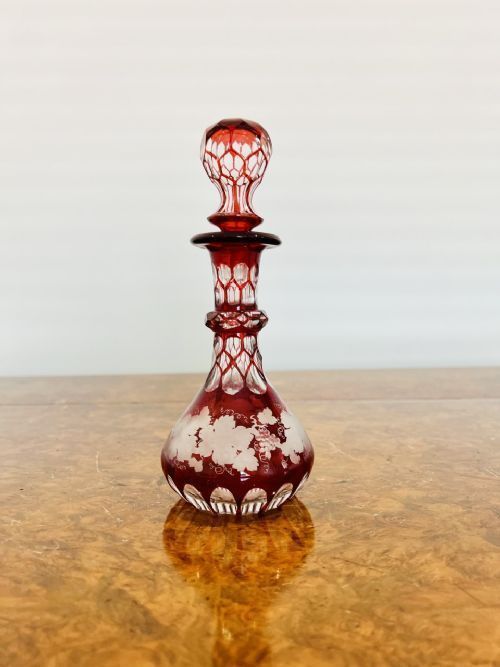
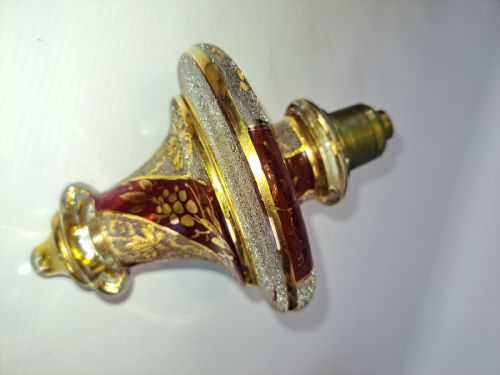
Decoration often involves wheel engraving or etching, displaying motifs such as birds among vines and fruiting vines. Additional elements include clear glass stoppers, silver plate mounts, brass fittings, and frosted glass components.
Workshops also employed cutting and gilding techniques to shape heavy crystal and red glass forms into tall wine jugs and spirit bottles. The resulting objects combine blown glass bodies with hand-finished details characteristic of nineteenth-century production.
Victorian diners enjoyed pouring port from vessels engraved with tiny birds hiding among frosted vines.
Assessing Quality
Quality rests upon the depth and evenness of the glass colour, alongside the precision of any wheel engraving or overlay cutting. Pieces featuring detailed bird and vine motifs or complex overlay work represent the upper end of the range.
The integration of materials also defines distinction, particularly where glass vessels combine with well-cast silver plate frames, brass fittings, or matching stoppers. The crispness of the facet cutting on crystal layers distinguishes finer items from simpler production.
The Victorian Cranberry Glass Decanter Glossary
- Cranberry glass
- A transparent glass coloured pink or red by the addition of gold to the molten batch. It is characteristic of nineteenth-century tableware.
- Overlay glass
- A technique where a layer of coloured glass is fused over a base of clear or contrasting glass. Craftsmen then cut away sections of the outer layer to create patterns.
- Silver plate
- A base metal coated with a thin layer of silver, commonly utilised for the frames and stands that hold nineteenth-century decanters.
- Hock decanter
- A tall, slender wine decanter traditionally used for serving hock or white wine. These vessels often feature colour-over-crystal construction.
- Stopper
- A glass or crystal plug fitted into the neck of a decanter to seal the contents. Matching stoppers original to the piece contribute to its integrity.
Victorian Cranberry Glass Decanter: Frequently Asked Questions
What is cranberry glass?
Cranberry glass is a transparent red or pink glassware produced by introducing gold into the glass mix during melting. This specific chemical process gives the material its rich and distinctive tone.
The technique became popular during the nineteenth century for tableware, decorative vessels, and scent bottles. Its warm colour made it a favourite in Victorian and Edwardian homes.
How do I date a decanter?
Dating relies on observing the form, the method of manufacture, and stylistic traits recorded across the nineteenth and early twentieth centuries. Elements like hand-cut facets and specific overlay patterns point towards periods such as the eighteen-fifties or eighteen-eighties.
Associated silver plate frames and stoppers also help determine the era of production. Comparative examples from English and Bohemian workshops provide further chronological context.
Were these used for wine?
These vessels served primarily for holding and pouring wine, spirits, and liqueurs during formal meals and gatherings. Taller hock decanters accommodated white wine, while smaller bottles held spirits or perfumes.
Many items were supplied as pairs or set into silver-plated stands alongside matching glasses for serving guests. Their dual role combined practical dining utility with decorative display.