
Victorian Country Desk Chair
A victorian country desk chair is a sturdy vernacular seat built for serious writing and daily sitting.
Victorian Country Desk Chair
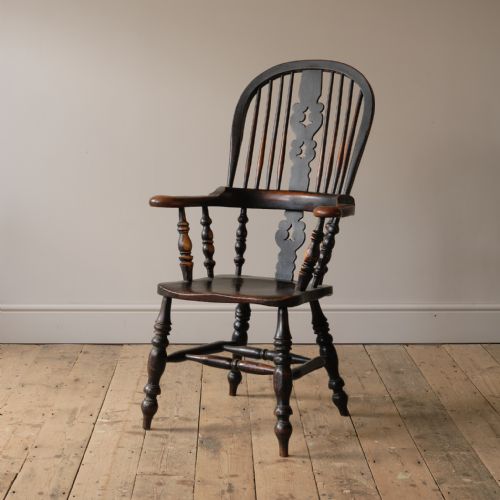
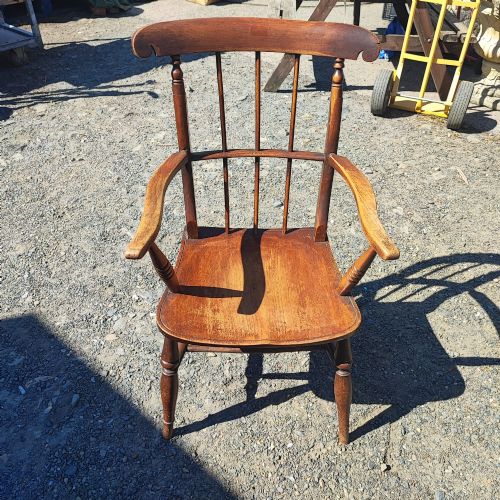
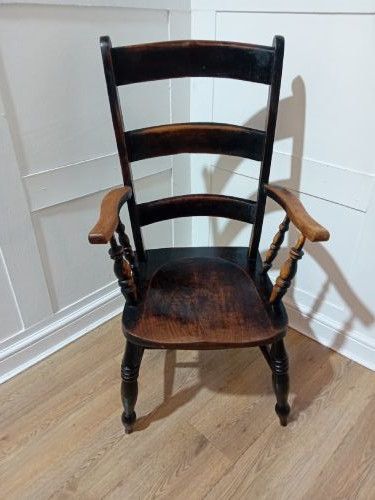
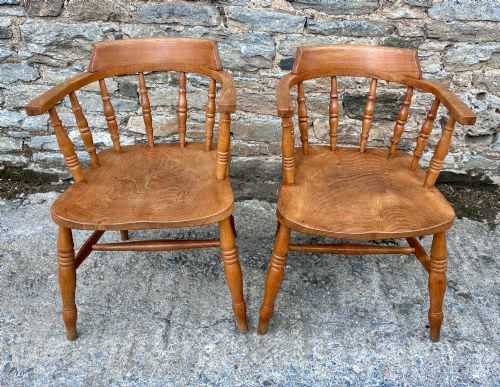
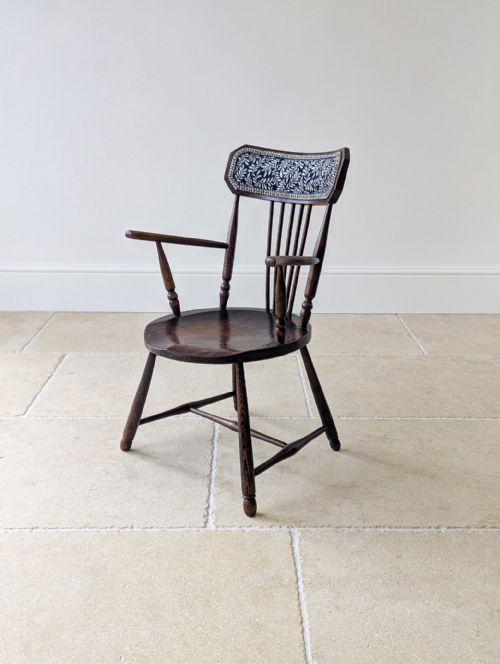
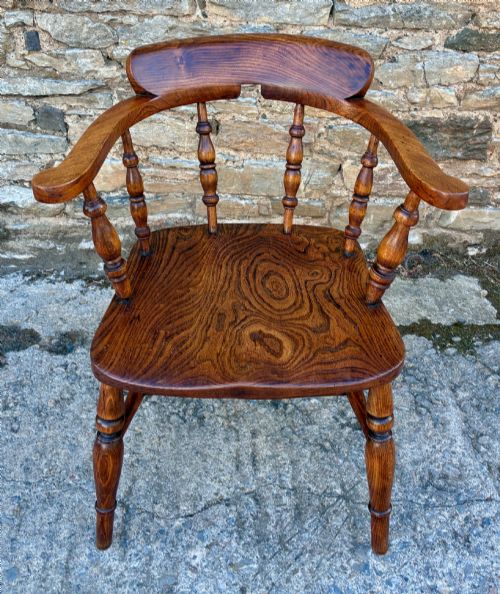
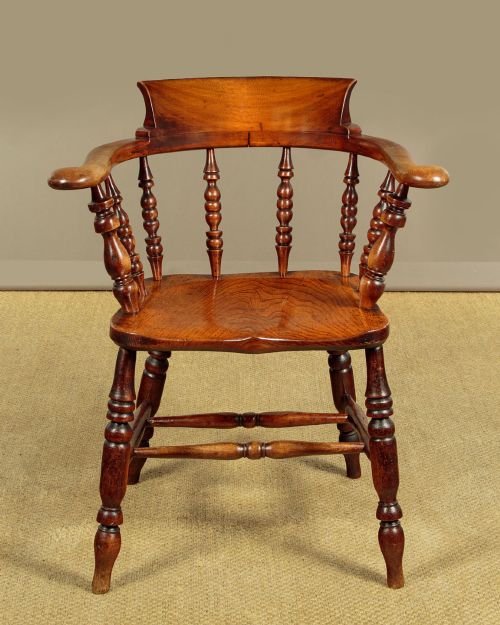
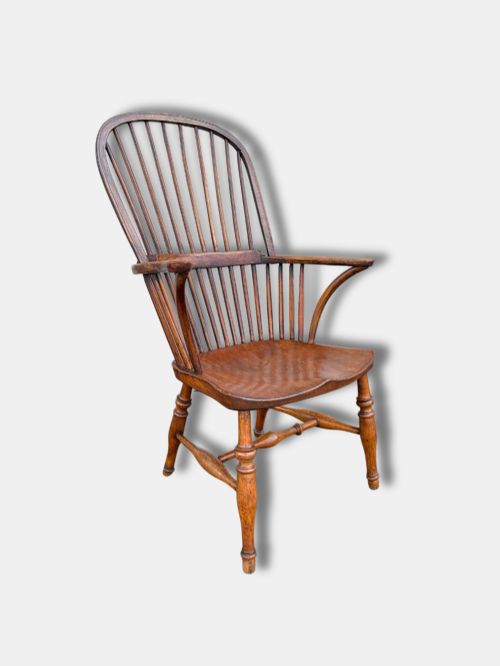
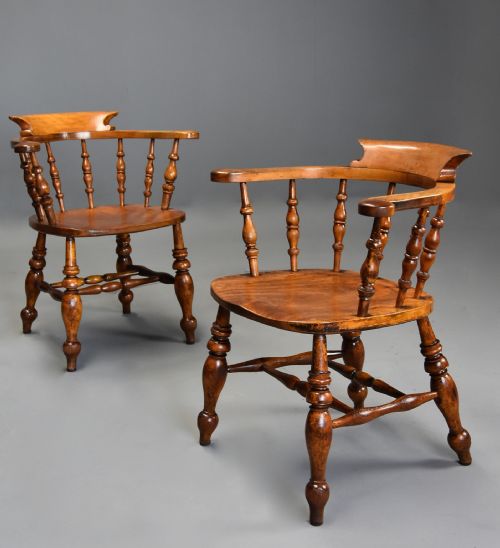
A victorian country desk chair encompasses traditional seating forms produced across the nineteenth century, including Windsor armchairs, smoker's bows, and captain's chairs. These pieces originate primarily from provincial English workshops and rural country houses, serving practical domestic and administrative purposes.
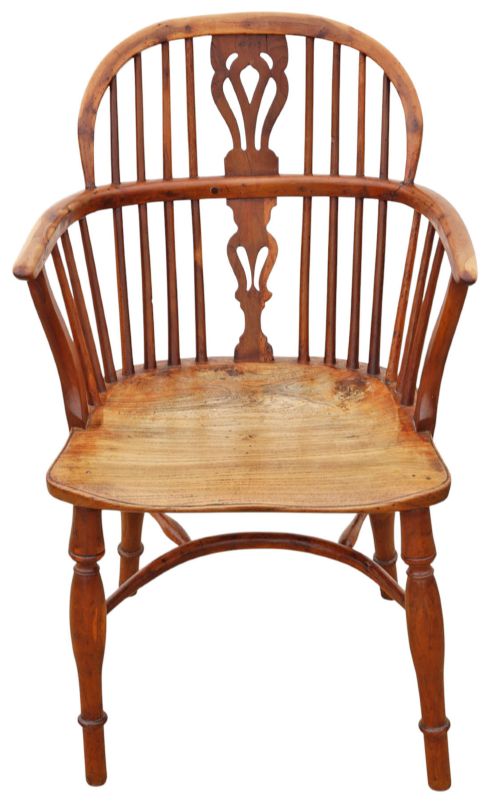
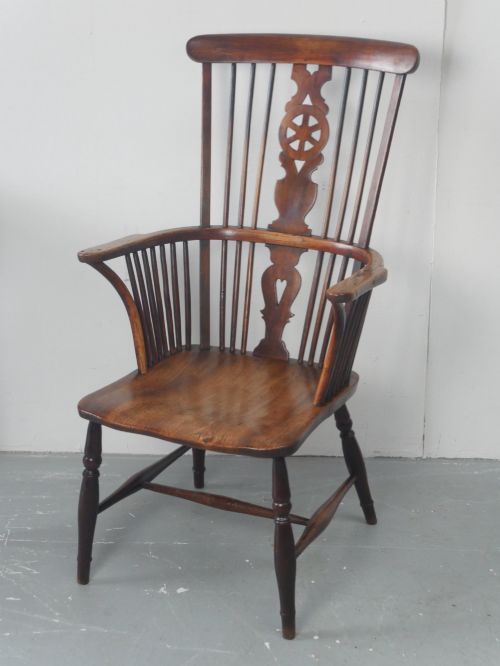
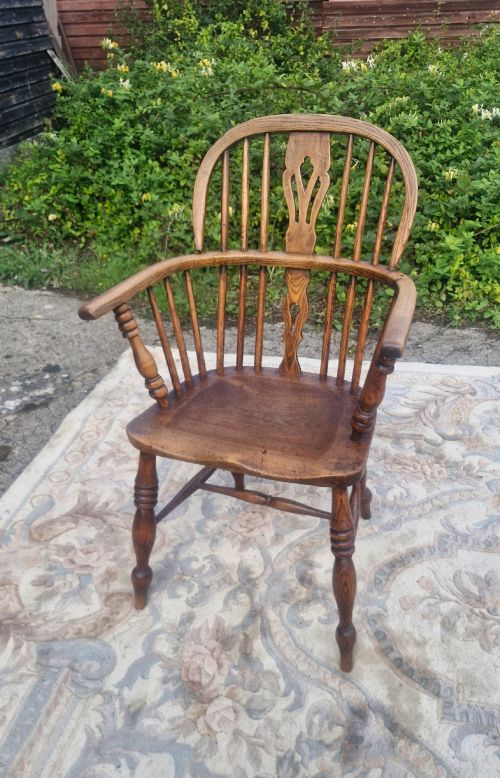
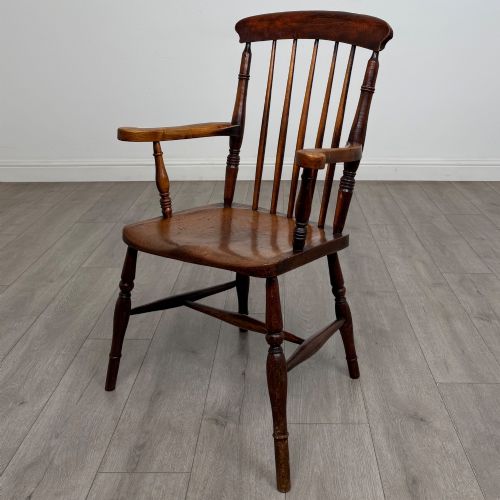
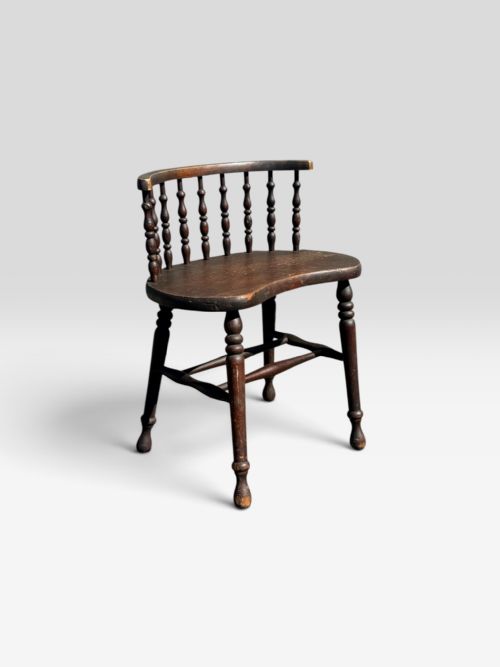
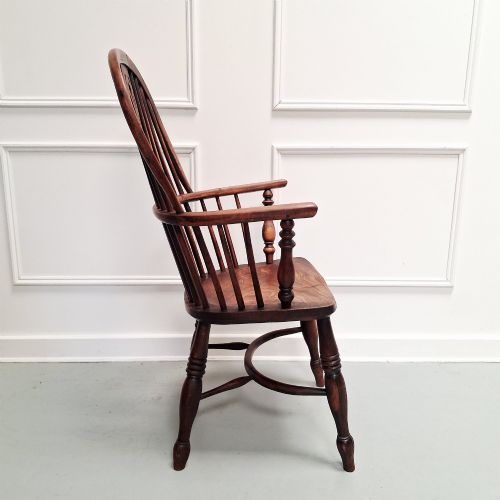
The version most commonly met on this page is the low-back or high-back Windsor armchair, often featuring a carved seat and spindle supports. Makers shaped these domestic seats for endurance, utilising regional timber combinations that survive through generations of active use.
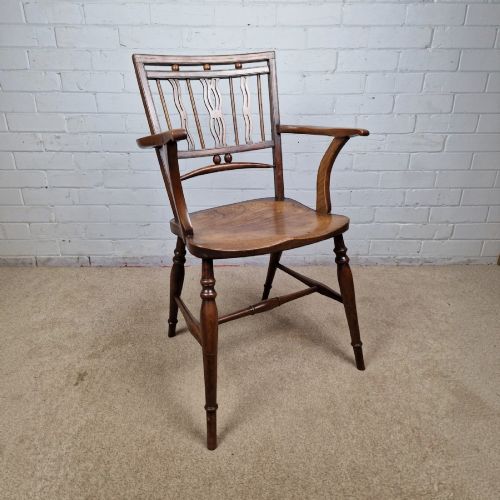
Examples span various vernacular styles such as Thames Valley, Oxford, and Gothic interpretations, reflecting local cabinet-making traditions. Buyers encounter everything from simple stick-back models to elaborately constructed wheel-back and spindle-back chairs.
Materials and Construction
Makers relied on native hardwoods, most frequently pairing elm seats with ash or beech for the spindles and legs. Yew wood appears in select pieces, prized for its natural grain and rich tone.
The traditional construction method involved boring holes directly into a solid slab seat to receive the legs and back stem. Wedges and stretchers, such as crinoline stretchers, locked the undercarriage into a rigid frame without metal fasteners.
Several chairs retain a solid elm seat shaped by countless hours of nineteenth-century sitting.
Distinctions in Quality
Quality rests upon the selection of timbers and the depth of the sculpted seat. A thicker, well-figured elm seat combined with balanced steam-bent arms elevates the standard of a chair.
Subtle details in the turning of the legs and the proportions of the spindle or comb-back dictate the aesthetic success of the piece. Original finish and a deep, undisturbed patina distinguish untouched regional examples from heavily restored ones.
J SPENCER
The Victorian Country Desk Chair Glossary
- Windsor chair
- A wooden chair built with a solid carved seat into which the back and legs are separately dowelled. This form represents the foundation of English vernacular seating.
- Smoker's bow
- A low-backed Windsor armchair with a continuous curved rail and arms, widely used in farmhouse parlours and offices. This variant offers compact comfort for writing at a desk.
- Crinoline stretcher
- A bowed connecting rail between the legs of a chair that strengthens the lower structure. It provides extra rigidity and mimics the hoopskirts worn during the period.
- Patina
- The surface sheen and colour developed over decades through use, polishing, and natural ageing. A good surface shows the genuine history of the wood.
- Thames Valley chair
- A distinct regional style of Windsor seating known for refined turnings and yew-wood construction. These pieces originate from workshops operating along the river system.
Victorian Country Desk Chair: Frequently Asked Questions
What is a smoker's bow?
A smoker's bow is a sturdy low-back Windsor armchair designed with a continuous curved armrail. These pieces were common in provincial offices, country houses, and rural drawing rooms.
They offer a compact seating profile while maintaining the robust construction typical of nineteenth-century vernacular furniture.
How do I identify a yew wood chair?
Yew wood displays a distinctive warm, reddish-brown tone with intricate grain patterns and occasional knots. It is denser and heavier than standard domestic timbers.
Chairs built from this material often command higher attention due to the scarcity and decorative quality of the wood.
Were these chairs used at desks?
Many sturdy country armchairs served double duty as writing seats in libraries and offices. Their supportive arms and solid wooden seats suited long hours of administration.
Historical listings frequently categorise these as captain's chairs or library chairs alongside standard dining forms.
What is a crinoline stretcher?
A crinoline stretcher is an arched wooden brace connecting the legs beneath the seat. It resembles the curved shape of nineteenth-century undergarments.
This structural addition prevents the legs from wobbling under heavy daily weight and adds significant rigidity.
How do I care for antique elm?
Elm is a durable wood that benefits from occasional feeding with a quality beeswax to maintain its moisture. Avoid placing the chair near direct heat sources or in fluctuating humidity.
Gentle dusting with a soft cloth preserves the original surface sheen and natural finish.