

Victorian Couch
A victorian couch brings nineteenth-century seating to a room, offering deep upholstery and carved wood frames for everyday sitting or reclining.

Victorian Couch
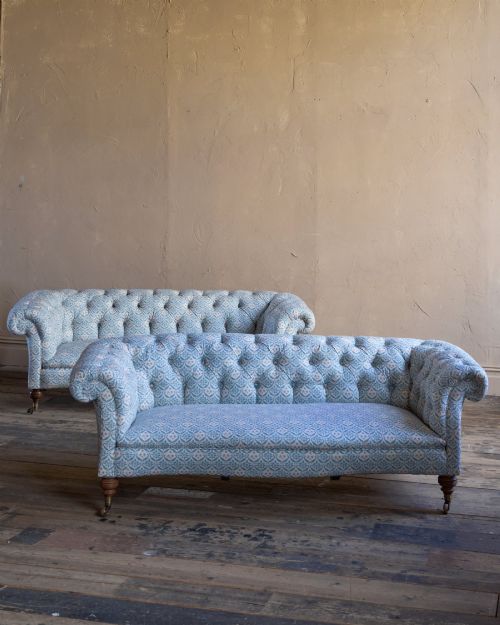
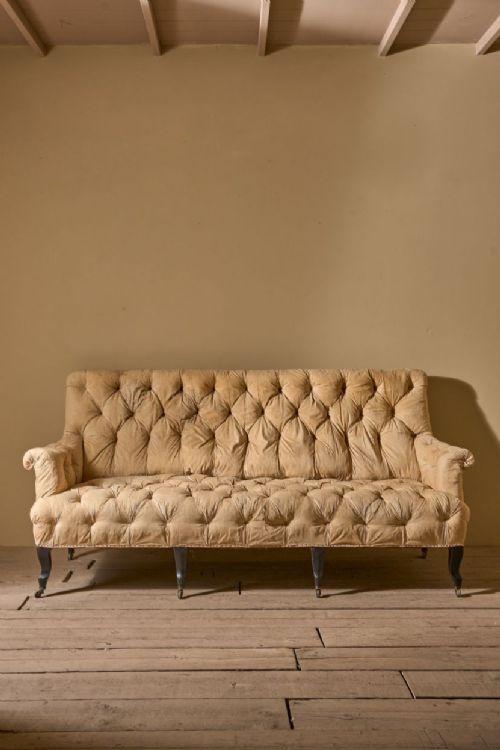
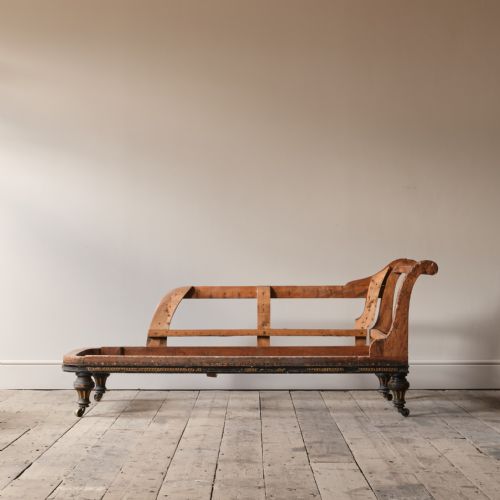
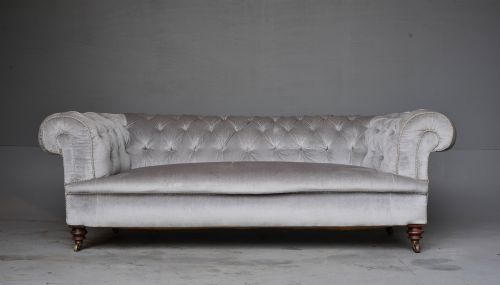
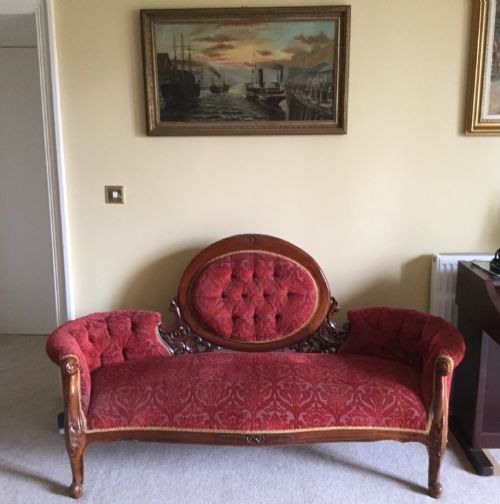
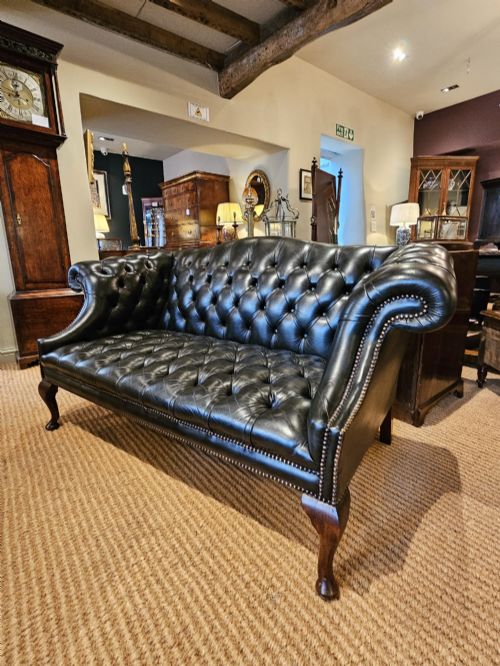
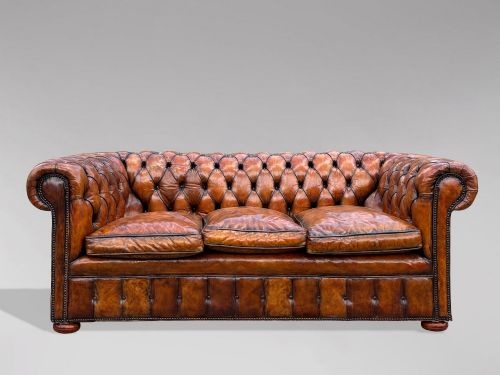
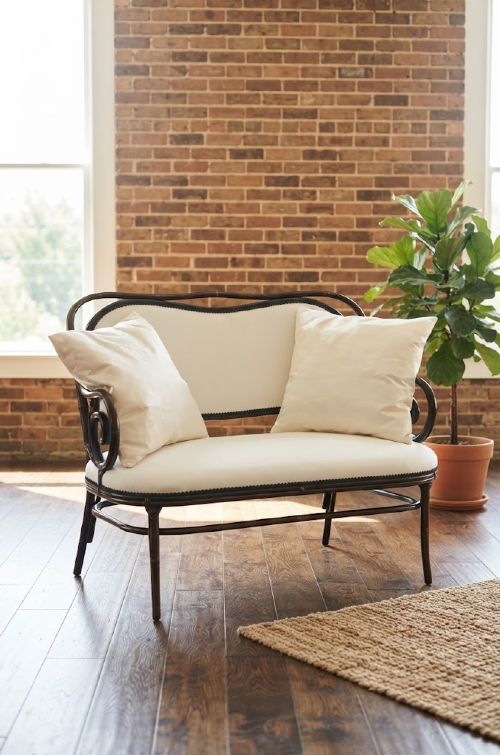
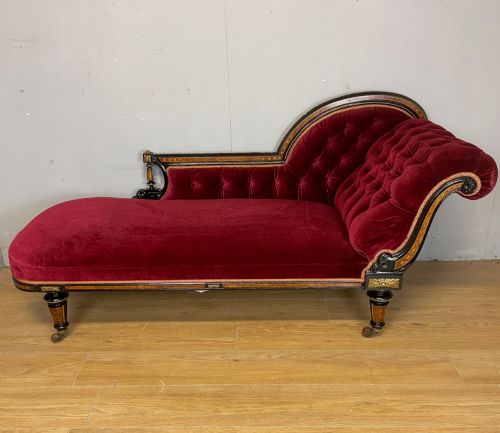
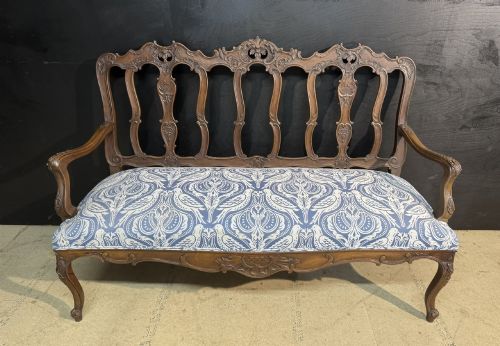
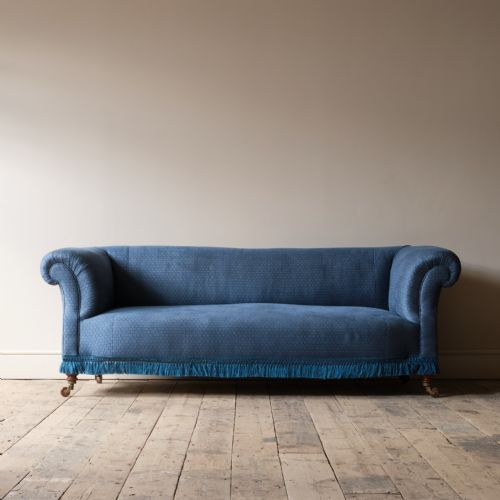
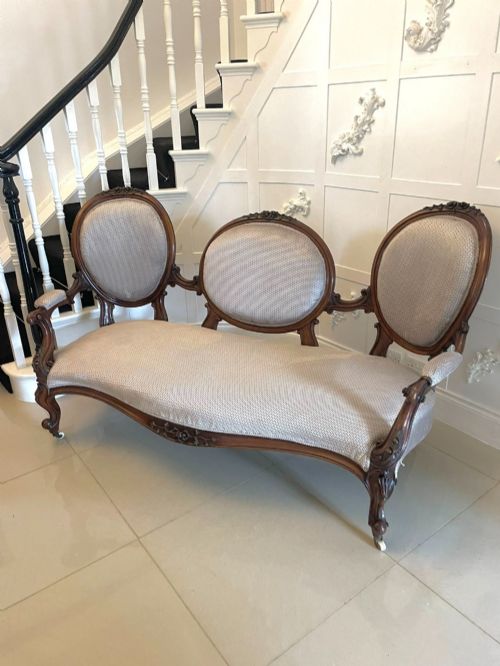
A victorian couch spans several forms across nineteenth-century styles, appearing as deep-buttoned Chesterfields, salon settees, and asymmetric chaise longues. The evidence shows these seating pieces emerging from the nineteenth century in various wood frames and upholstery styles, reflecting domestic comfort and formal entertaining.
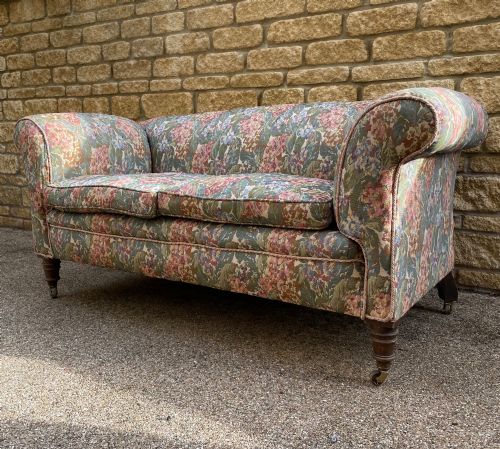
Buyers frequently encounter mahogany, walnut, and rosewood frames paired with leather, velvet, calico, or brocade. Forms range from two-seater drop-arm sofas and conversation seats to daybeds and double-ended couches, recording diverse domestic requirements of the period.
How they were made
Frames rely on solid hardwoods like mahogany, walnut, and rosewood, frequently shaped through carving, turning, or steam-bending as seen in bentwood examples. Inlaid panels, ormolu decoration, and brass fittings complement the timber structures.
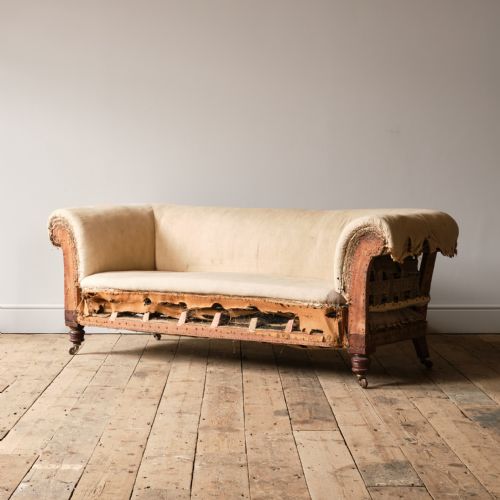
Upholstery techniques involve sprung bases paired with horsehair or deep pile fabrics, alongside buttoning, calico lining, and hand-stitched leather. Makers incorporated intricate woodwork alongside robust internal webbing to support daily use.
Conversation seats allowed two people to chat face-to-face without craning their necks during crowded Victorian gatherings.
What varies in quality
The integrity of the timber frame and the crispness of hand-carved details separate standard production from superior examples. Finely figured mahogany and walnut veneers, alongside precise marquetry inlay, indicate careful workshop execution.
Originality of internal springing, upholstery materials, and historical maker stamps elevate individual pieces. Substantial joinery and authentic period textiles maintain the structural and aesthetic integrity expected by collectors.
Holland and Sons·Thonet·Hampton and Sons·Howard and Sons·C Hindley and Sons
The Victorian Couch Glossary
- Chaise Longue
- An elongated chair form designed for reclining, featuring a partial backrest and single armrest. These pieces combine seating and daybed functions.
- Chesterfield
- A deep-buttoned upholstered sofa featuring rolled arms of the same height as the back. Traditional versions utilise leather or heavy fabric coverings.
- Settee
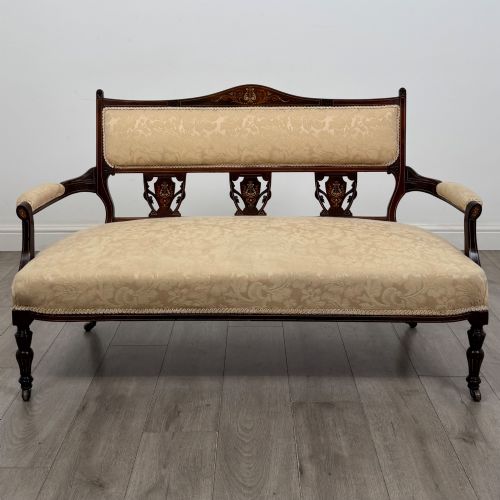
- A medium-sized upholstered bench with a back and arms, designed to seat multiple people. They appear in various stylistic revivals throughout the nineteenth century.
- Marquetry
- Decorative woodwork formed by fitted veneers of different timbers and materials. Artisans apply these patterns onto cabinet surfaces and structural panels.
- Ormolu
- Gilded bronze mounts applied to furniture for decorative effect. This technique highlights structural corners and stylistic motifs on high-status pieces.
Victorian Couch: Frequently Asked Questions
How do I identify a victorian couch?
Examine the timber frame, upholstery style, and construction methods to determine the period. Nineteenth-century pieces typically feature solid mahogany or walnut structures combined with traditional sprung foundations.
Look for stylistic markers such as spoon-backs, buttoned leather, or carved revival details that align with nineteenth-century manufacturing techniques.
What is the difference between a settee and a couch?
Settees generally offer upright seating for multiple people with structured backs and arms. Couches and daybeds often incorporate asymmetrical or reclining elements intended for lounging.
Historical terminology frequently overlaps in nineteenth-century records, where sellers used both terms interchangeably for domestic seating.
Are these pieces suitable for daily use?
Many nineteenth-century seating pieces accommodate regular sitting when supported by sound internal webbing and sturdy frames. Professional reupholstery often reinforces historical sprung bases for modern living.
Consider the depth and height of the seat to ensure it matches your intended room layout and comfort preferences.
How should I care for leather upholstery?
Maintain antique leather surfaces by applying appropriate conditioning balms to prevent drying and cracking. Keep pieces away from direct sunlight and heat sources to preserve the finish.
Dust regularly with a soft, dry cloth and address spills immediately using gentle, non-abrasive cleaning methods.