
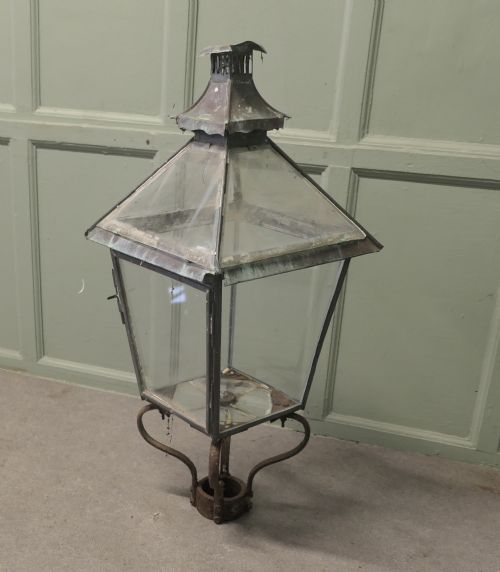
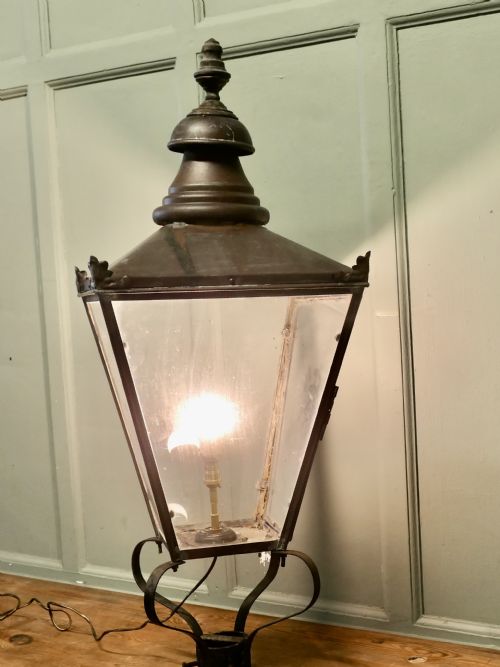
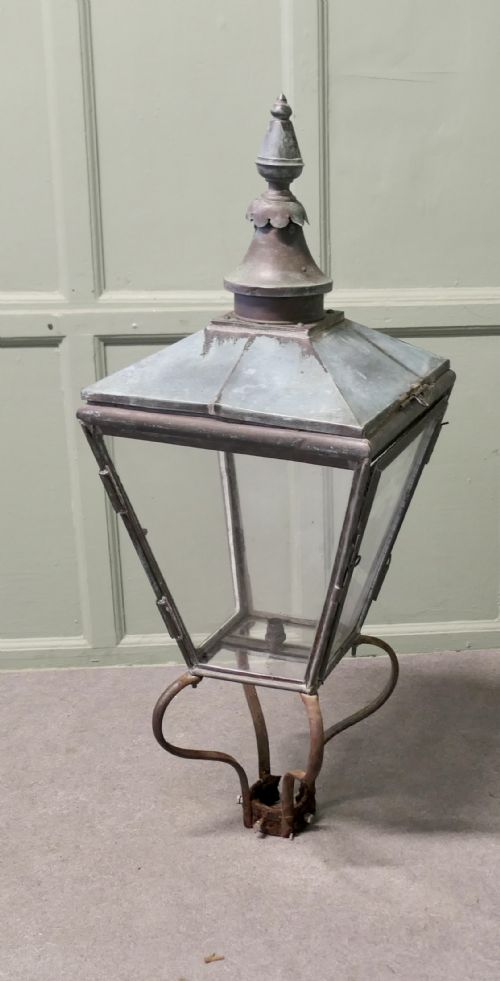
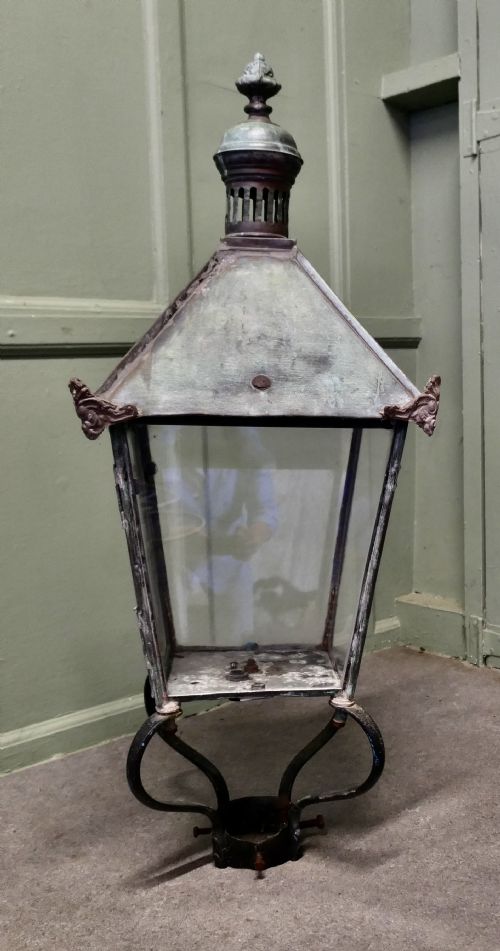
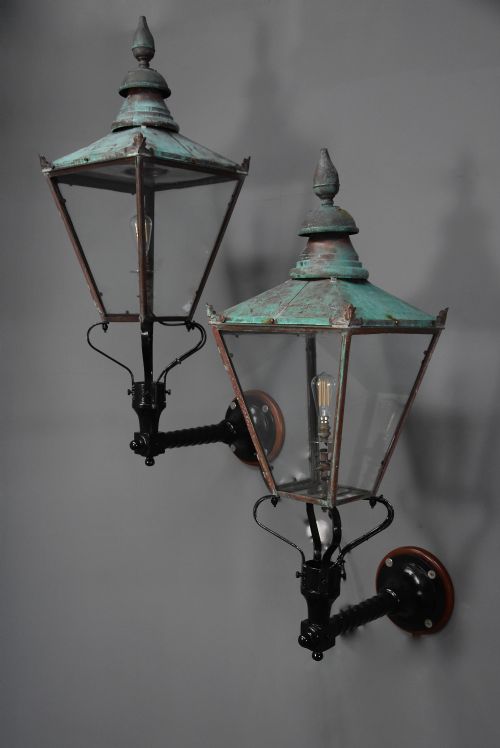
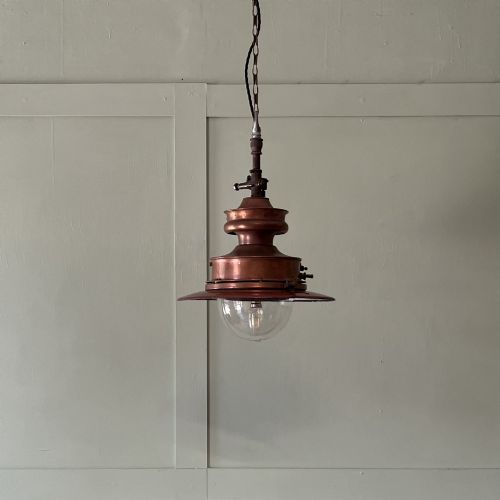

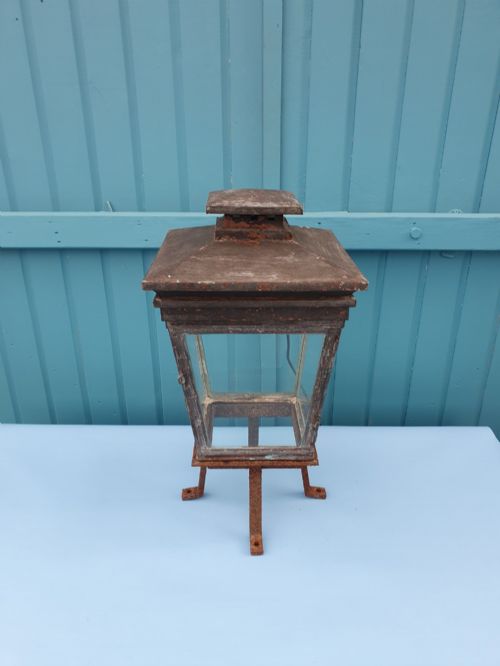


Victorian Copper Lantern
These robust victorian copper lantern pieces offer genuine period character and illumination, built to endure outdoors or anchor a hall.
Victorian Copper Lantern
A victorian copper lantern brings functional historical lighting into modern spaces, drawing primarily from street lights, coach-house wall brackets, and railway carriage lamps. The selection leans heavily toward substantial street lamps and outdoor wall lights designed for exterior endurance.
Forms span large hanging pendants, gate post lights, corner fittings, and garden cloches constructed from sturdy metal frames. Most examples originate from the nineteenth century into the early twentieth century, carrying the heavy patination of outdoor service.
Buyers encounter architectural formats intended to cast wide illumination across porches, carriage drives, and high ceilings. These utilitarian objects bridge domestic interiors and municipal infrastructure from an era of gas and early electric conversion.
Construction and materials
Makers built these pieces using sheet copper combined with iron and cast brass for structural rigidity. Glazing relied on thick panes held securely within metal framing to withstand weather exposure.
Surfaces developed natural verdigris patinas over decades of outdoor placement, while some retain traces of early paint. Metal components were joined using traditional riveting and soldering techniques suited to heavy daily use.
Listings feature periods spanning the nineteenth century through the early twentieth century, alongside materials including wrought iron, cast iron, and quarter-inch glass.
Assessing quality and proportion
Superior examples display balanced architectural proportions, particularly in large street lights and paired bracket fixtures. The integration of decorative elements like spiral twist wall brackets or neo-classical cast details separates standard utility items from finer commissions.
The integrity of the original copper body and the retention of heavy glass panes dictate overall worth. Alterations from gas conversion or rewiring affect the physical integrity of the internal structure.
A Foster And Pullen Bradford·Gwr
The Victorian Copper Lantern Glossary
- Verdigris
- A green patina formed naturally on copper through atmospheric weathering over long periods. This chemical layer protects the underlying metal and signals authentic age.
- Gas conversion
- The adaptation of an antique lamp originally fuelled by gas to run on modern electricity. This process often involves retaining the historic burner housing while wiring internal bulb sockets.
- Coach-house lantern
- A wall-mounted light fixture historically placed beside carriage entrances to illuminate arriving vehicles. These pieces typically feature sturdy brackets and weatherproof housing.
- Railway carriage lamp
- A specialised portable lighting unit designed to mount inside or outside nineteenth-century train compartments. They are built compactly to endure vibration and constant motion.
Victorian Copper Lantern: Frequently Asked Questions
How do I install a victorian copper lantern?
Most hanging and wall-mounted versions require professional electrical mounting to handle their substantial weight and older wiring configurations.
Ensure your mounting surface can support heavy metal brackets before fixing outdoor or porch fixtures in place.
Can these lanterns be used outdoors today?
Many of these pieces were originally built as street lamps or coach-house lights designed for exterior weather exposure.
Check the current IP rating and sealing of converted electrical components to ensure safe continuous outdoor placement.
What is a gas conversion?
A gas conversion means the interior burner components of an antique lamp have been retrofitted to hold modern electrical lamp holders and wiring.
This allows historic fixtures to function safely in domestic settings while preserving the original exterior metalwork.
How do I clean verdigris without damaging the metal?
Verdigris is a natural weathered patina that collectors prize for documenting the age and history of the copper surface.
Gentle dusting with a dry cloth is recommended to preserve the aged finish rather than using harsh chemical polishes.