



Victorian Compactum Cupboard
These robust pieces known as a victorian compactum cupboard combine hanging space and drawer storage into one heavy item for the bedroom.
Victorian Compactum Cupboard
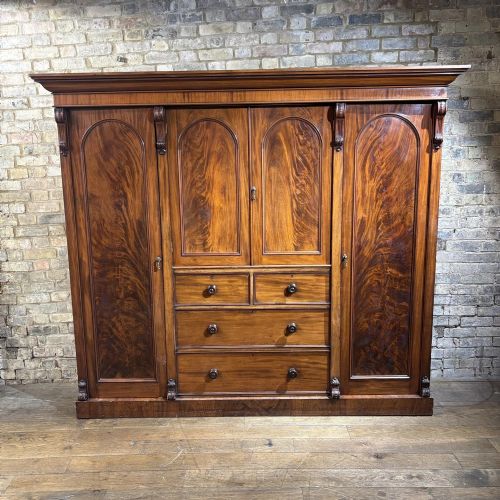
When you search for a victorian compactum cupboard, you encounter substantial bedroom storage designed to house a complete gentleman's or lady's wardrobe within a single footprint. These large items combine hanging compartments with internal drawers, linen presses, or sliding trays.
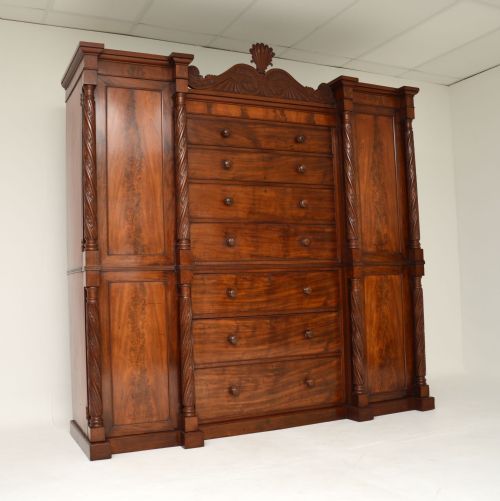
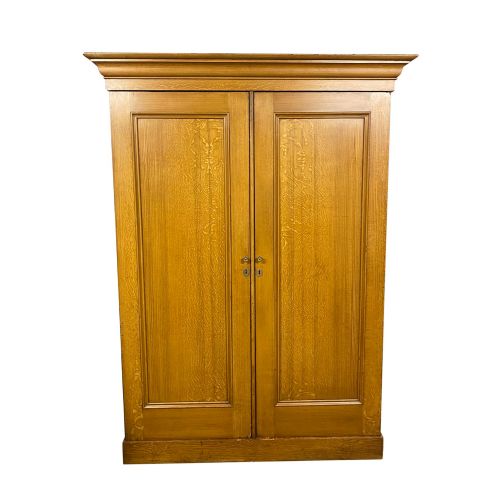
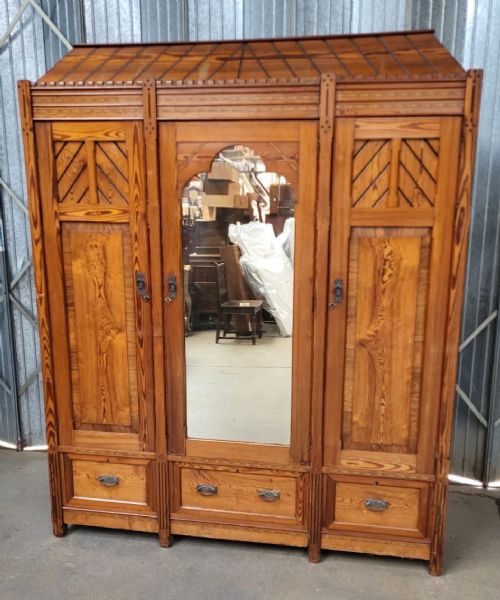
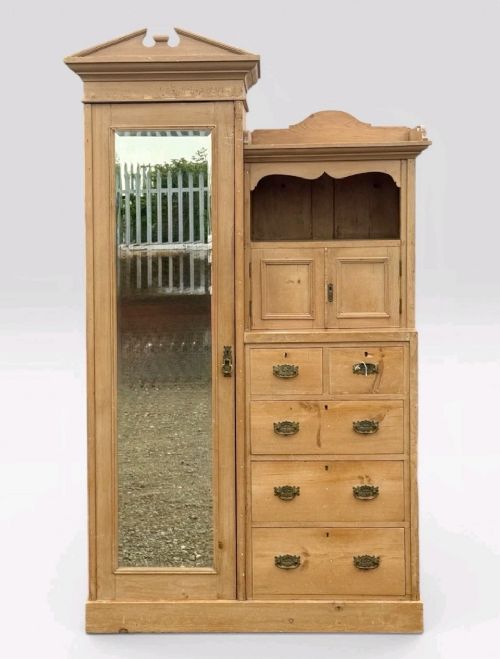
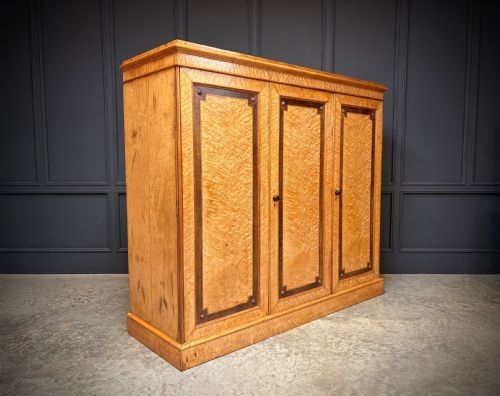
The versions appearing here span from the mid-nineteenth century through the late Victorian era, taking forms such as breakfront triple wardrobes, low configurations in birds eye maple, and combinations with scumble faux oak paintwork. Alongside standard mahogany and walnut, makers utilised pitch pine, pollard oak, and ash.
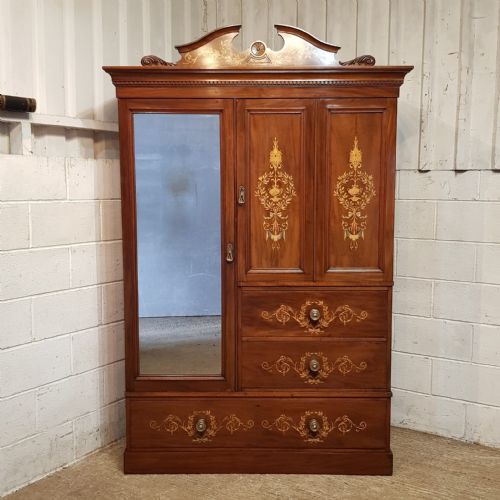
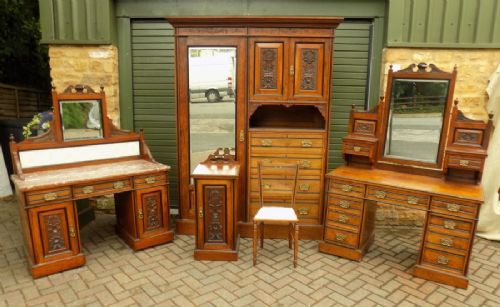
These architectural bedroom pieces frequently arrive as breakfront triple or four-door structures, occasionally incorporating mirrored doors or matching bedside cabinets. They stand as primary storage solutions from an era before fitted bedrooms became standard.
How they were made
Cabinet makers built these large carcases using solid foundational timbers like pine or ash, overlaid with figured veneers such as flame mahogany, burr walnut, and satin birch. Surface enrichment relied on intricate marquetry, decorative brass hardware, and specialised finishes including original scumble faux oak paintwork.
Internal components demanded careful carpentry, integrating sliding linen trays, compartmentalised drawer banks, and hanging rails within tight spaces. Large mirror glass panels frequently fitted into central doors, requiring sturdy framing to support the added weight.
Listings feature woods including mahogany, burr walnut, satinwood, pollard oak, ash, and pitch pine across Victorian and Edwardian periods.
What varies in quality
Quality rests upon the choice of timber veneer and the complexity of the internal configuration, moving from plain pine country pieces to highly figured flame mahogany and burr walnut triple wardrobes. Superior examples feature integrated drawers, sliding trays, and matching woodwork throughout.
The standard of carving, inlay work, and original hardware distinguishes fine workshop output from standard production. Well-executed breakfront mouldings and intact mirror glass add structural and visual refinement to the construction.
Maple and Co·Holland and Sons·Edwards and Roberts
The Victorian Compactum Cupboard Glossary
- Compactum
- A multi-functional wardrobe combining hanging space, drawers, and shelving within a single unit. This layout maximised bedroom storage in nineteenth-century homes.
- Breakfront
- A piece of furniture featuring a central section that projects forward from the flanking wings. This configuration added architectural depth to large wardrobes.
- Scumble
- A decorative paint technique used to simulate natural wood grain like oak over a simpler base timber. Artisans created translucent layers to mimic costly materials.
- Linen Press
- A tall cupboard traditionally used for storing folded textiles and garments on sliding internal trays. These often formed the central section of larger wardrobe combinations.
- Marquetry
- The art of applying decorative pieces of veneer to a structure to form intricate patterns or pictures. Craftsmen utilised contrasting woods to achieve tonal variety.
Victorian Compactum Cupboard: Frequently Asked Questions
How do I dismantle a large compactum?
These large wardrobes often break down into modular sections including a cornice, a plinth, hanging wings, and a central drawer unit. Removing the doors and unscrewing internal fixings allows for safer transport.
Working with a partner ensures heavy mirrored doors and solid timber panels are handled without damaging the original joints or glass.
What is the difference between a compactum and a wardrobe?
A standard wardrobe focuses primarily on vertical hanging space behind full-length doors. A compactum integrates dedicated drawer banks, linen slides, and smaller compartments alongside the hanging sections.
This multi-purpose design allowed owners to store folded garments, shirts, and accessories within the same footprint as their coats and dresses.
How do I care for burr walnut veneer?
Maintain the polished timber surfaces by applying a traditional beeswax sparingly and buffing gently with a soft cloth. Avoid placing these pieces in direct sunlight or near heat sources to prevent the delicate burr veneer from drying out.
Keeping room humidity stable protects the wood structure and prevents the decorative veneers from lifting over time.
Where were these cupboards placed in Victorian bedrooms?
These substantial items anchored the main bedroom wall, often positioned opposite the bed to serve as the primary focal point. Their scale required generous ceiling heights and wide floor spaces found in period properties.
Smaller low configurations were occasionally placed beneath windows or in rooms with restricted vertical clearance.