



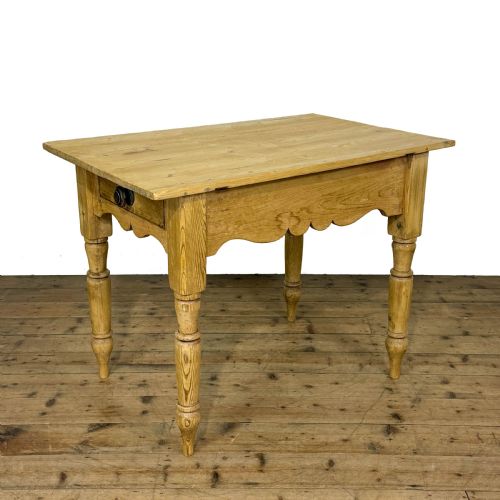
Victorian Compact Writing Desk
These Victorian compact writing desks are clever, space-saving pieces built for correspondence, housing stationery and drawers beneath sloping writing surfaces.
Victorian Compact Writing Desk
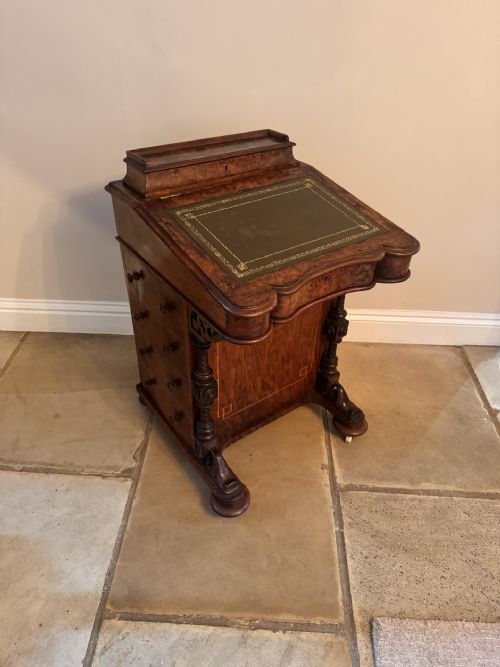
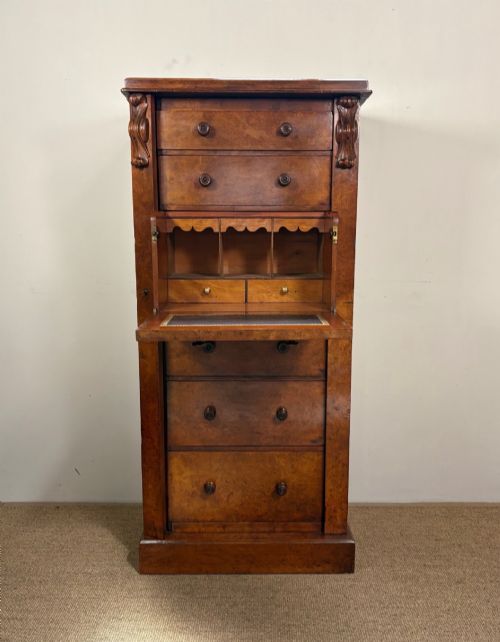
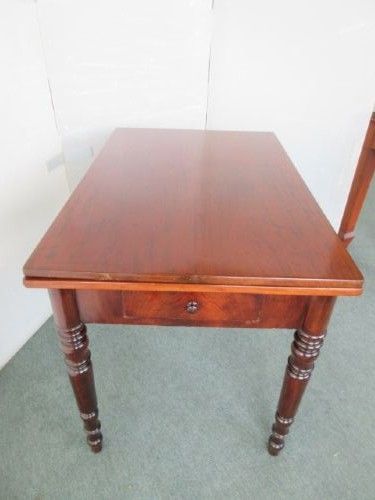
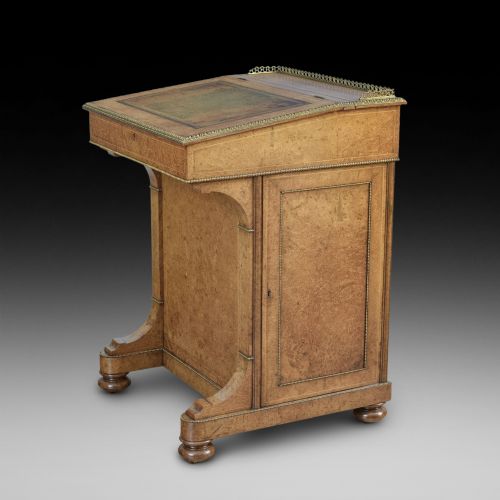
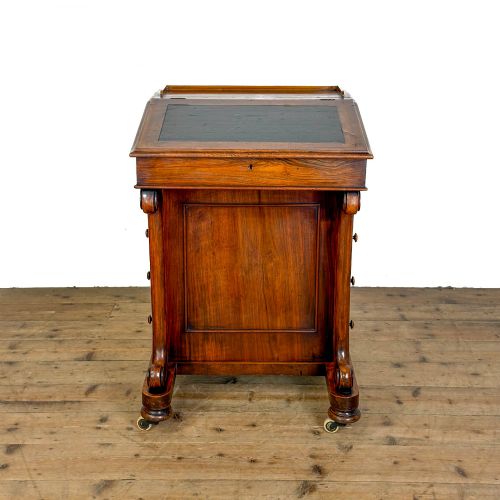
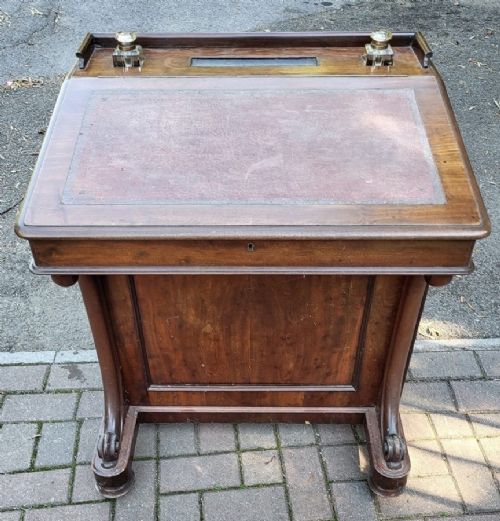
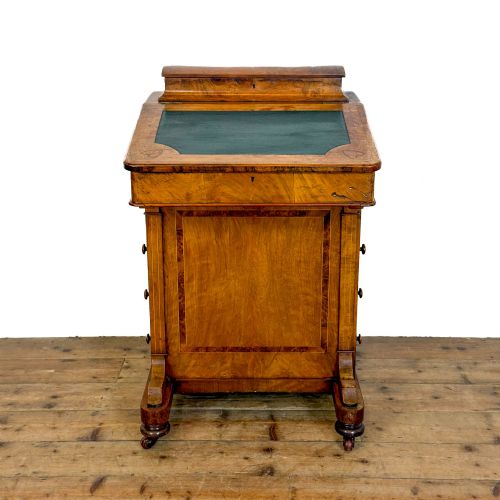
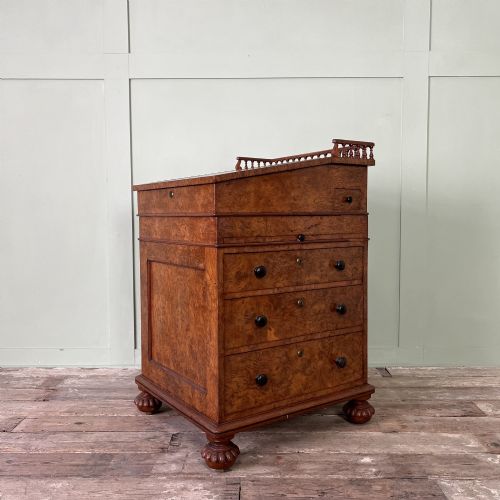
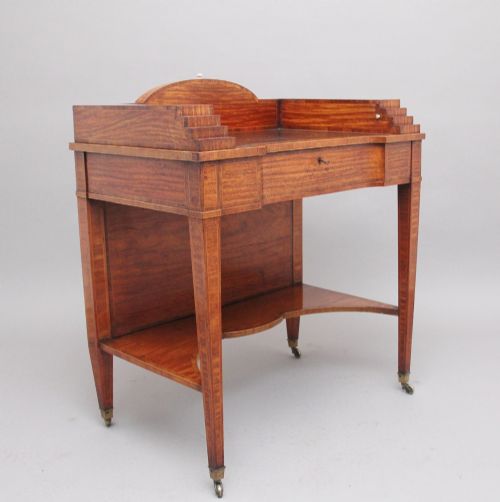
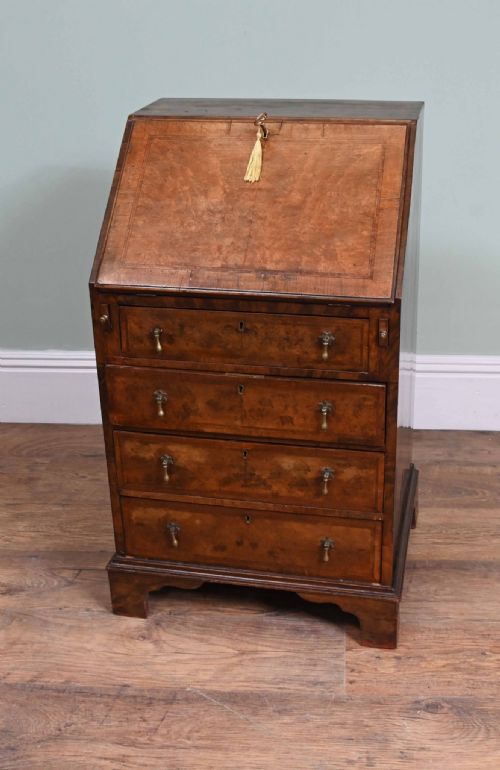
A Victorian compact writing desk is primarily represented on this page by the Davenport form, alongside small writing tables, bureaux, and secretaire chests. These pieces originate from the nineteenth century, spanning decades from the eighteen-fifties through to nineteen hundred. Makers designed them to occupy minimal floor space while offering functional storage for letters and writing implements.
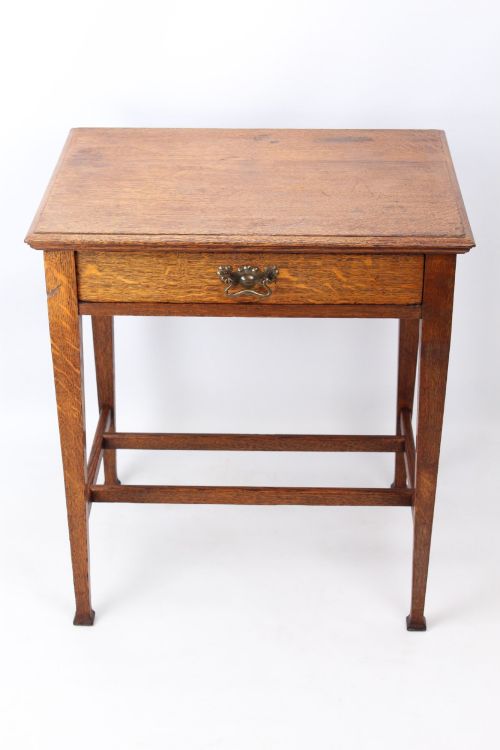
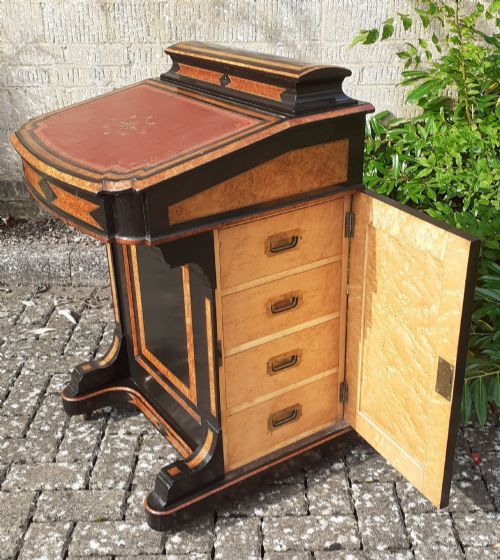
The prevailing form on this page is the Davenport desk, often constructed with a sloped, leather-inset writing surface above a pedestal of side drawers. Alongside these, buyers find related compact writing desks in walnut, mahogany, and rosewood, reflecting the domestic writing habits of the period. Forms range from simple Arts and Crafts oak items to elaborate marquetry-inlaid piano top variations.
How they were made
Cabinet makers utilised dense hardwoods such as mahogany, walnut, and rosewood as foundational structures, frequently applying burr walnut, amboyna, or satinwood veneers to create richly figured surfaces. Boxwood inlay, brass mounts, and ebony detailing often accentuate the exterior framework. Interiors frequently conceal satinwood compartments and small stationery drawers.
Writing slopes commonly feature inset panels of leather to provide a suitable surface for pen and ink use. Structural joinery of the period relies on traditional cabinet-making techniques, accommodating functional elements like pop-up stationery compartments, side-opening drawers, and draw-leaf mechanisms where applicable.
Periods represented span from the William IV era through the late Victorian period.
What varies in quality
Quality rests upon the choice of timber veneers and the precision of decorative inlay work, such as floral marquetry or boxwood stringing. Pieces exhibiting highly figured burr walnut or exotic amboyna veneers demonstrate superior material selection by the maker. The complexity of internal fittings, including concealed drawers and pop-up stationery cabinets, also separates standard items from finer examples.
Construction integrity and the retention of original brass hardware, fitted leather writing surfaces, and functioning locking mechanisms dictate the standing of an individual desk. The reputation of documented makers such as Gillows introduces distinct provenance, reflecting higher standards of workshop execution.
Gillow and Co·Gillows of Lancaster
The Victorian Compact Writing Desk Glossary
- Davenport desk
- A compact Victorian writing desk featuring a sloping top above a pedestal of side drawers. The form became popular in the nineteenth century for use in parlours and boudoirs.
- Burr walnut
- A prized timber cut from walnut tree growths, displaying swirling, highly figured grain patterns. Cabinet makers utilised these veneers on the exterior surfaces of finer desks.
- Marquetry
- Decorative woodwork where pieces of veneer are fitted into a ground to form floral or geometric patterns. Elaborate examples often appear on Victorian walnut furniture.
- Secretaire
- A piece of furniture containing a writing drawer or fold-down writing flap that conceals small pigeonholes and compartments. Versions on this page include chests and cabinets.
- Crossbanding
- A border strip of veneer laid around the perimeter of a panel so that the grain runs at right angles to the main centrepiece. This technique frames the top surfaces of quality desks.
- Amboyna
- An exotic, highly valued timber known for its mottled, speckled grain. Makers used it sparingly for luxury veneer work on nineteenth-century pieces.
Victorian Compact Writing Desk: Frequently Asked Questions
What is a Davenport desk?
A Davenport desk is a compact nineteenth-century writing cabinet featuring a sloping lid that lifts or opens for correspondence. Beneath the writing surface sits a pedestal typically fitted with small drawers.
These pieces were designed for domestic use in smaller rooms where a full-sized partner desk would prove too large. Their clever internal compartments kept writing materials neatly stored out of sight.
How do I distinguish walnut from mahogany?
Mahogany is a heavy, reddish-brown timber that often displays a straight or ribbon-like grain pattern. Walnut tends to show darker brown tones with more varied and flowing grain movement.
Victorian cabinet makers frequently used burr walnut veneers, which exhibit distinctive swirling patterns, whereas mahogany items often showcase the solid reddish timber characteristic of earlier nineteenth-century work.
Where were these desks placed?
Victorian compact writing desks suited drawing rooms, boudoirs, and private sitting spaces. Their modest footprint allowed them to sit against walls or in corners where floor space was limited.
Because many Davenports have drawers opening to one side rather than the front, they could be positioned beside a window or chair while remaining fully accessible.
What are pop-up compartments?
Pop-up compartments are concealed stationery boxes that rise from the top of certain Victorian desks when released by a hidden mechanism. They provided secure storage for paper and envelopes.
This ingenious mechanical feature allowed makers to maximise utility in a small piece of furniture without cluttering the main writing surface.