
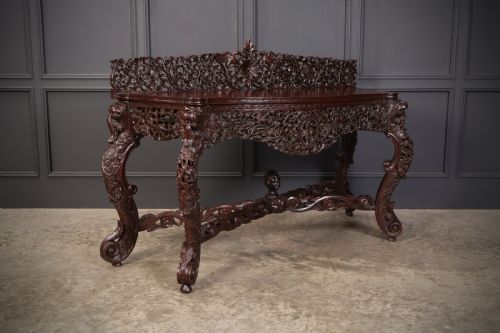


Victorian Colonial Sofa
A victorian colonial sofa brings rich timber and deep carving straight from nineteenth-century workshops into a modern room.
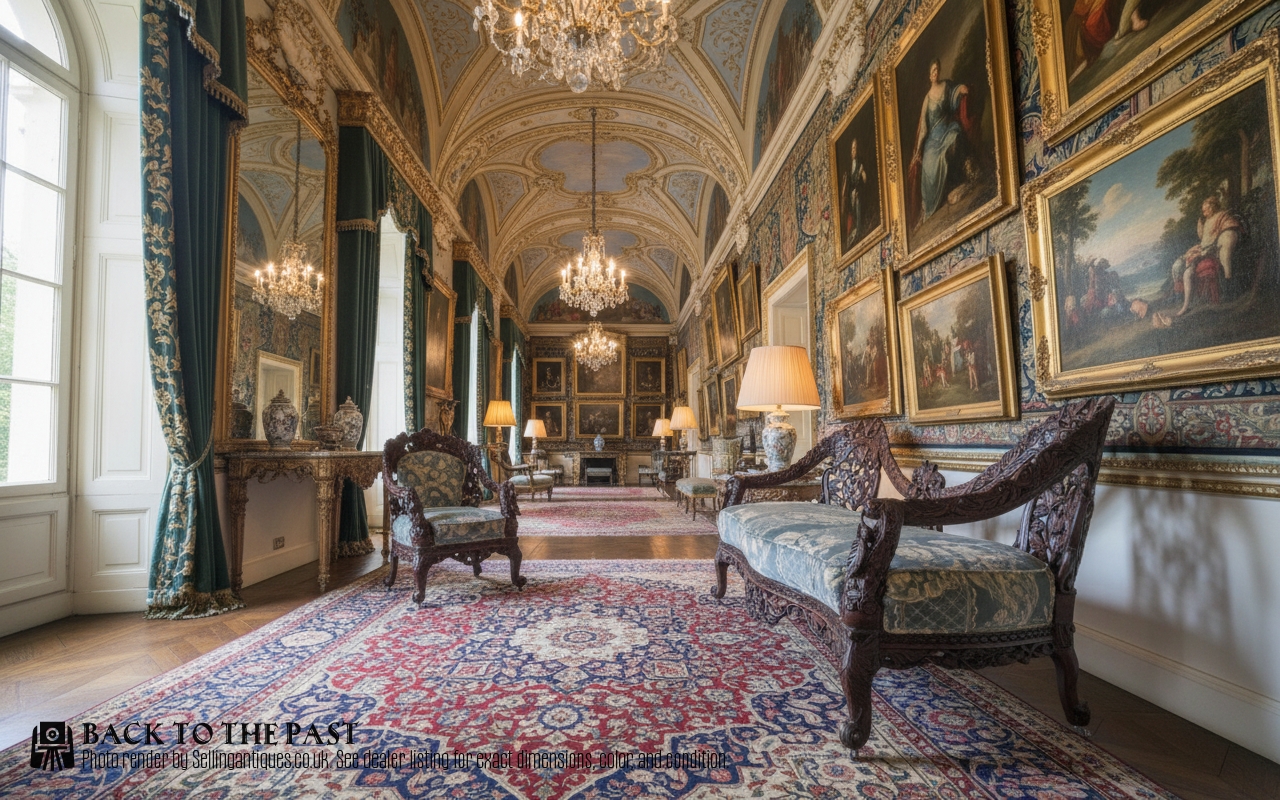
Victorian Colonial Sofa
When you search for a victorian colonial sofa, you are looking at nineteenth-century seating produced in British colonial territories and outposts, drawing on both European furniture forms and local craftsmanship. The pieces on this page span the 1840s up to 1880, encompassing styles such as Anglo-Indian and Anglo-Burmese.
You will encounter distinct seating forms including carved sofas, scroll back benches, chaise longues, and settees. These items combine the structural silhouettes popular in Britain with the dense timbers available in the regions where they were made.
The version you are most likely to meet on this page is a carved wooden frame featuring robust timbers and intricate hand-carved ornamentation. They serve as striking focal points in a drawing room or hallway, offering a tangible link to nineteenth-century design history.
How they were made
The makers of these pieces utilised dense, heavy hardwoods native to the colonies, recording rosewood, rio rosewood, padauk, ebony, teak, and general hardwood in their construction. These timbers were selected for their ability to hold deep, crisp hand-carving without splitting or losing structural integrity over decades of use.
Upholstery and natural materials such as rattan cane appear frequently on seating forms, providing contrasting texture and resilient support within the wooden frames. Cabinetmakers combined traditional joinery with elaborate surface carving, often executed in high relief across crest rails, arms, and legs.
The furniture styles recorded span Anglo-Indian, Anglo-Burmese, and Regency influences.
What varies in quality
The standard of carving determines much of the separation between average and exceptional pieces, distinguishing fluid, deeply undercut foliage from stiff, shallow work. The crispness of the chisel marks and the symmetry of the scrolling elements reveal the confidence of the regional artisan.
Choice of timber also governs quality, with dense rio rosewood or finely figured padauk commanding greater presence than standard mixed hardwoods. The original integration of cane seating and the structural rigidity of the frame complete the assessment of a piece.
The Victorian Colonial Sofa Glossary
- Anglo-Indian
- Furniture made in India during the British period, combining British furniture forms with traditional Indian carving techniques.
- Padauk
- A heavy, durable tropical timber with a warm reddish hue, frequently utilised in nineteenth-century colonial cabinetmaking.
- Chaise Longue
- An upholstered sofa shaped with an elongated seat for reclining, popular in nineteenth-century drawing rooms.
- Cane Seating
- Woven rattan material used to form breathable seats and backs on chairs, benches, and lounges.
- Rio Rosewood
- A dense, highly figured Brazilian rosewood sometimes imported and utilised in high-status colonial furniture commissions.
Victorian Colonial Sofa: Frequently Asked Questions
What is a victorian colonial sofa?
A victorian colonial sofa is a nineteenth-century seating piece produced in British colonies like India or Burma, merging British furniture shapes with local artisan carving.
These pieces typically feature dense tropical timbers such as rosewood or padauk, and often include detailed floral or scroll motifs carved directly into the solid wood.
How were these sofas used?
These sofas were utilised as principal seating and lounging furniture in the formal rooms of British colonial residences and grand homes back in Britain.
Their substantial timber frames and cane panels were specifically suited to warmer climates, offering both durability and comfortable airflow in domestic settings.
How do I live with one?
Living with a colonial sofa involves placing it where the carved wooden details and rich timber tones can be properly seen, away from direct heat sources.
Keep the dense hardwoods nourished with appropriate wax and treat any cane components with care to maintain their tension and natural flexibility.
How do I date these pieces?
Dating relies on examining the timber species, the tool marks left by the carver, and the stylistic crossover between Regency proportions and later Victorian tastes.
Pieces often point toward the mid-to-late nineteenth century, specifically spanning the decades from 1840 to 1880 as recorded in colonial workshops.