


Ornate Settee
An ornate antique settee brings a dramatic focal point to a room, offering grand historic seating shaped by diverse global aesthetics.
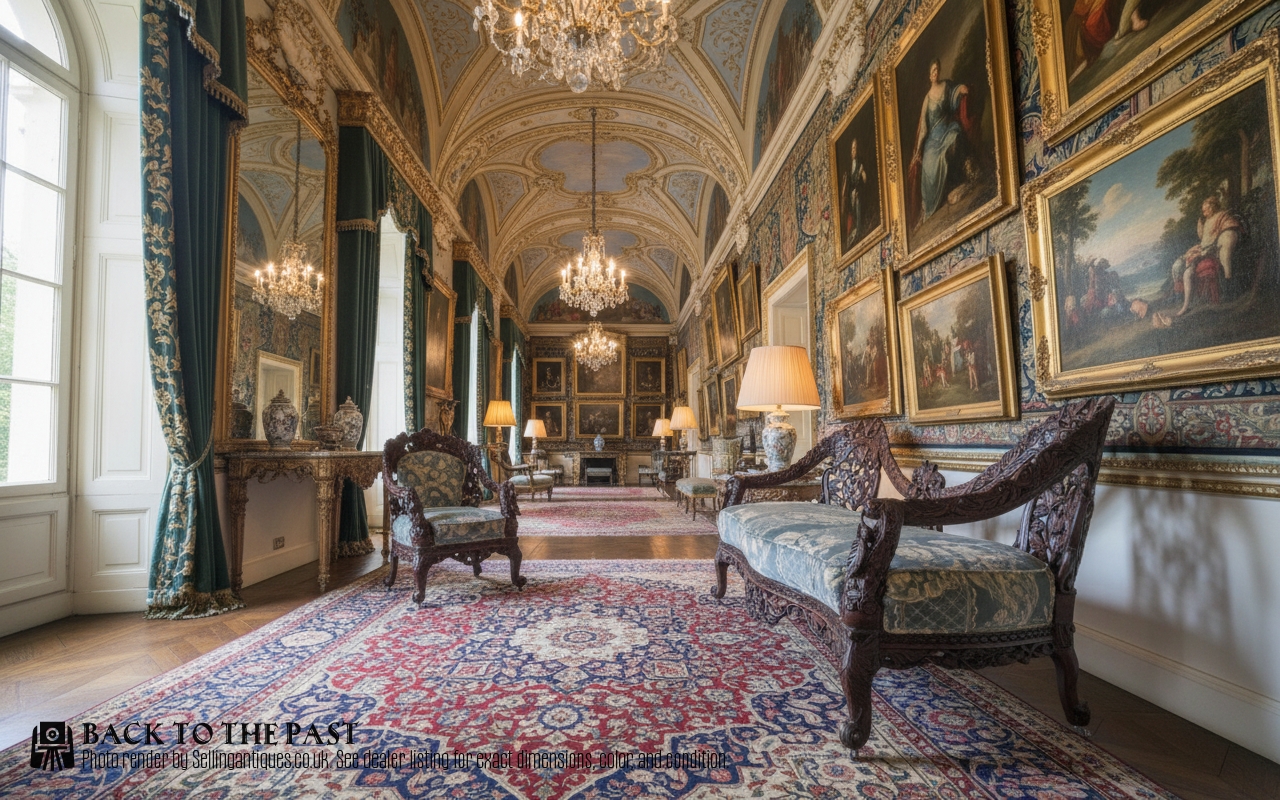
Ornate Settee
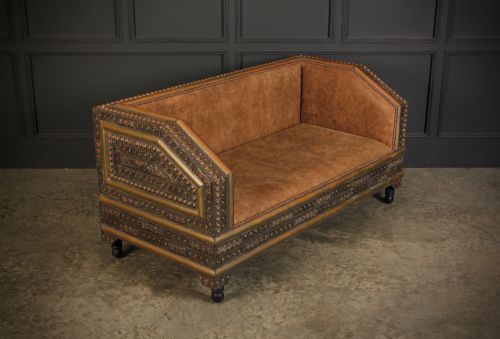
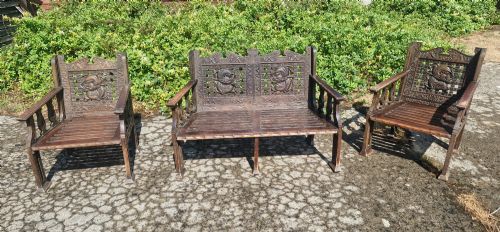
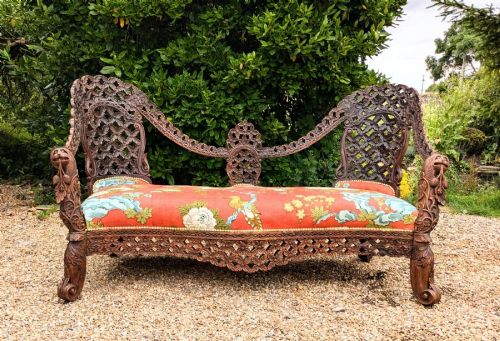
When you search for an ornate antique settee, you encounter a wide array of seating designed for both interior reception rooms and outdoor garden spaces. These pieces span multiple centuries, ranging from eighteenth-century colonial commissions to Victorian revival parlour pieces and twentieth-century conservatory furniture.
The selections on this page incorporate distinct regional styles such as Anglo-Indian, Venetian Rococo, Chippendale revival, and nineteenth-century Viennese designs. Forms vary from single sofas and canapes to multi-piece suites, veranda benches, and garden seating.
You are most likely to meet nineteenth-century examples and Victorian frames carved from mahogany or teak, alongside heavier colonial seating originating from India and Ceylon. Each piece reflects the decorative tastes of its specific period, utilising elaborate woodwork and formal silhouettes.
Materials and construction methods
Makers utilised dense hardwoods such as teak, mahogany, padauk, and walnut to build sturdy frames capable of supporting intricate, deep relief carvings. These timbers were often sourced locally or imported during colonial periods, providing a durable foundation for elaborate regional craftsmanship.
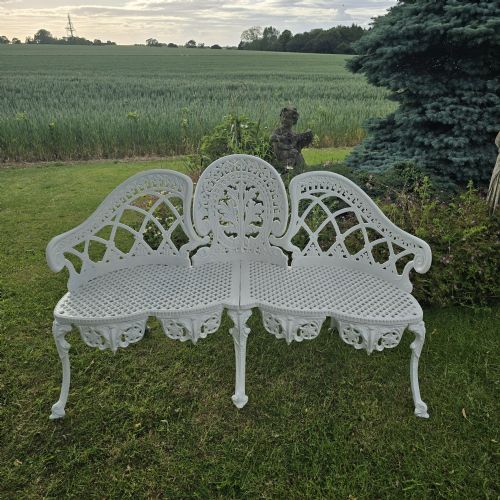
Surface ornamentation relied on hand-carved floral and scrolling motifs, polychrome paint finishes, and occasional enamel mounts. Outdoor variants incorporated cast iron or cast metal to withstand weathering while maintaining decorative curves.
Upholstery historically involved traditional stuffing methods paired with diverse textiles like velvet and patterned fabric, though many surviving examples have undergone refurbishment or replacement over the decades.
Several settees survived decades of colonial humidity and conservatory dampness only to retire in modern central heating.
Factors determining quality and craftsmanship
Quality in an ornate antique settee is largely defined by the depth, crispness, and complexity of the hand-carving across the wooden frame. Superior examples demonstrate fluid, uninterrupted lines in styles such as Rococo revival or Venetian Rococo, where every scroll and motif appears deliberate and balanced.
The selection of timber significantly impacts the integrity of the piece, with dense tropical hardwoods and well-seasoned European walnuts holding intricate details far better than softer alternatives. Furthermore, the cohesion of a multi-piece suite or the originality of surface treatments like polychrome paint distinguishes exceptional workshops from standard production.
The Ornate Settee Glossary
- Polychrome
- Decorated in multiple colours, often applied to wood or plaster surfaces. This technique creates vibrant, painted ornamentation seen in Venetian pieces.
- Revival
- A stylistic movement adopting historical design vocabulary from earlier centuries. Chippendale and Victorian revival pieces reinterpreted past aesthetics with nineteenth-century methods.
- Padauk
- A heavy, durable tropical hardwood prized for its rich reddish-brown colour. It frequently appears in colonial furniture from India.
- Conservatory suite
- A matched group of seating designed for light-filled glass rooms or verandas. These suites often incorporate lighter wood frames and cane or cushion seating.
Ornate Settee: Frequently Asked Questions
Where were these settees originally placed?
These pieces served primarily in formal reception rooms, parlours, and drawing rooms of large country houses and urban residences. Garden benches and veranda seats were similarly positioned for outdoor leisure.
Over time, many of these settees transitioned into sunrooms, conservatories, or modern living spaces as decorative focal points.
How do I distinguish Victorian revival from original pieces?
Distinguishing the period often relies on examining the tool marks, timber ageing, and construction joinery hidden beneath the frame. Revival pieces from the nineteenth century adopted eighteenth-century motifs like Chippendale carvings.
Consulting the specific details recorded in the listing helps determine whether a settee originates from the original era or a later revival movement.
What defines Anglo-Indian furniture style?
Anglo-Indian furniture combines traditional British furniture forms with intricate indigenous Indian carving techniques. Cabinetmakers in regions like Bombay and Ceylon utilised local timbers such as teak and padauk.
These pieces often feature dense floral relief work and deep mouldings reflecting cross-cultural design exchanges during the nineteenth century.