
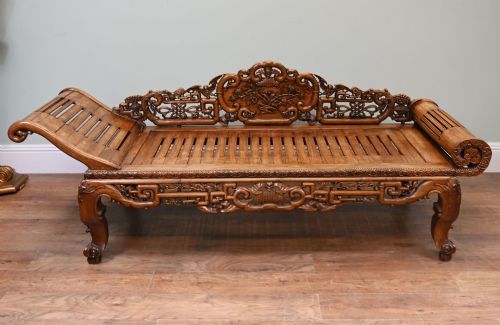


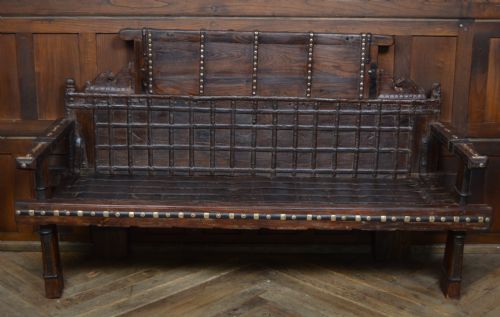


Carved Hardwood Daybed
These carved hardwood daybed pieces offer solid seating and sleeping forms, bringing regional joinery and dense timbers into modern rooms.
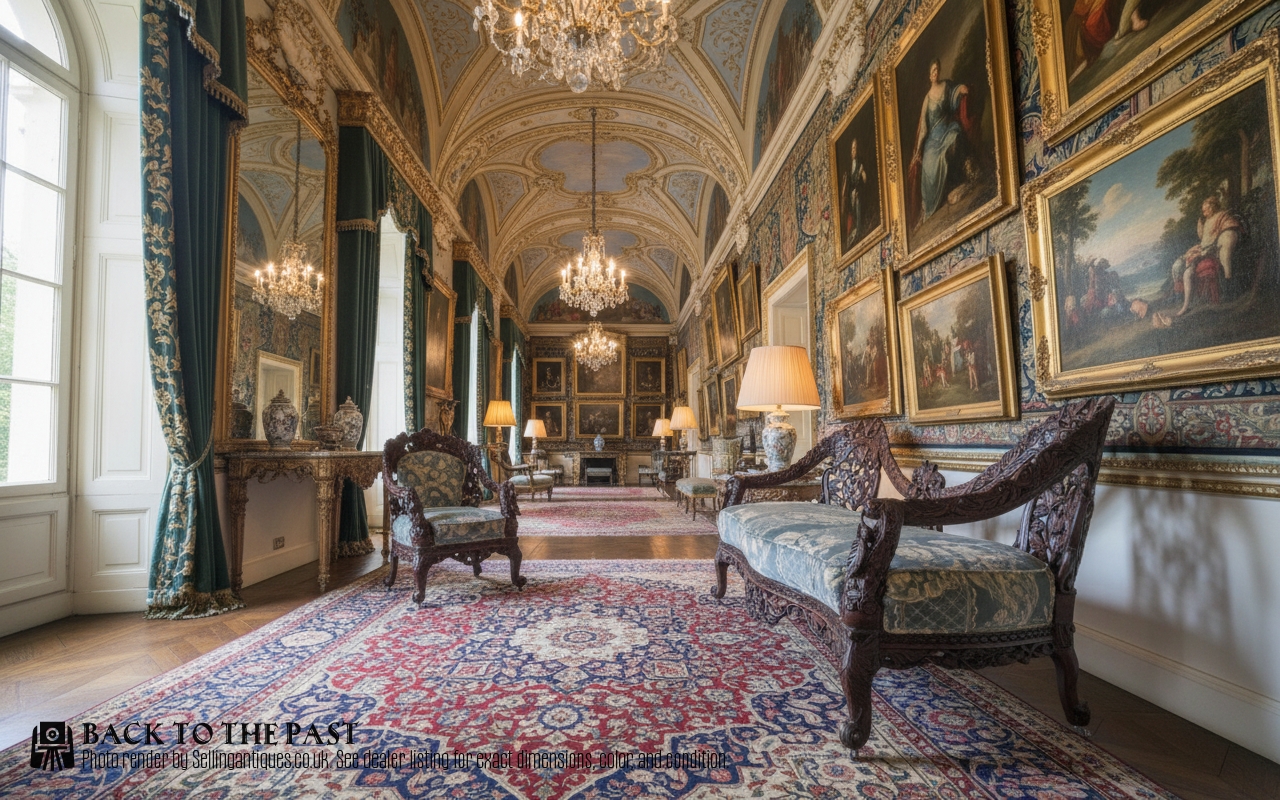
Carved Hardwood Daybed
When searching for a carved hardwood daybed, buyers encounter a mix of regional forms spanning the nineteenth and early twentieth centuries. These pieces range from Chinese Qing Dynasty scroll-end platforms and Anglo-Indian colonial settees to African ceremonial beds and Moorish window seats.
The domestic versions most frequently met on this page combine dense timber frames with detailed carving, cane panels, or rattan seating surfaces. Many retain low profiles, deep seats, and integrated armrests suited for lounging or display.
Origins vary across diverse traditions, encompassing Chinese hardwood furniture, Anglo-Indian craftsmanship, and African tribal objects adapted for contemporary interiors. Each geographical style employs distinct structural motifs and timber selections typical of its workshop traditions.
Construction and materials
Makers utilised dense timbers such as huali wood, teak, and general hardwoods capable of supporting intricate hand-carved relief work and structural joints. These sturdy woods provided the necessary tensile strength for daybeds, benches, and low tables without requiring excessive bulk.
Secondary materials like cane and rattan frequently form the seating or panel inserts, woven tightly to offer flexible support within rigid wooden frames. Occasional brass fittings, marble inserts, and fabric upholstery add contrasting textures and functional reinforcement to the designs.
The furniture styles represented across the page include Qing Dynasty, Moorish Revival, Anglo-Indian Colonial, and African tribal traditions.
Judging quality and execution
Quality rests primarily in the crispness and depth of the hand carving, where skilled execution defines the clarity of dragons, scroll ends, and geometric patterns. Superior examples display balanced proportions and tight joinery that endure decades of shifting humidity.
The selection of timber significantly influences the overall integrity of the piece, with dense grain and uniform colour marking higher grades of hardwood. Condition of integrated elements like cane panels or brass accents further separates standard utility pieces from finer decorative works.
The Carved Hardwood Daybed Glossary
- Hardwood
- Timber derived from broad-leaved trees, known for density and durability. These woods resist denting and support intricate carving.
- Cane
- Woven material stripped from the rattan palm, used for resilient seating surfaces. It provides flexibility and breathability within wooden frames.
- Kang
- A traditional heated sleeping platform in Chinese homes, often adapted as a low table or daybed. These low-profile forms feature distinctive scroll ends.
- Settee
- A medium-sized upholstered or wooden bench with a back and arms. This form bridges the gap between chairs and larger daybeds.
Carved Hardwood Daybed: Frequently Asked Questions
How do I style a daybed?
Position the piece against a neutral wall or use it as a low room divider to showcase its carved back and arms. Layer the deep seat with simple linen cushions to maintain comfort without obscuring the timber frame.
Keep surrounding furniture minimal to let the regional joinery remain the visual focal point of the space.
Are these daybeds comfortable for sleeping?
Most historic daybeds feature firm wooden platforms or supportive cane webbing designed primarily for daytime reclining or sitting. Adding a custom mattress or pad transforms the firm surface into a practical guest bed.
Verify the internal length and width dimensions before adding bedding, as historical proportions often run shorter than modern standards.
How do I care for hardwood furniture?
Dust the carved surfaces regularly with a dry cloth to prevent dirt accumulation in recessed details. Avoid placing timber pieces near direct heat sources or strong sunlight to prevent splitting.
Apply a microcrystalline wax sparingly once or twice a year to nourish the timber grain and protect the finish.
Can these pieces function as coffee tables?
Lower platform designs and ceremonial beds adapt easily into large coffee tables within spacious sitting rooms. Their sturdy hardwood construction easily supports books, trays, and decorative objects.
Ensure the height matches your existing seating layout before repurposing a traditional daybed into a central table.