


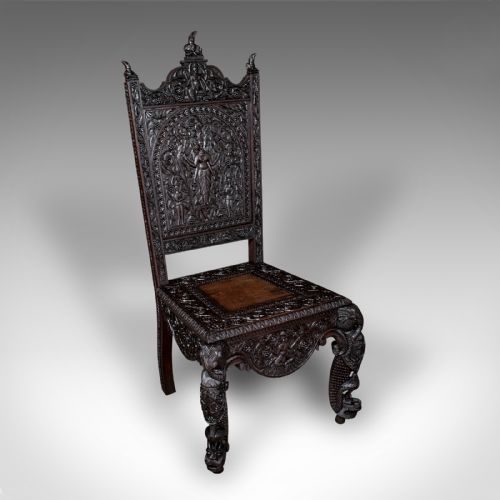


Victorian Colonial Chair
A victorian colonial chair brings heavyweight timber, rattan cane and deep regional carving straight from nineteenth-century British overseas outposts into a modern interior.
Victorian Colonial Chair
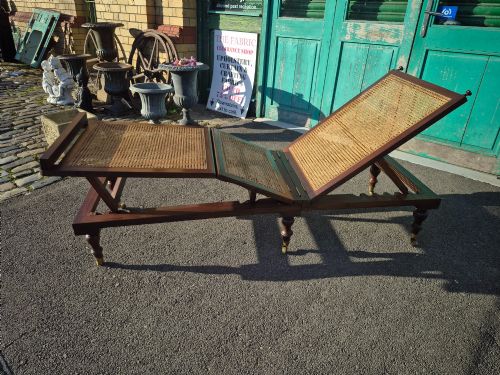
When you search for a victorian colonial chair, you encounter robust seating shaped by nineteenth-century trade and travel across the British Empire. These pieces range from substantial planters' chairs and daybeds to carved armchairs and dining seats.
The versions most commonly met on this page originate from regions such as India, Ceylon and Burma, created during the Victorian and Regency periods. Local workshops utilised dense native timbers to build furniture suited to tropical climates.
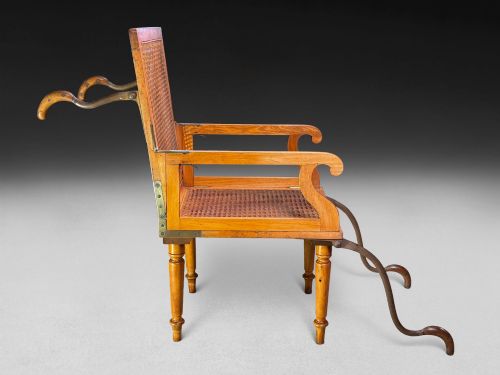
Forms vary from folding campaign seats designed for portability to ornate veranda chairs featuring elaborate carved woodwork. Dining chairs, side chairs and heavy armchairs complete the range of forms available.
Materials and construction
Construction relies heavily on dense tropical hardwoods, notably teak, mahogany, padouk, satinwood, ebony and rosewood. These timbers provided the structural integrity needed to withstand humid conditions and heavy daily use.
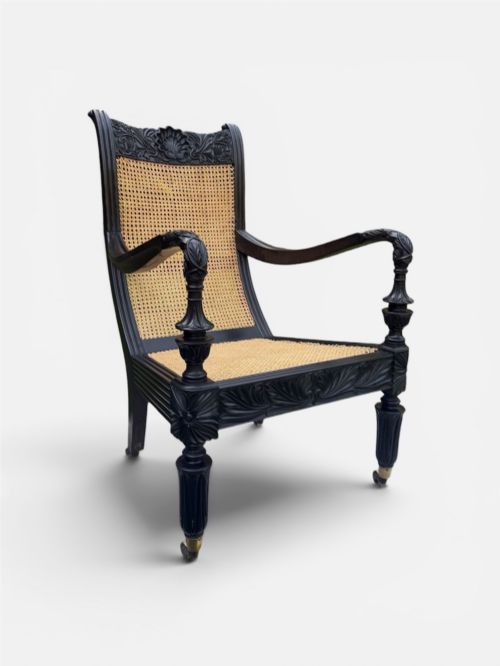
Cane panels and woven rattan frequently form the seats and backs to ensure ventilation in warm climates. Where solid surfaces appear, they often incorporate original leather or intricate hand-carved ornamentation.
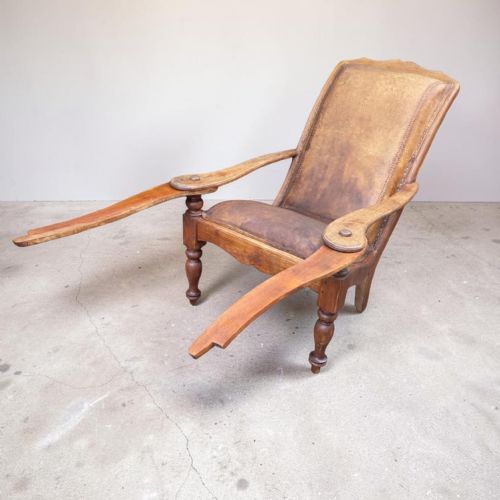
Extendable armrests on planters' chairs meant colonial officers could put their feet up without leaving the porch.
Judging quality and execution
Quality rests principally in the crispness and depth of the hand-carved detail across the hardwood frame. Finer examples display deeply undercut foliage and figures, whereas lesser pieces show shallower, simpler incision work.
The integrity of the original timber and the survival of early cane or leather elements distinguish superior survivals. Heavier solid construction and balanced proportions separate utilitarian camp furniture from grand domestic seating.
The Victorian Colonial Chair Glossary
- Planter's chair
- A large armchair featuring extended, hinged armrests designed to function as foot supports for reclining. These pieces originated on colonial estates for afternoon rest.
- Cane
- Woven rattan material utilised for seats and backs to provide cool ventilation. It forms a flexible yet supportive surface.
- Campaign furniture
- Portable pieces designed for military officers and officials on the move. They often incorporate folding mechanisms or take-apart frames.
- Anglo-Indian
- A descriptive term for furniture made in India by local craftsmen to British design requirements. It combines indigenous carving traditions with European forms.
- Padouk
- A heavy, durable tropical hardwood with a reddish hue favoured for nineteenth-century colonial cabinetmaking. It takes a fine carved finish.
Victorian Colonial Chair: Frequently Asked Questions
What is a planter's chair?
A planter's chair is a large nineteenth-century armchair featuring remarkably long, flat armrests designed to act as footrests. British residents in tropical climates utilised them for relaxed lounging during the hottest parts of the day.
These pieces typically incorporate woven cane seating and robust hardwood frames. Their generous proportions distinguish them from standard parlour armchairs.
Are these chairs comfortable to use daily?
Most colonial seating offers a firm sit due to the combination of solid timber frames and stretched cane panels. Adding loose squab cushions provides extra comfort for modern living.
The deep seats and raked backs of planters' chairs and armchairs invite relaxed sitting rather than upright posture.
Which woods were used?
Cabinetmakers in the colonies utilised dense native hardwoods that resisted humidity and insect damage. Common timbers include teak, mahogany, ebony, rosewood and satinwood.
These heavy woods account for the substantial weight of many pieces. Their dark natural tones developed a rich patina over time.