


Victorian Coastal Scene Art
Victorian coastal scene art captures harbours, fishing fleets and rocky shores across Britain and Europe through nineteenth-century oils and watercolours.
Victorian Coastal Scene Art
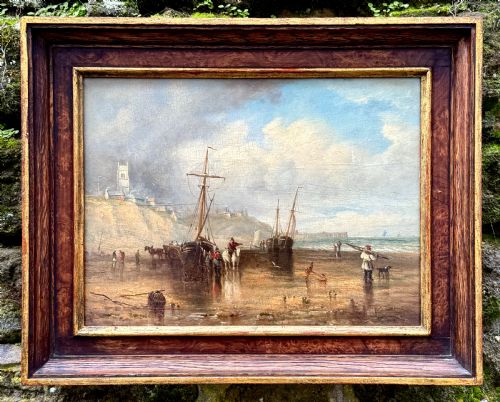
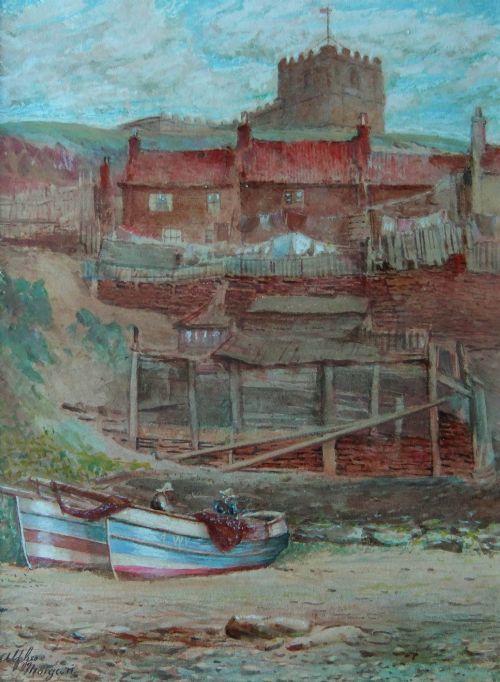
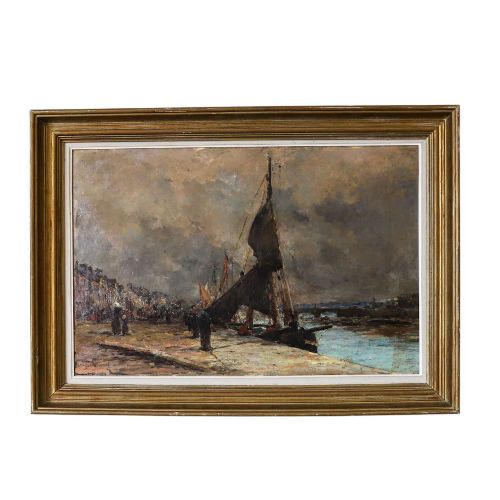
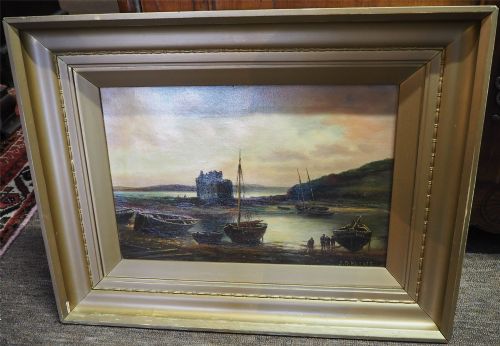
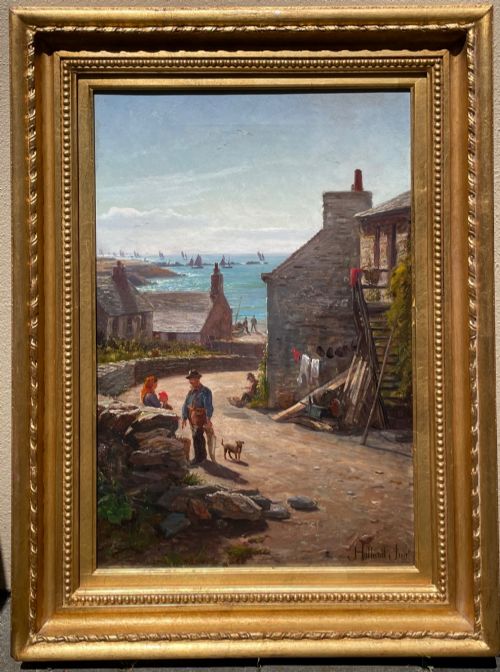
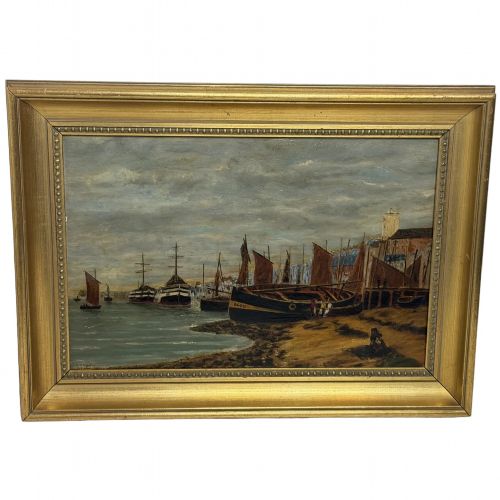
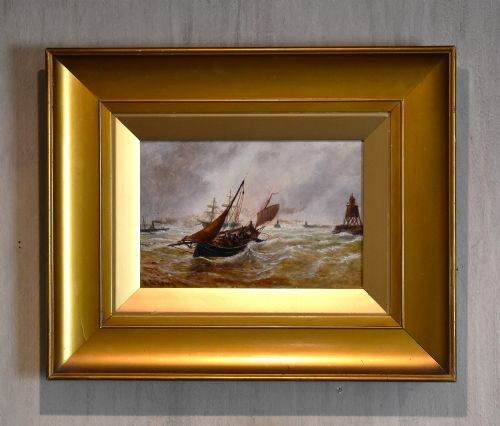
Victorian coastal scene art comprises paintings depicting harbours, fishing boats, and shorelines executed during the nineteenth century and the early decades of the twentieth. Collectors encounter works ranging from intimate watercolours on paper to large oil paintings on canvas framed in gilt wood. These pieces document maritime life, from Cornish fishing villages to bustling northern ports.
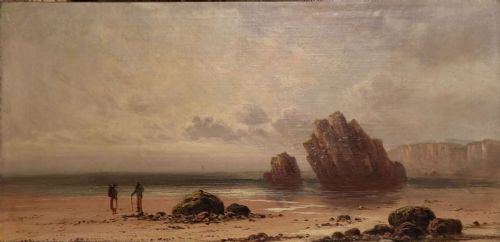
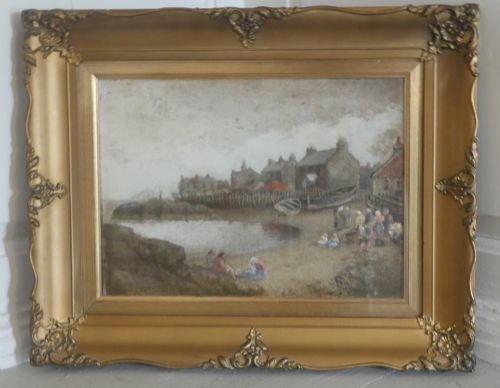
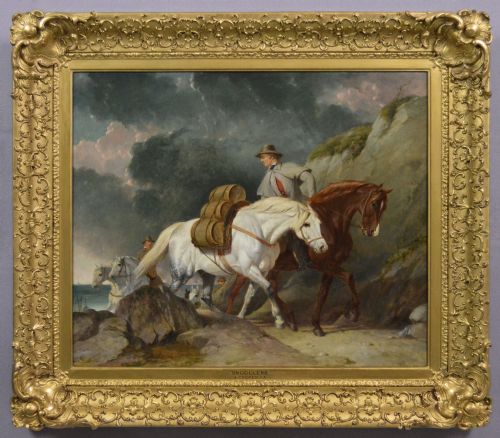
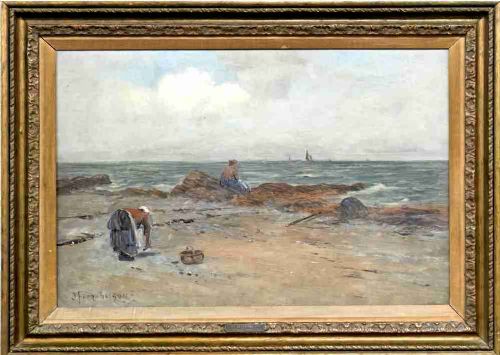
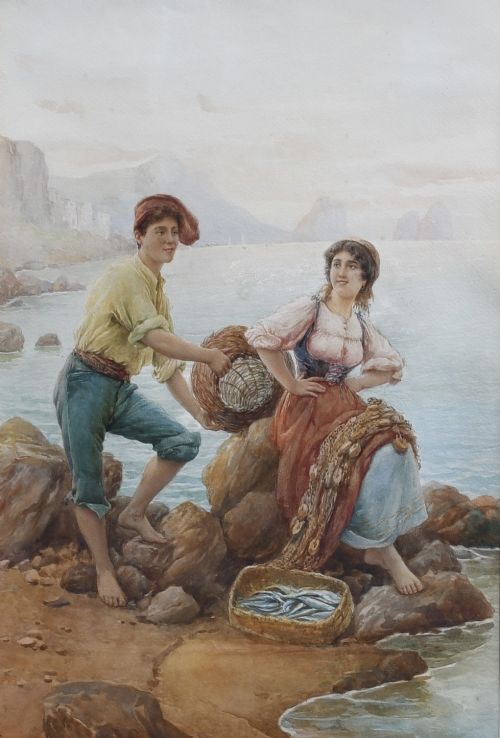
The works span several recognised styles, including Victorian marine art, British impressionism, and nineteenth-century realism. Many examples feature local figures such as fisherfolk, oyster pickers, and sailors engaged in daily shore work alongside coastal architecture. Marine landscapes often emphasise atmospheric weather conditions, ranging from calm sunsets to stormy seas near rocky sea stacks.
How they were made
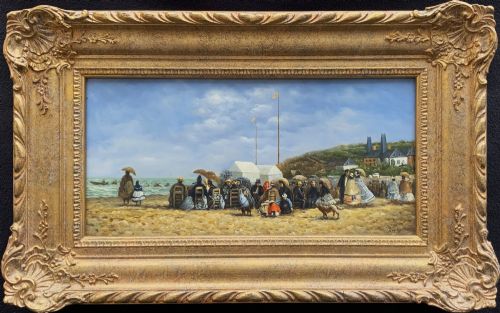
Artists utilised oil paint on canvas, panel, and card, or applied watercolour pigments onto paper support. Canvas works frequently employ heavy impasto, particularly for rendering foaming waves and dramatic skies. Gesso and gilt wood frames provide the traditional border structure for the oil paintings.
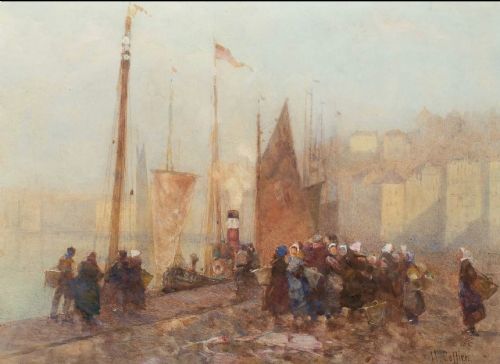
Watercolour compositions rely on delicate washes and pencil underdrawing to capture light on coastal waters and harbour walls. Oil painters built up scenes through layered pigments, capturing the reflective qualities of wet sand and sea spray. Many pieces utilise traditional glazing techniques to achieve depth in maritime horizons.
Listings feature works spanning the nineteenth century through the early twentieth century, utilising paper, canvas, oil paint, and watercolour.
What varies in quality
Quality separates through the artist's command of light, atmosphere, and maritime topography. Superior works capture convincing movement in water and weather without relying on rigid formulas. The handling of human figures within the landscape also dictates the distinction between standard topographical records and accomplished fine art.
The integrity of the original support and the richness of the pigment layers influence the standing of each piece. Finer examples retain their original framing materials, such as ornate gilt wood, which complement the scale of the canvas. The precision of brushwork in rendering rigging, architecture, and coastal geology marks the upper tier of production.
James Orrock·William Banks Fortescue·Hector Caffieri·Thomas Creswick·Alfred G Morgan·Abraham Cooper·Joseph Farquharson·Carlo Ferranti·John Holland·Bernard Benedict Hemy·Abraham Hulk·William Edward Webb·Gustave De Bréanski·James Kyd·Thomas Bush Hardy·Colin H Greenwood·T S Wallis·George Gregory·William Pitt·James Webb·Claude Thomas Stanfield Moore·Frederick William Hattersley·James Thomas Watts·Kate E Booth
The Victorian Coastal Scene Art Glossary
- Seascape
- A work of art depicting the sea, coastlines, and marine vessels. These compositions focus on maritime environments and atmospheric weather conditions.
- Impasto
- Paint applied thickly to a canvas, standing out from the surface. This technique adds tactile dimension to representations of rough water and stormy skies.
- Gesso
- A plaster mixture used as a smooth base for painting or applied to wooden frames before gilding. It provides a durable foundation for decorative mouldings.
- Watercolour
- Paint consisting of colour suspended in a water-soluble binder, traditionally applied to paper. This medium allows for transparent washes of light and colour.
Victorian Coastal Scene Art: Frequently Asked Questions
What subjects appear in these scenes?
Paintings show working harbours, fishing boats, coastal paths, and sandy beaches populated by local figures. Common motifs include cliffs, sea stacks, and historic coastal architecture.
Artists also depicted specific activities such as landing the catch, packing fish for market, and navigating stormy waters near British and European ports.
How do oils and watercolours differ?
Oils use thick pigments on canvas, panel, or card, allowing for textured brushwork and rich colour blending. Watercolours utilise transparent washes on paper to capture bright coastal light and atmospheric haze.
Both mediums served artists documenting nineteenth-century maritime life, though oils were typically chosen for larger, more dramatic compositions.
Where were these coastal scenes painted?
Locations span British coastal regions including Cornwall, Yorkshire, Norfolk, and North Shields, alongside European shores. Specific sites such as St Ives, Whitby, and the Isle of Man frequently recur in the titles.
Artists travelled extensively along these coastlines to record local fishing fleets, harbours, and distinct geological formations.
How should I frame these paintings?
Traditional gilt wood frames complement nineteenth-century oil paintings by enhancing their historical character and depth. Watercolours require conservation mounting behind glass to protect the paper support from moisture and light damage.
Original frames, when preserved, maintain the period integrity of the artwork and its presentation.