
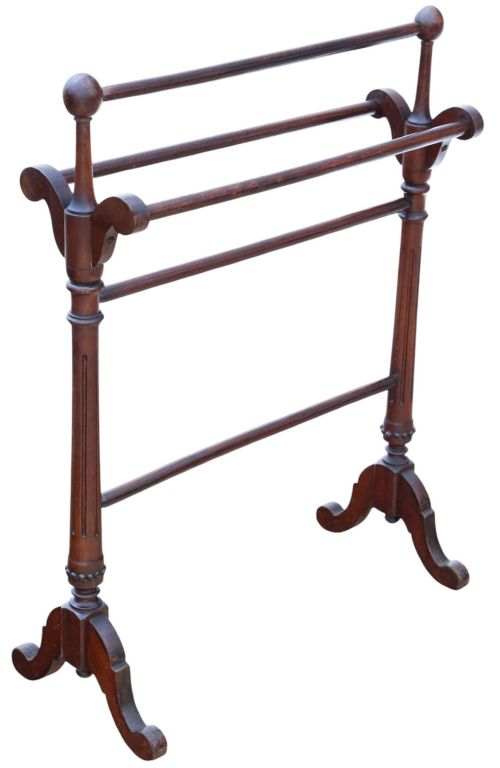
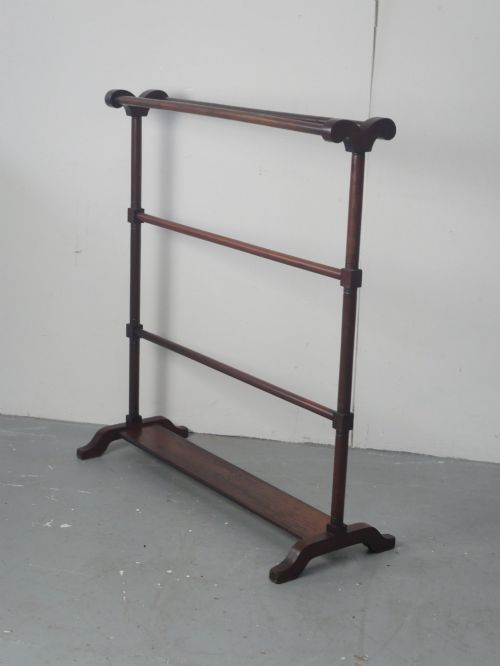
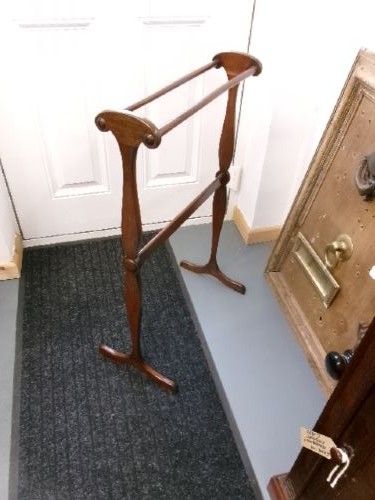
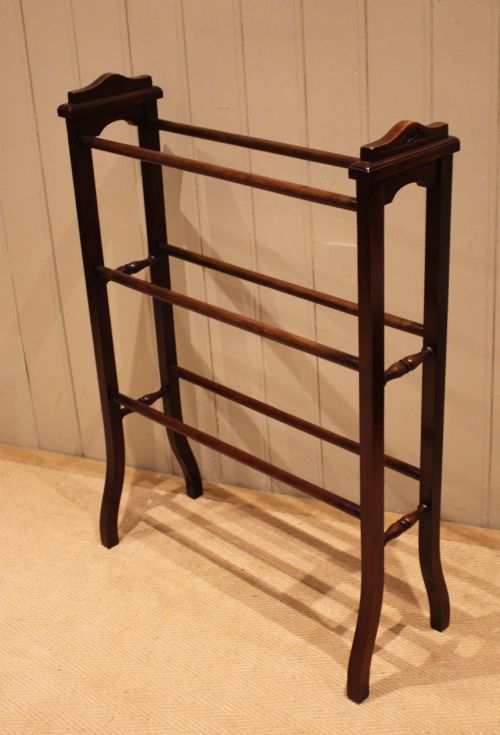
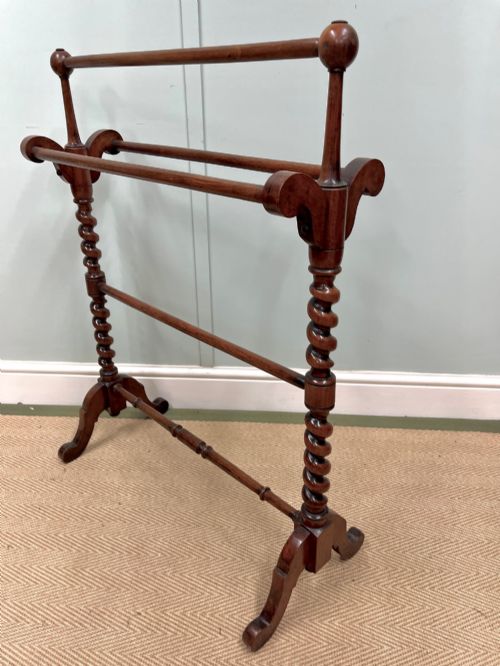
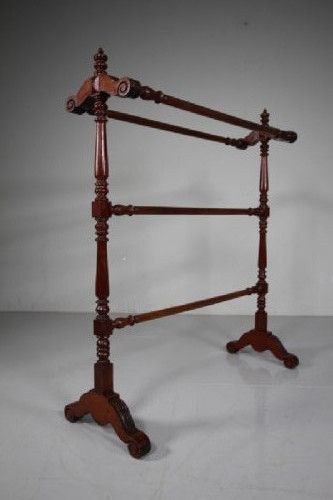
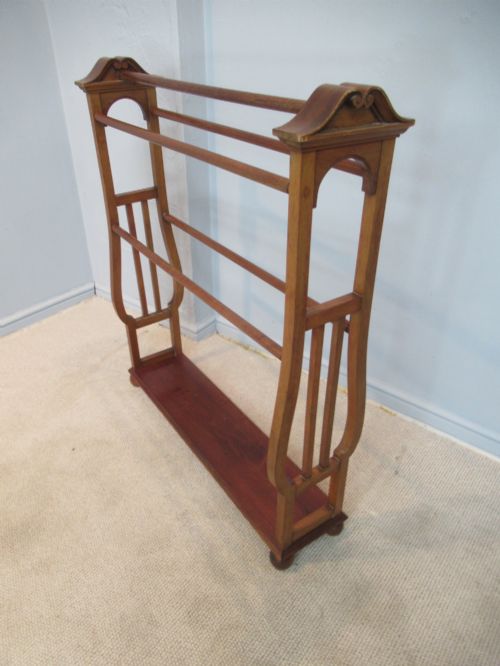


Victorian Clothes Horse
A victorian clothes horse is a domestic framework for airing laundry, prized for practical utility and warm timber grain.
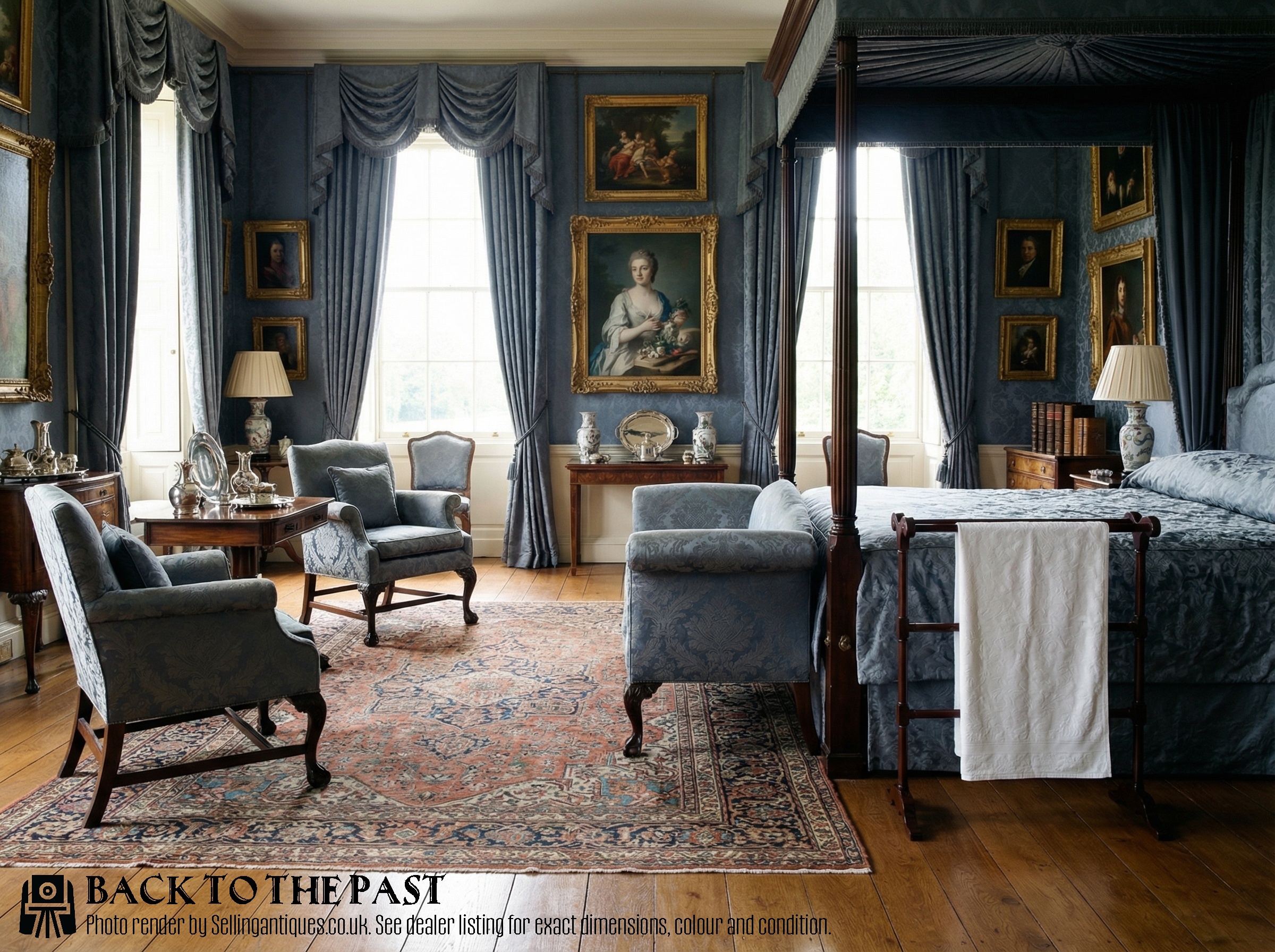
Victorian Clothes Horse
A victorian clothes horse search brings up sturdy domestic frames used originally for drying linens and towels near a hearth. These pieces serve today as functional bathroom fittings or bedroom decor, offering multiple rails for hanging garments.
The selections span standard standing rails, folding cheval designs, and three-fold frames. Most examples date from the nineteenth century through the Edwardian period, built to stand upright on floors or mount directly to walls.
How They Were Made
Cabinet makers built these frames predominantly in mahogany, walnut, oak, and pine, occasionally turning to ebonised wood for a dark, uniform finish. Individual rails and upright posts connect securely to handle the daily weight of damp textiles.
Makers utilised brass fittings for hinges and joints on folding variations, ensuring smooth movement across multiple panels. Hardwood constructions provide natural resilience, while simpler pine and oak versions offer straightforward country house utility.
Mahogany and pine dominate the timber selection, appearing across standing, folding, and wall-mounted formats from the nineteenth century.
What Varies in Quality
Construction density and timber selection separate standard utility items from finer parlour or country house pieces. Heavier mahogany and walnut examples with multiple folding sections or decorative turned supports sit at the upper end of the range.
The integrity of the structural joints and the retention of original brass hardware dictate the overall standard of survival. Simpler pine frames show straightforward vernacular carpentry, whereas Gothic Revival or Arts and Crafts models exhibit more thoughtful joinery and styling.
The Victorian Clothes Horse Glossary
- Cheval rail
- A freestanding framed rail designed to pivot or fold on hinges, allowing multiple angles of use.
- Ebonised wood
- Timber treated with a dark stain or finish to imitate expensive ebony, popular in late nineteenth century furnishings.
- Gothic Revival
- A design movement drawing inspiration from medieval architecture, seen here in pointed arches or heavier carved structural elements.
- Arts and Crafts
- A style prioritising honest construction and visible craftsmanship, often utilising solid oak without excessive ornamentation.
- William IV
- A transitional design period bridging Regency and early Victorian tastes, typically characterised by robust proportions and restrained classical details.
Victorian Clothes Horse: Frequently Asked Questions
How were clothes horses used originally?
These frames stood near fireplaces or kitchen ranges to dry damp linens and warm garments before dressing.
Households moved the folding sections around rooms to catch ambient heat from stoves.
What woods are most common?
Mahogany appears frequently across nineteenth century examples, offering deep reddish tones and solid durability.
Walnut, oak, and pine also feature regularly, reflecting both formal parlour and simpler country house origins.
Are folding rails sturdy?
Multiple hinged sections allow the frames to stand independently while supporting the weight of towels or linens.
Original brass hinges provide the necessary articulation to keep the multi-fold structures stable during daily use.
How do I date a piece?
Stylistic clues such as William IV proportions or Arts and Crafts plainness help place pieces within specific decades.
Materials like ebonised wood or specific turned spindle profiles also point towards late nineteenth or early twentieth century production.