


Mahogany Blanket Rack
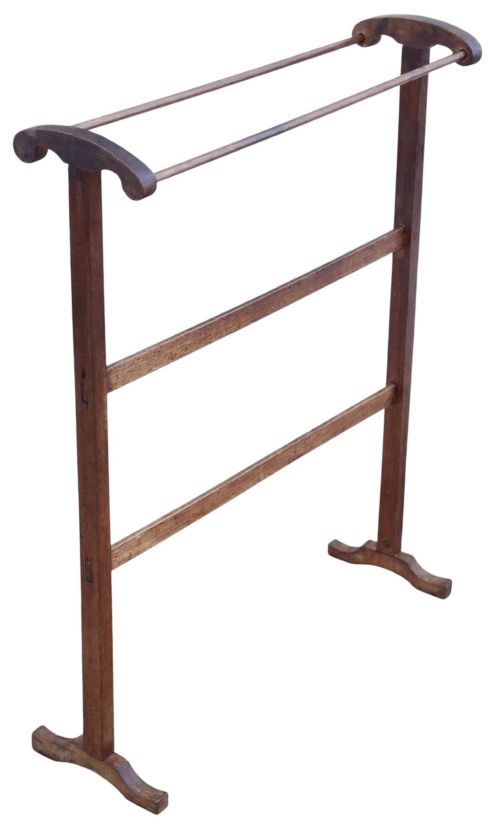
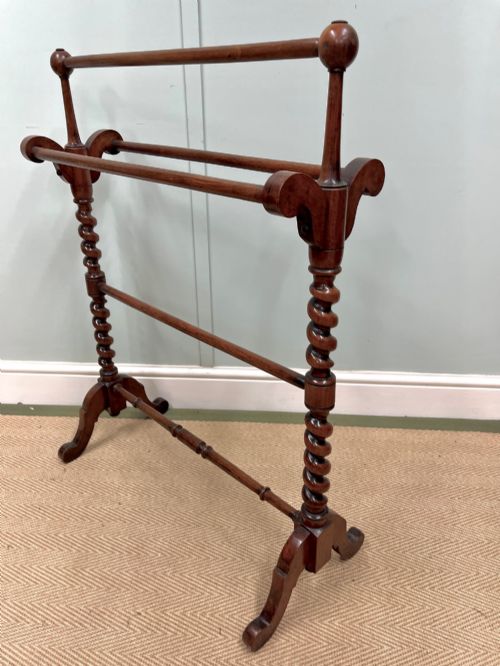
These mahogany blanket rack options are freestanding timber rails designed for holding linens and clothes, combining practical utility with traditional British craftsmanship.
Mahogany Blanket Rack
A mahogany blanket rack provides sturdy timber construction designed to hold and air linens or garments in bedrooms and dressing rooms. Buyers searching for a mahogany blanket rack typically encounter standing rails dating from the nineteenth and early twentieth centuries.
The pieces on this page span several distinct periods including Regency, Victorian, and Edwardian eras. Most examples function primarily as towel rail stands or clothes rails constructed from solid timber.
Makers often utilised generous proportions to create multi-bar configurations suitable for family homes. These freestanding items offer a traditional method for organising textiles without permanent wall fixtures.
Materials and construction methods
Makers built these items predominantly using mahogany, frequently combining it with secondary woods such as oak and hardwood for internal stability. Selected pieces feature decorative satinwood and boxwood inlay to enhance the primary timber surfaces.
Construction techniques relied upon sturdy joinery to withstand the daily weight of damp linens or heavy garments. Cabinetmakers shaped the uprights and horizontal bars to balance load capacity with visual elegance.
Available forms include standing towel rail stands, clothes rails, and multi-bar configurations featuring satinwood inlay.
Indicators of finer quality
Quality in these pieces rests upon the selection of timber and the precision of any decorative inlay work. Finer examples incorporate contrasting boxwood and satinwood details that require skilled hand-craftsmanship to execute cleanly.
Proportions and structural integrity dictate the upper tier of the range, where balanced five-bar configurations or generous sizing reflect superior workshop standards. Lesser pieces rely on plain timber without the refined detailing seen on attributed works.
The Mahogany Blanket Rack Glossary
- Regency
- A British design period spanning the early nineteenth century noted for classical revival influences and refined cabinetmaking. Pieces from this era often display particularly graceful proportions.
- Inlay
- A decorative technique where contrasting woods such as boxwood or satinwood are inserted into recesses within the primary mahogany surface. This method creates geometric or floral patterns.
- Edwardian
- A stylistic period covering the early years of the twentieth century up to the First World War. Furniture from this time frequently reinterprets earlier traditional forms with lighter framing.
- Hardwood
- Dense timber derived from broad-leaved deciduous trees, providing the structural strength necessary for freestanding rails. Mahogany and oak fall into this material category.
Mahogany Blanket Rack: Frequently Asked Questions
Where should I place a blanket rack?
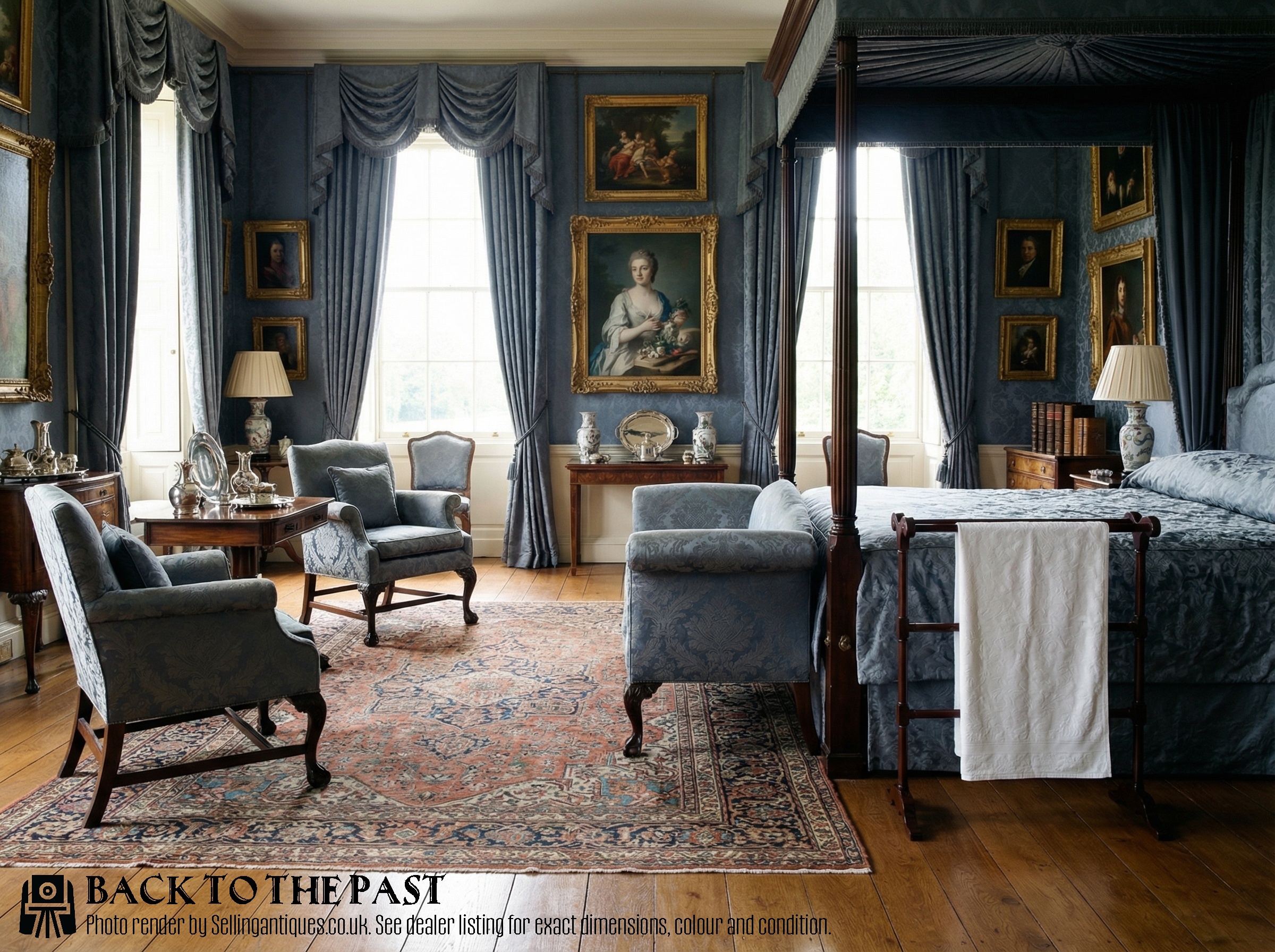
These rails suit bedrooms, dressing rooms, or bathrooms where textiles require airing or display. Their freestanding design allows them to move easily between rooms as needed.
Position them away from direct heat sources to protect the polished mahogany and prevent timber splitting.
How do I clean mahogany wood?
Maintain the timber surface using a soft, dry cloth to remove dust accumulation regularly. Avoid modern silicone sprays that can damage antique polishes.
Apply a traditional beeswax periodically to nourish the grain and preserve the deep reddish-brown colour of the mahogany.
Can these rails hold heavy blankets?
Most standing rails handle standard household blankets, towels, and clothing items comfortably. The sturdy hardwood construction supports daily domestic utility.
Overloading multi-bar stands with excessively damp or heavy items may strain the side joints over time.
How do I identify Edwardian pieces?
Edwardian examples usually date around nineteen hundred and feature lighter framing compared to earlier Victorian furniture. They frequently incorporate delicate inlay work.
Examine the construction joints and timber colour to distinguish these twentieth-century interpretations from nineteenth-century originals.