


Traditional Mahogany Airer
A traditional mahogany airer brings warmth and practical utility to a room, offering a sturdy frame for drying and displaying textiles.
Traditional Mahogany Airer
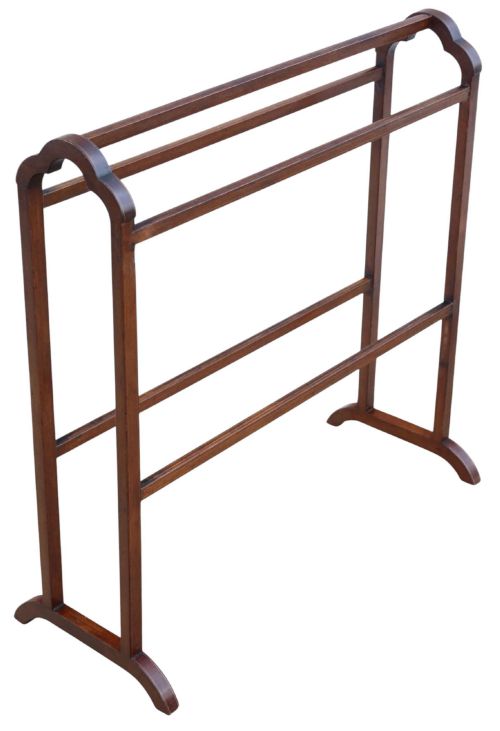
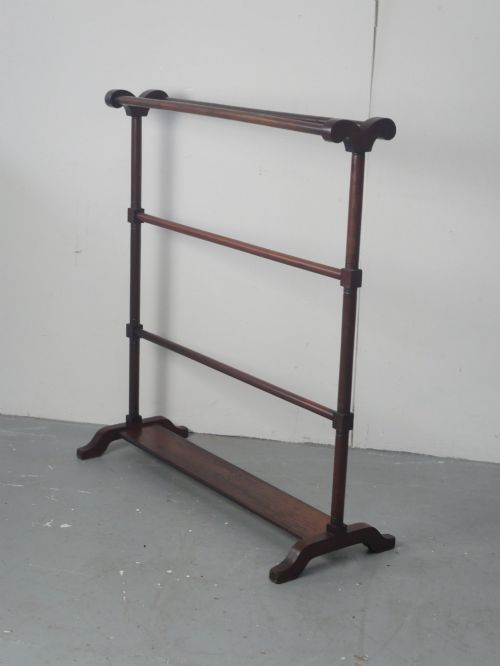
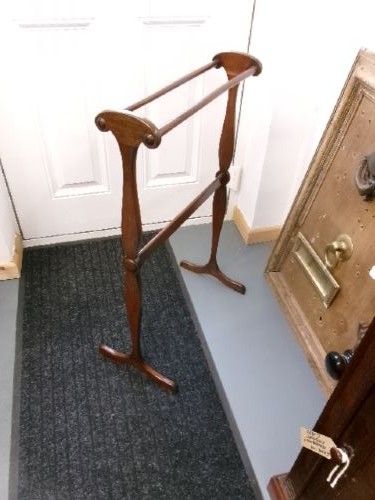
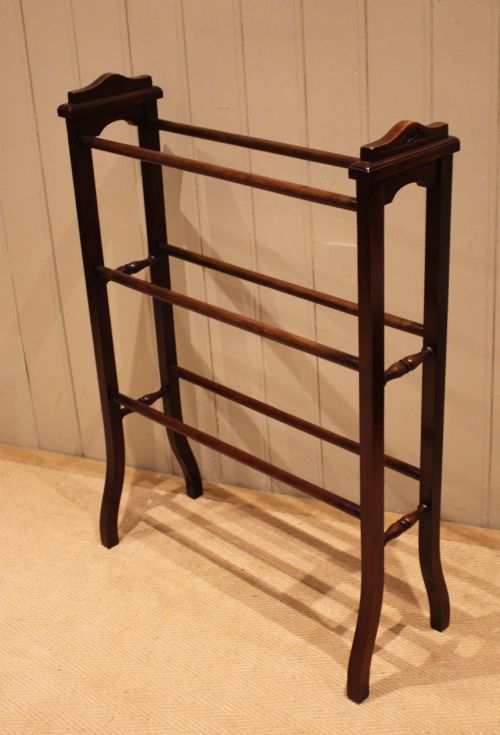
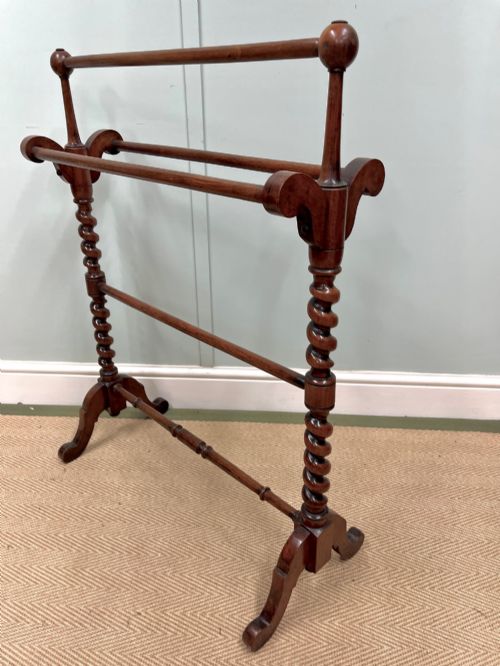
A traditional mahogany airer is essentially a standing towel rail designed to hold linens, towels and small garments in domestic spaces. These pieces take the form of freestanding frames with multiple horizontal bars, allowing air to circulate around damp textiles placed upon them.
Most examples found on this page date from the Victorian and Edwardian eras, alongside pieces attributed to the Regency period. They are constructed primarily as floor-standing rails, occasionally featuring folding mechanisms or generous proportions suited to larger domestic quarters.
How they were made
Makers utilised solid mahogany and related hardwoods to build these frames, ensuring the wood could withstand the daily weight of damp linens without warping. The timber is frequently finished with a smooth polish that highlights the natural grain of the mahogany.
Selected pieces incorporate fine decorative details such as satinwood and boxwood inlay, whilst others integrate brass components. These contrasting inlays and metal accents provide subtle ornamentation to the functional uprights and crossbars.
Even laundry day had to look civilised when your smalls hung on inlaid mahogany.
What varies in quality
Quality in a traditional mahogany airer rests upon the substance of the timber and the solidity of the joints holding the bars and uprights together. Heavier, more substantial rails offer greater stability in use compared to lighter, more simply constructed alternatives.
The presence of decorative elements like satinwood inlay or brass fittings elevates a piece from a purely utilitarian item to a more refined piece of furniture. Proportion and scale also separate standard rails from larger, more generously sized examples attributed to prominent workshops.
Gillows
The Traditional Mahogany Airer Glossary
- Mahogany
- A durable hardwood valued for its rich reddish-brown colour and smooth grain. It forms the primary structural material for these towel rails.
- Satinwood inlay
- A contrasting light-coloured wood inserted into the darker mahogany surface to create decorative patterns. This technique is typical of Edwardian and late nineteenth-century cabinet work.
- Boxwood
- A dense, pale wood frequently used for fine stringing and inlay details alongside satinwood. It provides a sharp visual contrast against the dark mahogany frame.
- Standing towel rail
- A freestanding piece of furniture designed with multiple horizontal bars for hanging textiles. These items function as portable airers within domestic rooms.
- Regency
- An architectural and design style spanning the early nineteenth century, characterised by classical restraint and elegant proportions. Pieces from this period often display superior craftsmanship.
Traditional Mahogany Airer: Frequently Asked Questions
What is a traditional mahogany airer used for?
These pieces function primarily as freestanding towel rails and clothes airers for drying and airing household textiles. They provide multiple horizontal bars to hold linens away from walls and floors.
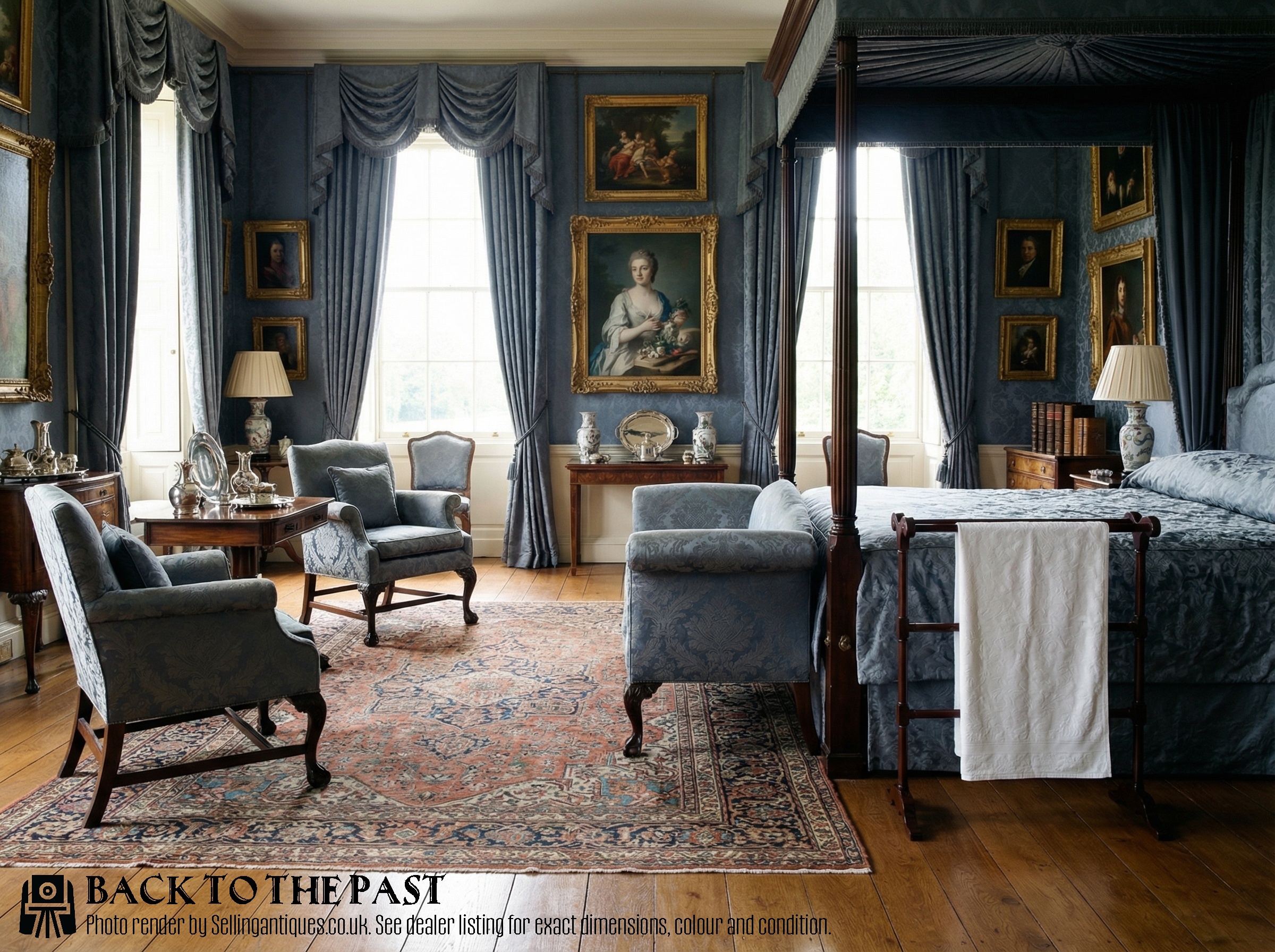
In period homes, they sat in bedrooms, bathrooms or nurseries where damp garments needed a reliable drying space. Today, they remain practical for everyday textile storage.
How do I date a mahogany towel rail?
Dating relies upon stylistic details, construction methods and the specific characteristics of the timber used in the frame. Edwardian examples often feature delicate inlay work, whereas mid-Victorian pieces tend to be heavier and plainer.
Looking at the joinery and the finish helps determine whether a piece originates from the nineteenth century or the early twentieth century. Regency items often display more generous proportions and classical influences.
Are these rails folding or fixed?
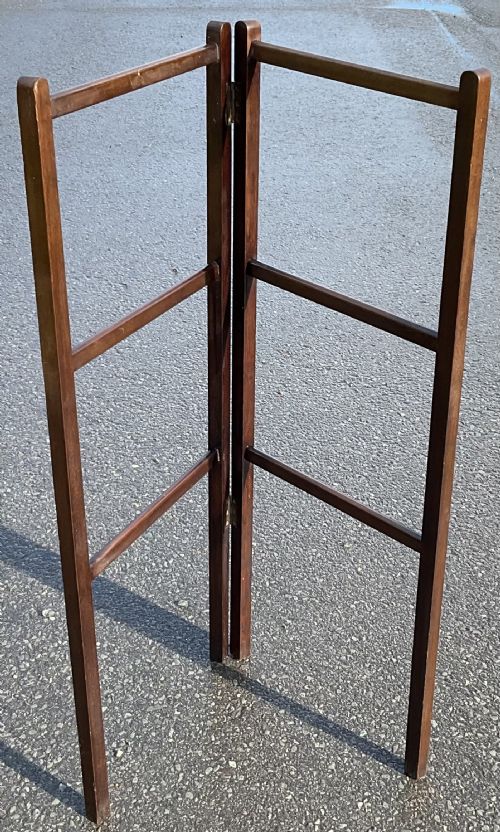
The selection includes both rigid standing frames and folding designs intended to save space when not in use. Folding variants use hinged mechanisms to allow the side sections to swing inward.
Fixed rails offer a more rigid structure designed to remain in a stationary position within a room. Both forms utilise solid mahogany or hardwood construction to maintain stability.
How do I care for mahogany furniture?
Maintenance involves dusting the timber regularly with a soft, dry cloth to prevent the buildup of particles on the polished surface. Keeping the wood away from direct heat sources prevents the timber from drying out.
Applying a suitable wax polish occasionally helps preserve the lustre of the mahogany and protects the finish. Avoid placing excessively wet items directly on the wood for prolonged periods.