



Victorian Circular Lamp Table
When you want a solid place for a reading light next to a fireside chair, a victorian circular lamp table brings a compact, sturdy platform with timber grain.
Victorian Circular Lamp Table
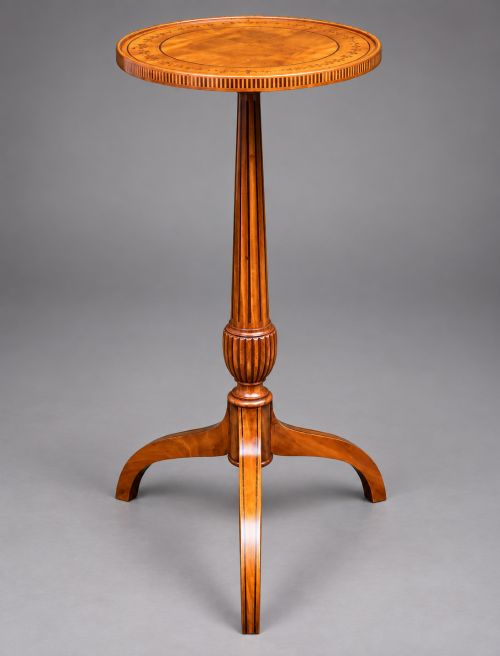
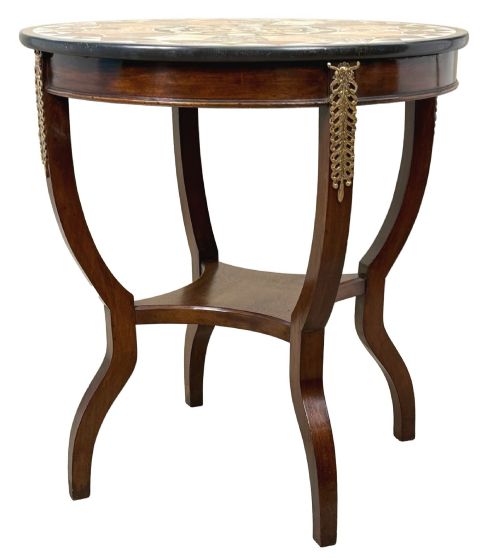
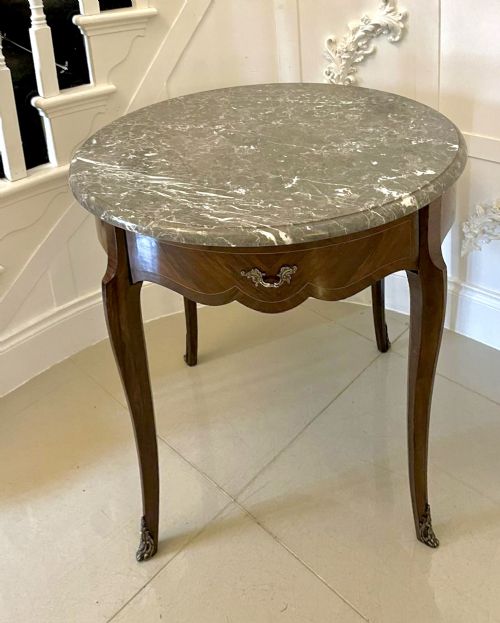
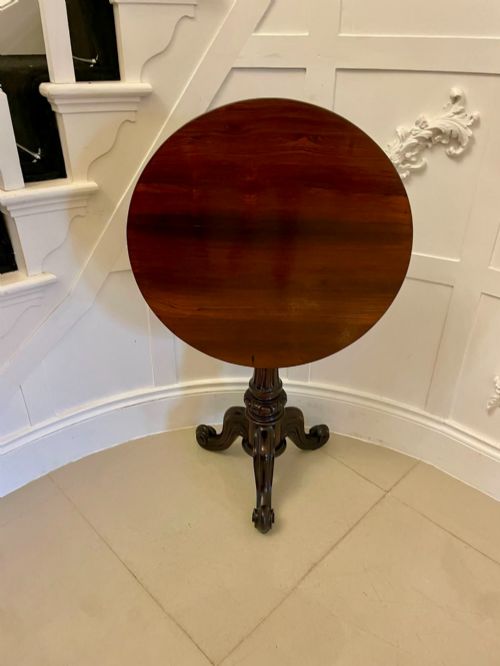
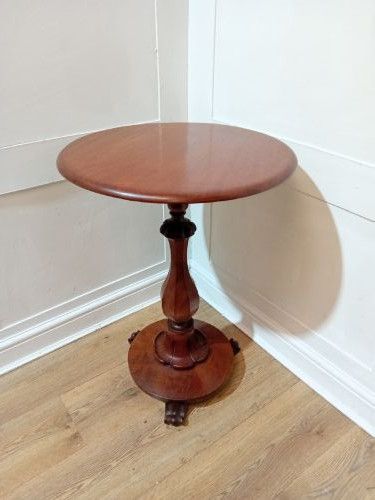
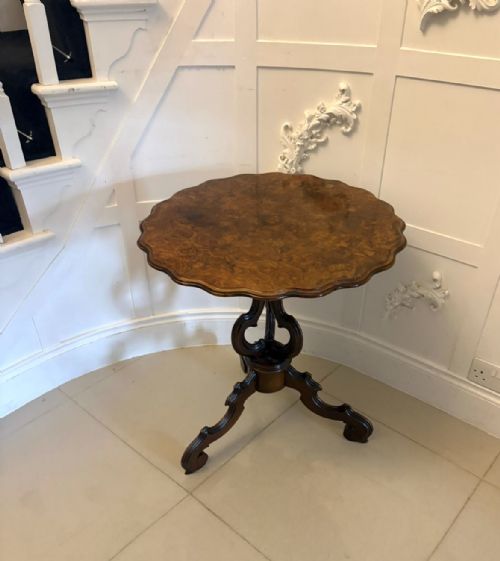
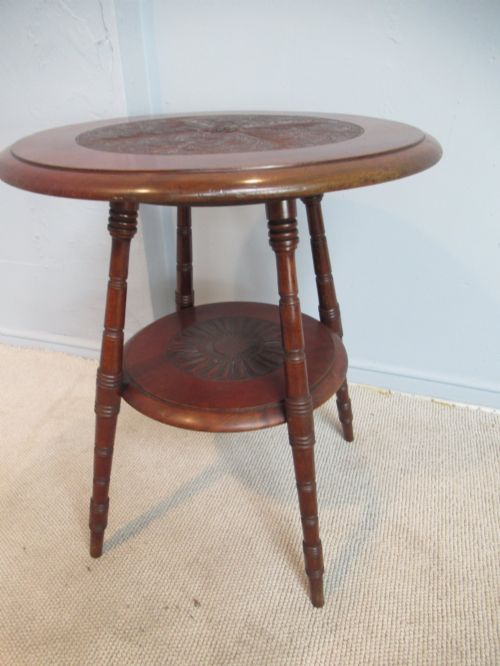
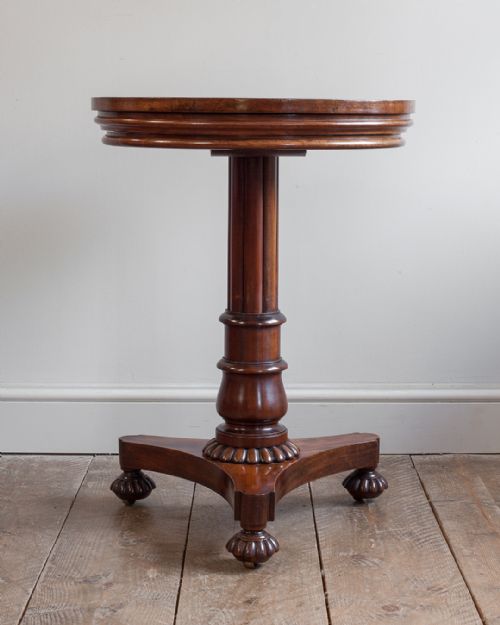
A victorian circular lamp table is a small, round occasional piece designed to sit beside seating and hold illumination or drinks. Most examples found here rest on a central pedestal with tripod feet, though four-legged variants also appear.
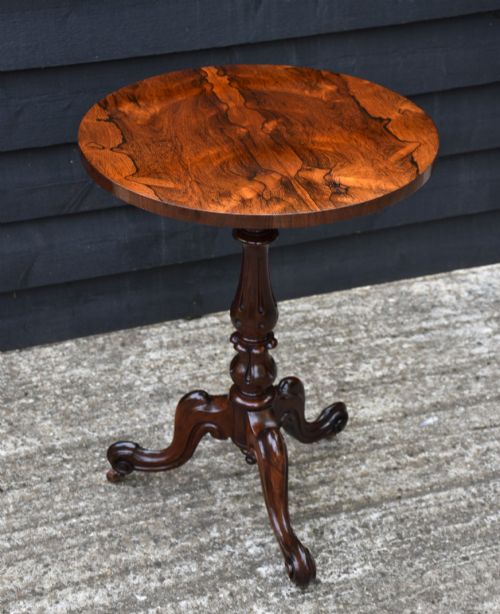
The form crosses paths with wine tables, side tables, and occasional tables, sharing a compact circular top suited to small corners. These tables date predominantly from the nineteenth century, spanning various walnut, mahogany, and rosewood constructions.
Makers shaped these surfaces for domestic convenience, often incorporating tilt mechanisms or inlaid marquetry to catch the eye in a parlour. They remain practical household furniture pieces that fit neatly beside modern sofas and armchairs.
How they were made
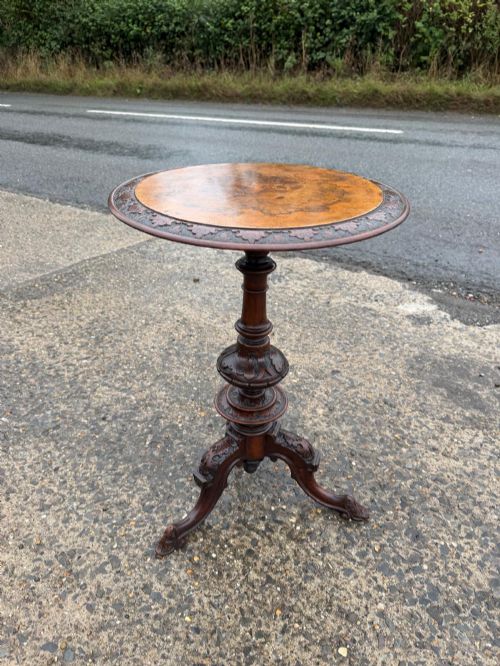
Cabinet makers utilised dense native and imported timbers, pairing solid mahogany and oak frames with decorative veneers like burr walnut and rosewood. Tops were frequently constructed with matched veneer segments radiating from a centre point to display natural grain patterns.
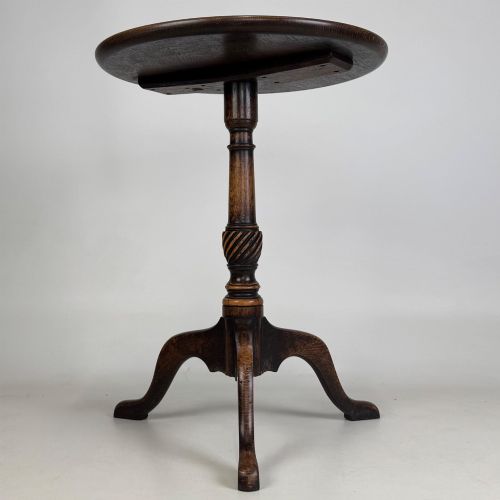
Pedestals turned on lathes to form columns, sometimes featuring barley twist carving or fluting before joining substantial tripod bases. Inlaid details incorporated brass, lighter woods, and marble inserts to create contrasting decorative borders on the circular tops.
What varies in quality
The distinction between ordinary and superior pieces lies in the selection of timbers and the crispness of carved details. Finer tables feature highly figured burr walnut or rich rosewood veneers paired with substantial, stable tripod bases that show no wobble.
Secondary elements such as marquetry inlay, hand-carved pedestal collars, and original pivoting mechanisms elevate an example above standard production. The weight of the timber and the tightness of the joinery at the pillar joints determine the structural integrity over time.
James Shoolbred·Gillows
The Victorian Circular Lamp Table Glossary
- Tripod base
- A three-legged support structure commonly found beneath the central pillar of small round tables. This configuration ensures the table remains steady on uneven floorboards.
- Marquetry
- The art of applying decorative pieces of veneer to a structure to form intricate patterns and pictures. Craftsmen used contrasting woods to create geometric designs on table tops.
- Tilt top
- A hinged mechanism allowing the circular surface to pivot and lock vertically when not in use. This clever design saved valuable floor space in nineteenth-century rooms.
- Barley twist
- A decorative turning technique resembling a spiral rope shape carved into furniture legs and columns. It gained wide popularity during the Victorian period.
- Specimen marble
- An arrangement of various coloured marbles fitted together to form a geometric or mosaic pattern on a table surface. These tops often arrived from Italian workshops.
Victorian Circular Lamp Table: Frequently Asked Questions
What was a lamp table originally used for?
These small round tables provided a stable surface for oil lamps, candles, and reading materials beside parlour seating. Their compact footprints allowed them to tuck into corners without crowding the room.
Today they serve the exact same domestic purpose, holding modern table lamps, drinks, and books beside armchairs or sofas.
How do I spot a tilt top table?
Look underneath the circular surface for a wooden or brass catch mechanism fixed to the top of the central pillar. This latch releases the table top so it can pivot flat against the pedestal.
Tilt mechanisms allowed Victorian households to store tables flat against walls when rooms needed to be cleared for entertaining.
Are these tables sturdy enough for daily use?
Nineteenth-century tables were built using solid hardwoods and tight joinery designed to withstand active household environments. A well-balanced tripod base distributes weight evenly across three points on the floor.
Checking that the central column is firmly secured to the legs ensures the table will support lamps and cups without wobbling.
How do I tell mahogany from walnut?
Mahogany generally presents a straight, reddish-brown grain that darkens gracefully with age and exposure to light. Walnut tends to show a darker, richer chocolate tone with complex swirling grain patterns.
Burr walnut takes this further with swirling knot formations that create highly decorative textures across the circular top.