




Victorian Chinese Vase
A victorian chinese vase brings together nineteenth-century British taste and traditional oriental craftsmanship, offering striking decorative presence for any room.
Victorian Chinese Vase
A victorian chinese vase encompasses items made during the nineteenth century, including pieces produced for export and domestic British adaptation. Buyers searching for a victorian chinese vase will encounter various forms ranging from ceramic vessels to converted table lamps.
The selection includes porcelain vessels, bronze ritual forms, and cloisonné pieces often mounted in ormolu or brass during the Victorian period. Many surviving examples function as table lamps, altar vases, or decorative centrepieces.
Canton, Famille Rose, and blue and white styles dominate the offerings alongside bronze Hu and Gu ritual vessels. These items reflect the Victorian fascination with oriental design applied to domestic interiors.
Materials and Techniques
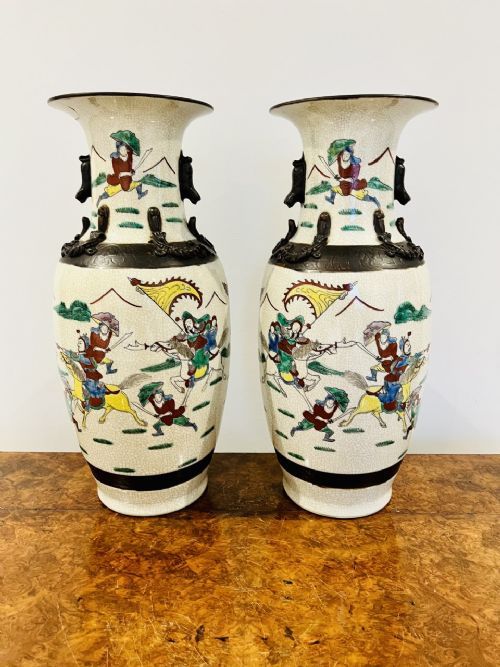
Ceramic pieces utilise porcelain and stoneware decorated with enamel palettes such as Famille Rose and Famille Verte, alongside cracked glaze and blue and white pigments. These techniques involve detailed hand-painting on fired clay bases.
Metal items employ cast bronze, brass, and ormolu mounts, frequently combined with cloisonné enamel work. Artisans shaped ritual vessel forms and applied decorative surface patterns using traditional metallurgical methods.
Secondary materials include hardwood, marble, and fabric used for stands and lamp shades that accompany the primary ceramic or metal vessels.
Listings feature porcelain, bronze, brass, enamel, fabric, hardwood, and gold leaf across nineteenth-century styles.
Assessing Quality
Quality rests upon the crispness of the hand-painted enamel detail and the precision of the bronze or ormolu mounts. Finer vessels show superior control over pigment application and glaze consistency.
The integration of nineteenth-century European mounts with oriental porcelain dictates the overall cohesion of the piece. Superior examples maintain balanced proportions between the ceramic body and any added metalwork or stands.
The Victorian Chinese Vase Glossary
- Famille Rose
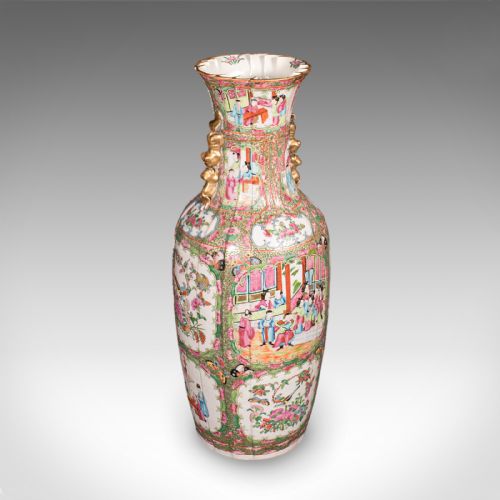
- A palette of opaque enamels dominated by pink or rose colours, widely used on Chinese porcelain during the Qing dynasty. This style appears frequently on nineteenth-century export vases.
- Cloisonné
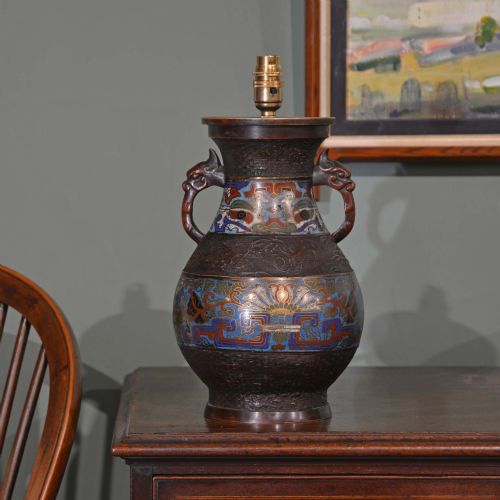
- An enamel technique where metal wire is soldered to a metal base to create compartments filled with coloured paste and fired. These vessels display intricate geometric and floral patterns.
- Ormolu
- Gilded bronze used for decorative mounts on furniture and porcelain vessels during the nineteenth century. It provides a bright metallic contrast to ceramic and bronze bodies.
- Hu
- An ancient Chinese ritual vessel form adapted in bronze during the nineteenth century. These vessels typically feature bulbous bodies and applied handles.
- Gu
- A slender ceremonial trumpet-shaped beaker form in bronze or ceramic. Victorian examples serve as decorative posy vases or display items.
Victorian Chinese Vase: Frequently Asked Questions
What is a victorian chinese vase?
A victorian chinese vase is an ornamental vessel produced or imported during the nineteenth century, often reflecting British interior design tastes of the period.
Many of these pieces combine traditional oriental ceramics or bronzes with contemporary European mountings like ormolu or brass.
Were these vases used as lamps?
Numerous nineteenth-century vases were subsequently converted into oil lamps or electric lamps during or after the Victorian era.
This adaptation allowed households to display decorative oriental porcelain while serving a practical lighting function in the room.
How do I identify a canton vase?
Canton vases typically feature colourful enamel decoration depicting figural scenes, birds, and flowers within panel borders.
They represent a major category of nineteenth-century export porcelain found in British collections.
What is bronze ritual vessel style?
Bronze ritual vessel styles imitate ancient Chinese ceremonial bronzes such as Hu or Gu forms.
Victorian makers reproduced these archaic shapes in bronze to satisfy contemporary interest in exotic antiquities.