




Victorian Chinese Urns
Victorian Chinese urns bring together nineteenth-century British taste and Oriental craftsmanship, offering striking decorative presence for any room.
Victorian Chinese Urns
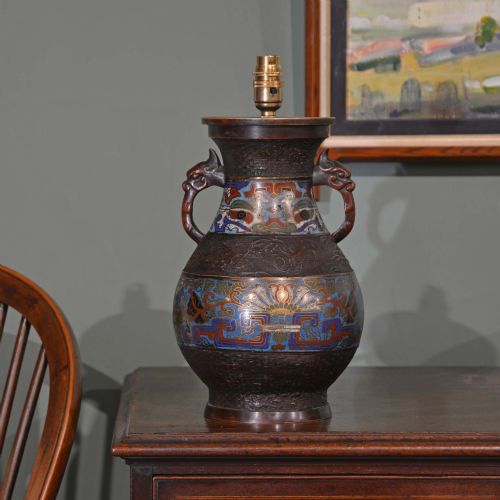
When you search for Victorian Chinese urns, you encounter a selection of nineteenth-century decorative pieces and stands rooted in Chinese export and Qing Dynasty traditions. The pieces here range from bronze ritual vessels and flower urns to carved hardwood plant stands and marble-inset tables.
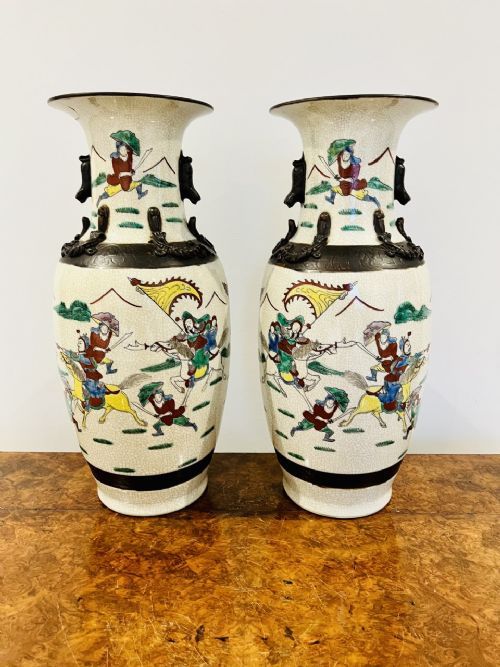
Most examples date from the late nineteenth century, reflecting the strong Victorian interest in Chinoiserie and Oriental design. You will frequently find bronze vases, cracked glazed porcelain, and cloisonne alongside the carved hardwood stands designed to display them.
How they were made
The material evidence points to skilled metalworking in bronze and brass, alongside intricate carving in padouk and other hardwoods. Artisans utilised cloisonne enamel and cracked glazes to achieve rich surface textures on ceramic bodies.
Many items incorporate inset marble panels within heavy wooden frames, combining structural stability with decorative contrast. Casting, hand-carving, and glazing techniques define the manufacturing standards of the period.
Materials across these listings span bronze, hardwood, marble, enamel, brass, porcelain, and rosewood.
What varies in quality
Quality rests in the depth and precision of the hand-carving on the hardwood stands and the fineness of the bronze casting on the urns. Heavy, well-balanced bronze pieces and dense, richly grained hardwoods distinguish superior examples from simpler ones.
The integrity of inset marble tops and the preservation of enamel or cracked glaze surfaces dictate the standing of each piece. Superior items display crisp decorative detail and solid construction without heavy structural compromise.
The Victorian Chinese Urns Glossary
- Cloisonne
- Enamelwork in which compartments are created on a metal surface by soldering thin flat wire to the metal. These partitions are then filled with coloured paste and fired.
- Jardiniere
- A decorative pot or stand intended for holding plants or flowers. They appear frequently in nineteenth-century interiors alongside matching display tables.
- Chinoiserie
- The imitation or evocation of Chinese motifs and techniques in Western art and furniture. This aesthetic shaped much of the decorative output during the Victorian period.
- Padouk
- A heavy, durable tropical hardwood prized for its rich colour and dense grain. It was frequently utilised for carved nineteenth-century stands and tables.
- Hu vase
- An archaic bronze vessel form originating in ancient China, adopted for decorative display in later periods. These vessels feature bulbous bodies and narrow necks.
Victorian Chinese Urns: Frequently Asked Questions
What are Victorian Chinese urns?
These pieces comprise nineteenth-century decorative vessels, ritual bronzes, and associated stands produced under the influence of Chinese export styles and Victorian Chinoiserie.
They represent a blend of Eastern manufacturing techniques and British domestic interior trends from the late eighteen-hundreds.
How were these urns used?
Owners utilised them as flower vases, posy holders, and decorative display items on tables and mantelpieces. Many were paired with carved hardwood stands or marble-top tables specifically designed to elevate them.
Larger bronze examples often served as altar vessels or prominent focal points in principal reception rooms.
How do I live with them?
Place bronze urns or porcelain vases on sturdy surfaces where their weight and height are secure. Carved hardwood stands function effectively as independent plant tables or display surfaces for smaller decorative objects.
Keep them away from direct heat sources to protect wood grain, glazes, and marble inserts from thermal stress.
How do I tell periods apart?
Nineteenth-century and Victorian pieces typically exhibit specific material characteristics like dense hardwoods, heavy bronze casting, and characteristic cracked glazes. Examination of the construction methods, such as joinery in stands and patination on metal, indicates the manufacturing era.
Stylistic markers bridge traditional Qing Dynasty forms with the Victorian taste for Orientalism.