



Victorian China Plates
These Victorian china plates combine nineteenth-century hand painting with durable ceramic bodies, offering both decorative presence and practical table service.
Victorian China Plates
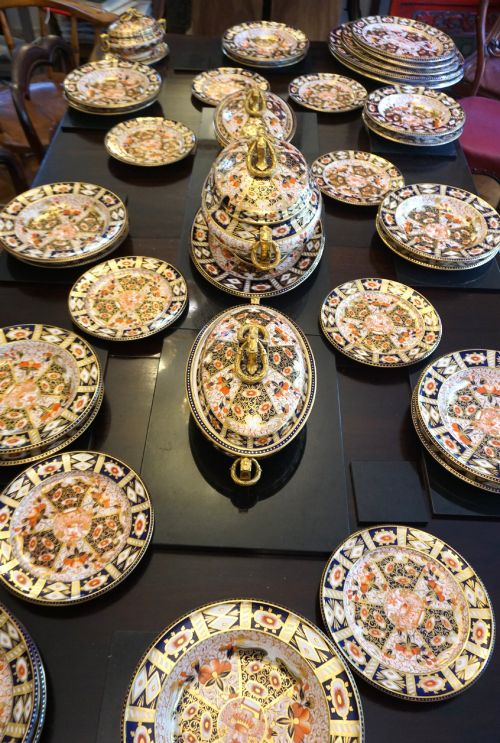
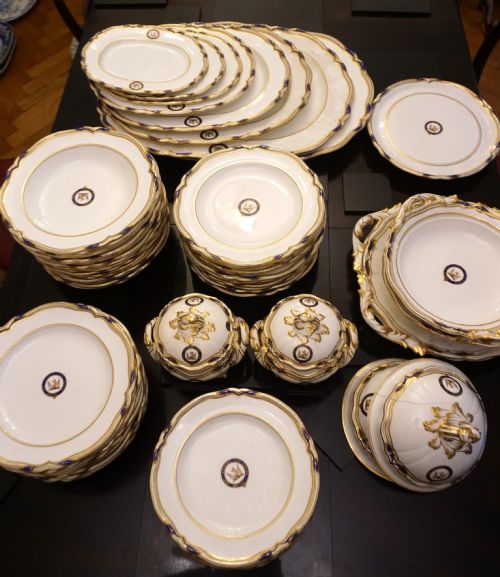
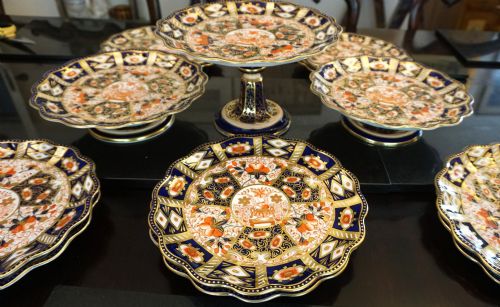
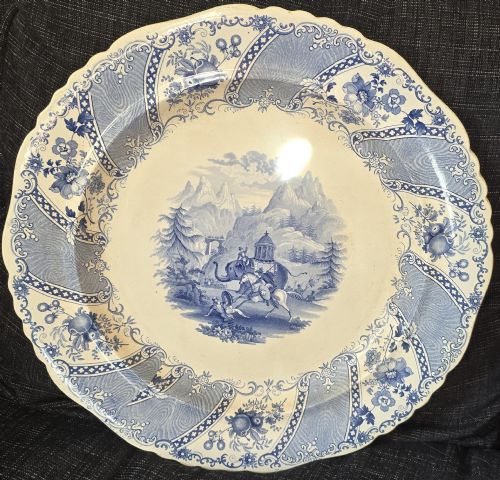
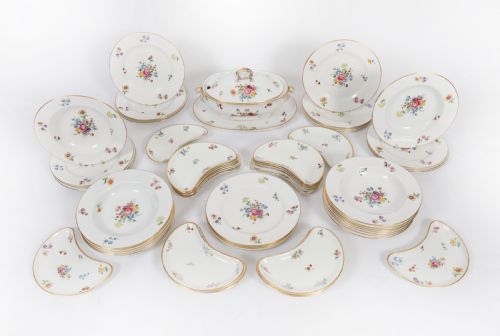
Victorian china plates encompass a wide variety of ceramic tableware produced throughout the nineteenth century, ranging from simple transfer-printed transferware to elaborate hand-painted dessert services. The pieces seen here span cabinet plates, serving platters, soup dishes, and complete dinner services intended for both display and everyday use.
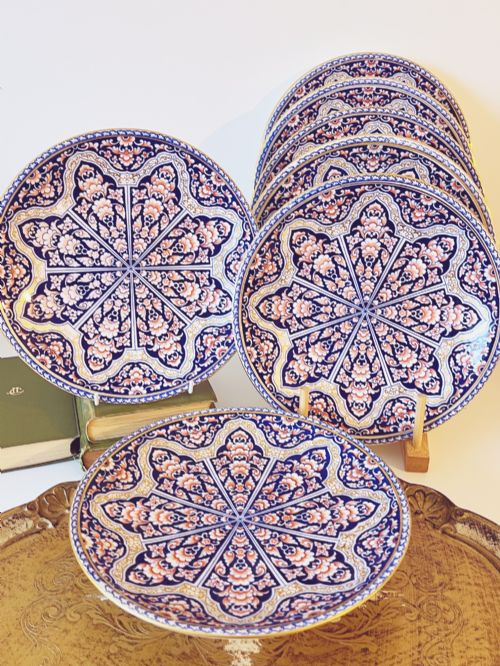
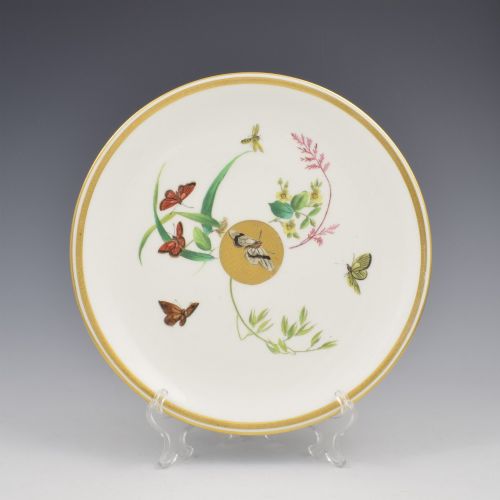
The materials and styles reflect the shifting tastes of the period, moving through early Victorian blue and white transfer prints toward later Aesthetic movement motifs, Victorian Imari patterns, and ornate armorial porcelain. Copeland, Minton, Coalport, and Royal Doulton dominate the offerings, appearing alongside earthenware, ironstone, and fine porcelain bodies.
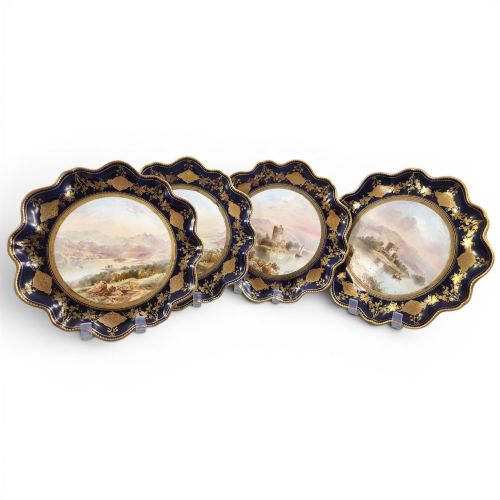
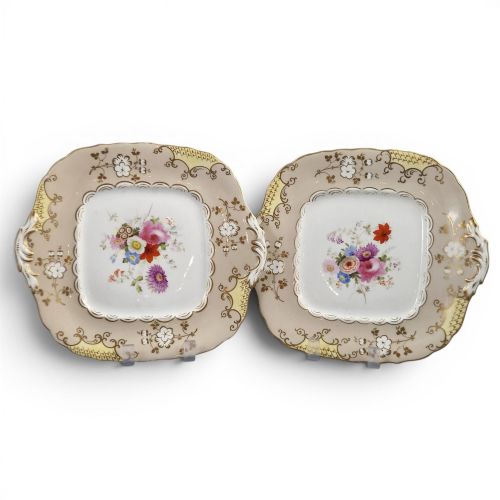
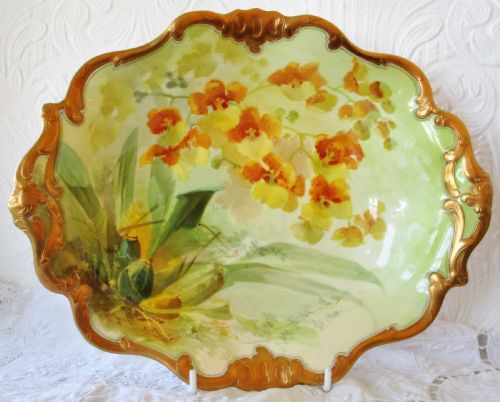
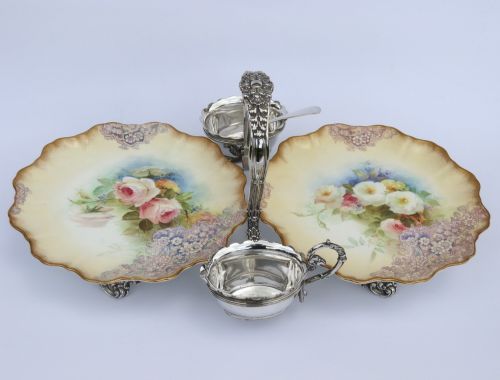
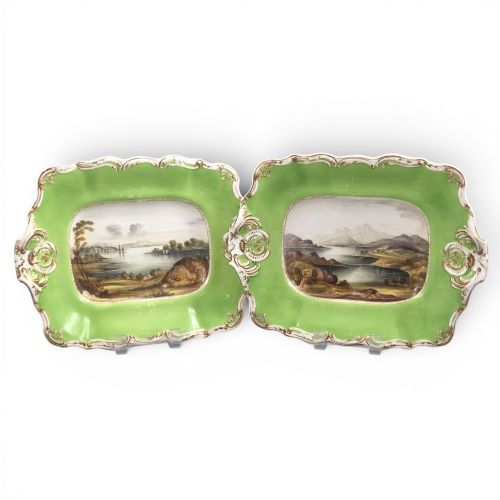
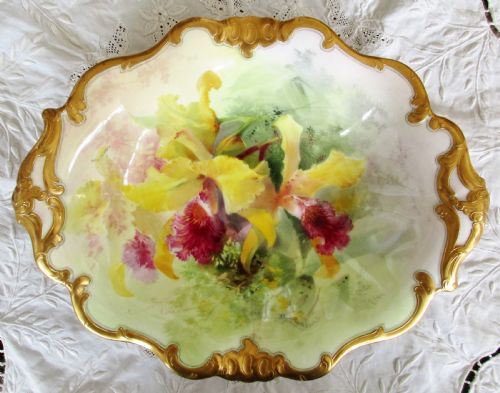
Buyers will encounter single cabinet plates alongside larger matching sets of dessert and dinner wares. Many examples preserve specific topographical views, botanical studies, or family crests hand-painted by named artists or produced by major English potteries.
How they were made
Potteries utilised porcelain, bone china, ironstone, and creamware bodies shaped into plates, platters, and dishes through moulding and throwing techniques. Ironstone provided a heavy, durable surface for everyday dining, while porcelain and fine china offered a thinner, more refined canvas for display.
Decoration relied on underglaze blue and white transfer printing as well as intricate hand-painted enamels combined with gold leaf and gilt highlights. Overglaze painting required multiple kiln firings to set the pigments and gilding securely onto the glaze.
Victorian China Plates Retail Price Guide 2026
Typical asking prices for victorian china plates among the pieces listed under this phrase on Sellingantiques today, from the lower quarter to the upper quarter. They describe what is for sale here now, not the wider market.
Listings feature porcelain, ironstone, and earthenware bodies decorated with transfer printing, enamel paints, and gold leaf.
What varies in quality
Quality separates standard production wares from high-end cabinet pieces through the precision and artistry of the hand-painting. Botanical studies, topographical views, and armorial crests executed by named artists or skilled factory hands command greater attention than mass-produced transfer prints.
The crispness of the porcelain paste, the brilliance of the enamel colours, and the application of gold leaf dictate the overall standard of a service. Complete matching services or well-preserved dessert sets demonstrate higher integrity than piecemeal collections assembled over time.
Royal Crown Derby·Wedgwood·Royal Doulton·Coalport·Copeland and Garrett·Aynsley·Pucher Deroche·Minton·Kerr and Binns·Kornilov Brothers
The Victorian China Plates Glossary
- Cabinet plate
- A decorative plate intended for display in a cabinet or on a wall rather than for practical dining use. These often feature elaborate hand-painted scenes or rich gilding.
- Transferware
- Earthenware or porcelain decorated by applying a printed design from an engraved copper plate onto the ceramic body using tissue paper. Blue and white transfer printing became widespread during the nineteenth century.
- Ironstone
- A dense, durable type of earthenware patented in the early nineteenth century to imitate Chinese porcelain. It resists chipping and cracking significantly better than standard pottery.
- Gilt
- A thin layer of gold applied to the surface of porcelain or earthenware as a decorative border or highlight. High-quality gilding retains its metallic lustre after decades of careful cleaning.
- Armorial
- A ceramic piece decorated with a specific family crest, coat of arms, or motto. These were typically commissioned by landed families for formal dining services.
Victorian China Plates: Frequently Asked Questions
Can I use these plates for everyday dining?
Most nineteenth-century ceramic tableware was made for actual use, particularly ironstone and heavier earthenware bodies.
However, fine porcelain cabinet plates with delicate enamel work and gold leaf are best reserved for display to prevent wear.
How do I clean antique china safely?
Wash pieces gently by hand using warm water and a mild detergent, avoiding harsh scrubbing or modern dishwashers.
Sudden temperature changes can crack fragile porcelain or craze the underlying glaze.
How can I tell ironstone from porcelain?
Ironstone is a heavy, opaque earthenware that feels dense and substantial in the hand.
Porcelain is lighter, sometimes translucent when held up to a strong light, and rings clearly when tapped gently.
What is the difference between a dessert service and a dinner service?
A dinner service comprises large meat platters, soup bowls, and dinner plates intended for the main savory course.
A dessert service focuses on comports, fruit plates, and matching dishes designed for the final sweet course.