

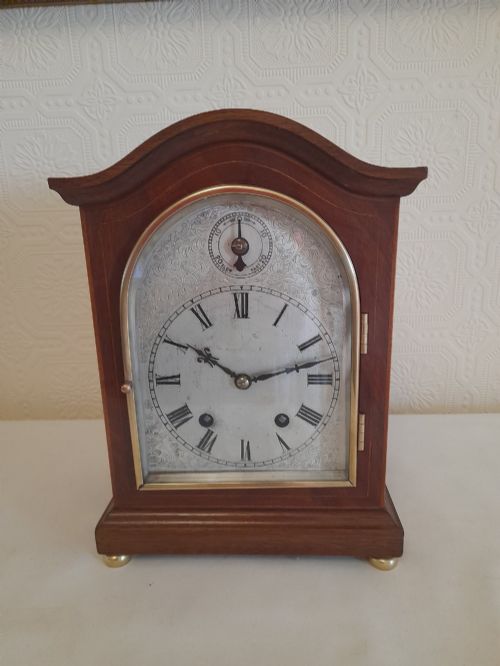
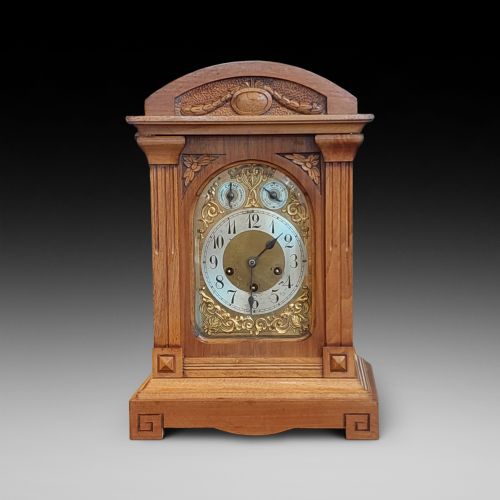
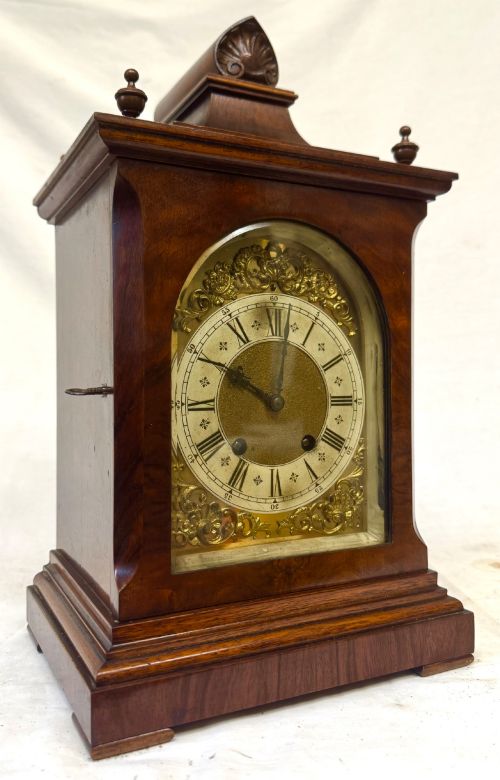
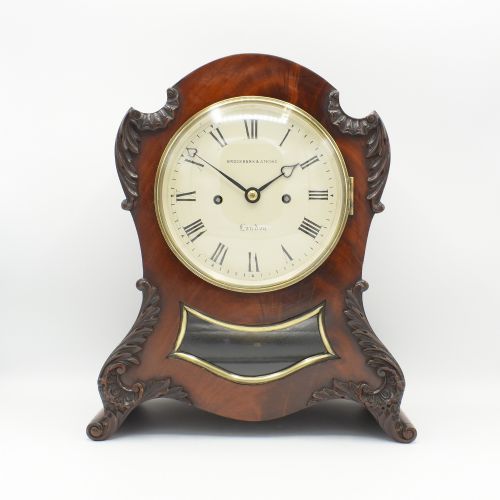
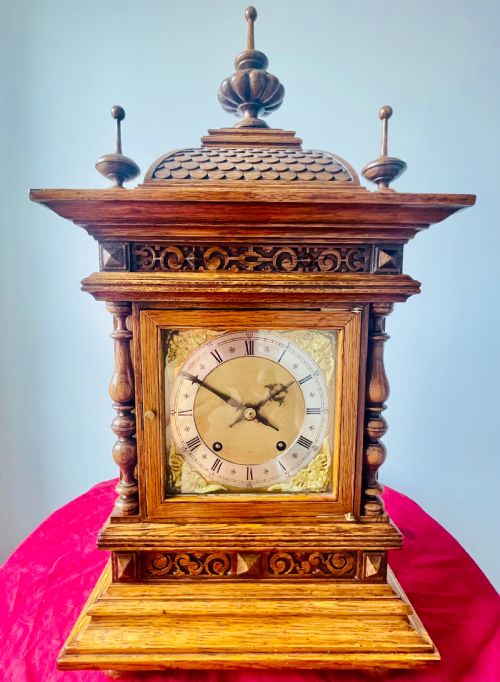
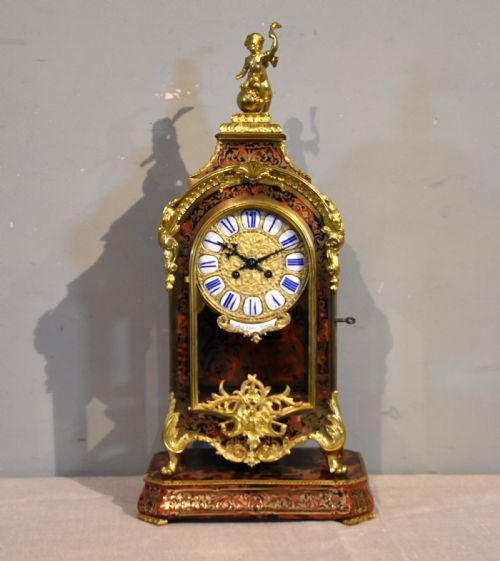

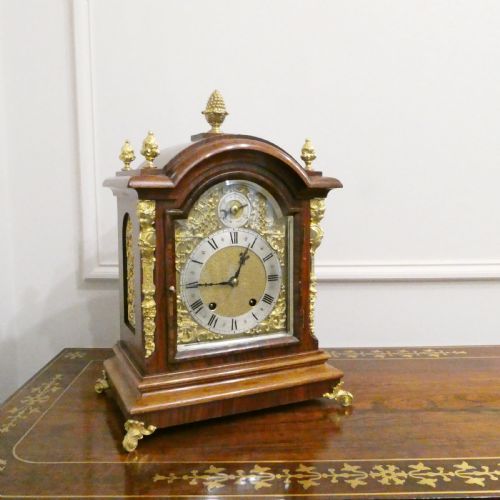


Victorian Chiming Bracket Clock
A victorian chiming bracket clock brings together precise horology and cabinet-making, standing ready to mark the hours in mahogany, oak, or walnut.
Victorian Chiming Bracket Clock
A victorian chiming bracket clock sits upon furniture or dedicated wall brackets, driven by spring or fusee movements housed in architectural wooden cases. The prevailing examples on this page date from the nineteenth century, spanning Victorian and Edwardian periods.
Cases emerge in mahogany, walnut, oak, and ebonised wood, frequently mounted with brass, ormolu, and glass panels. Dial configurations include brass, enamel, and silvered chapter rings, often revealing the mechanics of twin or triple fusee trains.
Makers and retailers range from English houses like George Wadham and Brockbanks & Atkins to German workshops such as Winterhalder & Hofmeier and Lenzkirch. Styles cross from Gothic Revival and Regency to Louis XV Revival and late Victorian designs.
How They Were Made
Cabinet makers constructed cases in solid and veneered timbers including mahogany, oak, walnut, and rosewood, incorporating carved details, brass mounts, and ebonised finishes. Glazed side panels and doors allowed views into the internal mechanisms.
Clockmakers fitted brass movements with fusee or spring-driven power sources, deploying bells, gongs, or multiple chimes for ting-tang, quarter-striking, and Westminster melodies. Dials combined engraved brass, enamel, and bronze components with protective glass covers.
Victorian Chiming Bracket Clock Retail Price Guide 2026
Typical asking prices for victorian chiming bracket clock among the pieces listed under this phrase on Sellingantiques today, from the lower quarter to the upper quarter. They describe what is for sale here now, not the wider market.
Materials span walnut, mahogany, oak, ormolu, and ebonised wood across nineteenth-century styles.
What Varies in Quality
Horological complexity divides simpler striking movements from triple fusee mechanisms that play multiple tunes on gongs or bells. The intricacy of the gear trains and the reputation of the maker dictate the standing of each piece.
George Wadham·Brockbanks & Atkins·Winterhalder & Hofmeier·Mappin & Webb·Schneckenburger·Lenzkirch·Barraud & Lunds
The Victorian Chiming Bracket Clock Glossary
- Fusee
- A conical pulley used in mechanical clocks to maintain an even pull on the movement as the mainspring unwinds. This mechanism ensures more accurate timekeeping throughout the duration of the wind.
- Ting-tang
- A striking system utilising two hammers and two bells or gongs to sound the quarters. It produces a distinctive two-note chime before the hour strike.
- Triple fusee
- A movement equipped with three separate fusee chains or cords driving the timekeeping, the striking train, and the chiming train. Such movements often operate multiple bells or Westminster chimes.
- Boulle
- A form of marquetry employing tortoiseshell and brass inlaid in contrasting patterns, named after the French cabinet maker André-Charles Boulle.
- Pad-top
- A style of clock case featuring a raised, domed upper section above the main body. This architectural roof form appears frequently on larger bracket clocks.
Victorian Chiming Bracket Clock: Frequently Asked Questions
How do fusee clocks work?
A fusee movement uses a conical drum and a chain or cord to equalise the declining power of the mainspring as it unwinds. This maintains consistent torque on the gear train for stable timekeeping.
Most high-grade examples on this page employ twin or triple fusee setups to manage time, strike, and chime functions separately.
What is a ting-tang clock?
A ting-tang clock strikes two distinct notes on quarters or half-hours before sounding the main hour. The mechanism uses two separate hammers hitting two bells or gongs.
This lighter acoustic signature distinguishes them from full Westminster quarter-chime movements.
Where were these clocks placed?
Bracket clocks earned their name from the wall brackets or shelves designed to support them in parlours, hallways, and drawing rooms. Many were also placed directly onto mantelpieces or tables.
Their glazed side panels allowed natural light to illuminate the movement from multiple angles.
How do I identify the maker?
Makers usually signed their names on the brass dial plates, backplates of the movement, or occasionally on enamel chapters. German workshops often stamped initials like W&H on the rear movement plate.
English makers frequently engraved their names and locations directly into the brass work.