
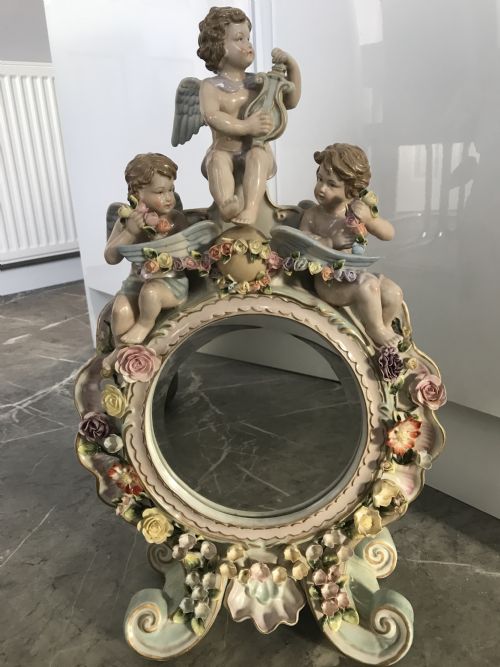


Victorian Cherub Mirror
A victorian cherub mirror brings spirited nineteenth-century charm into a room, combining carved putti or cherubs with decorative frames.
Victorian Cherub Mirror
A victorian cherub mirror unites nineteenth-century decorative arts with figurative sculpture, featuring winged putti or cherubs adorning wall, dressing table, or overmantel glass.
The selections on this page span styles from Rococo Revival and French Rococo Revival to Baroque Revival and Renaissance Revival, reflecting the period's taste for elaborate historical revivalism.
Forms range widely from large overmantel mirrors placed above fireplaces to smaller dressing table mirrors, easel mirrors, and bracket mirrors.
Materials and Techniques
Giltwood, gesso, and composition provide the ornate gilded frames characteristic of these pieces, often built over carved wooden carcases.
Porcelain elements, sometimes originating from continental factories or associated with Dresden and makers like Jean Gille, incorporate delicate ceramic flowers and figures into the mirror design.
Cast iron examples, such as those linked to Coalbrookdale, utilise robust metal casting to form durable frames complete with integrated mottos or figures.
Listings feature materials including cast iron, porcelain, giltwood, and gesso across periods from 1800 through the late nineteenth century.
Assessing Quality
The refinement of the carving or moulding distinguishes superior pieces, particularly in the modelling of the cherubs' faces, hair, and wings.
Frame construction and surface finish dictate the overall standard, where hand-applied gold leaf or carefully preserved original gilding surpasses later repainting.
The condition and authenticity of the mirror plate itself, whether original silvered glass or bevel-edged, plays a significant role in the piece's integrity.
Jean Gille·William Comyns
The Victorian Cherub Mirror Glossary
- Putto
- A plump, naked male child figure often winged, commonly referred to as a cherub in nineteenth-century decorative contexts. These figures appear frequently on crestings and frames.
- Gesso
- A plaster-like mixture applied to wood frames and carved or moulded before gilding. It creates the smooth, raised relief details found on ornate mirrors.
- Overmantel mirror
- A large mirror designed to hang specifically on the wall above a fireplace mantelpiece. They often feature architectural pediments or prominent crestings.
- Giltwood
- Wood, typically carved timber, coated with gold leaf or gold paint. This finish defines the opulent appearance of many nineteenth-century wall mirrors.
- Easel mirror
- A freestanding mirror supported by a hinged prop or stand at the back. These are typically smaller dressing table or tabletop accessories.
Victorian Cherub Mirror: Frequently Asked Questions
Where should I hang an overmantel mirror?
An overmantel mirror traditionally hangs centrally above a fireplace mantelpiece, reflecting light and anchoring the room's proportions.
Ensure the wall fixings are secured adequately into studs or masonry to support the substantial weight of these large nineteenth-century frames.
Are porcelain mirrors fragile?
Porcelain mirrors require careful placement away from high-traffic zones where accidental knocks might damage delicate ceramic flowers or projections.
Their glazed surfaces clean easily with a dry cloth, but the applied decorative elements demand gentle handling during maintenance.
How do I date a Victorian mirror?
Dating relies on examining the construction methods, the backboards, the style of the frame ornamentation, and the condition of the glass plate.
Stylistic markers like Rococo Revival curves or specific maker marks help narrow down the period of manufacture alongside material evidence.