
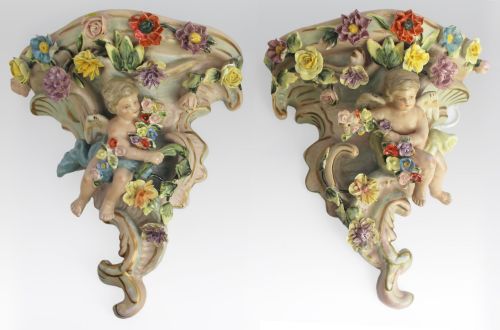
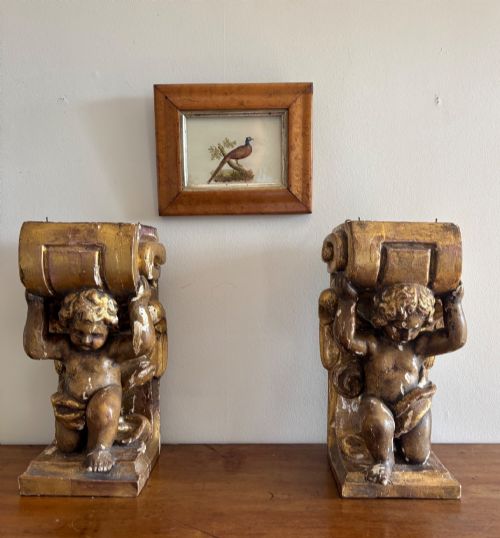
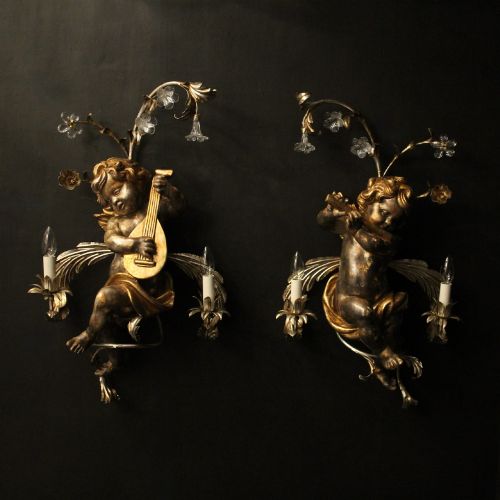
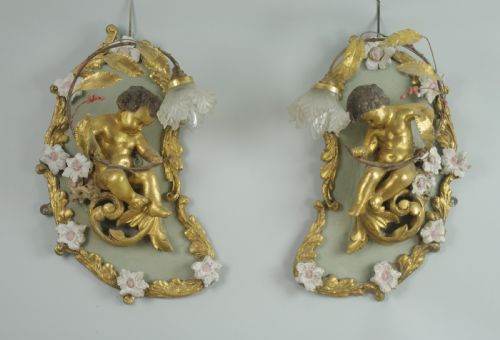
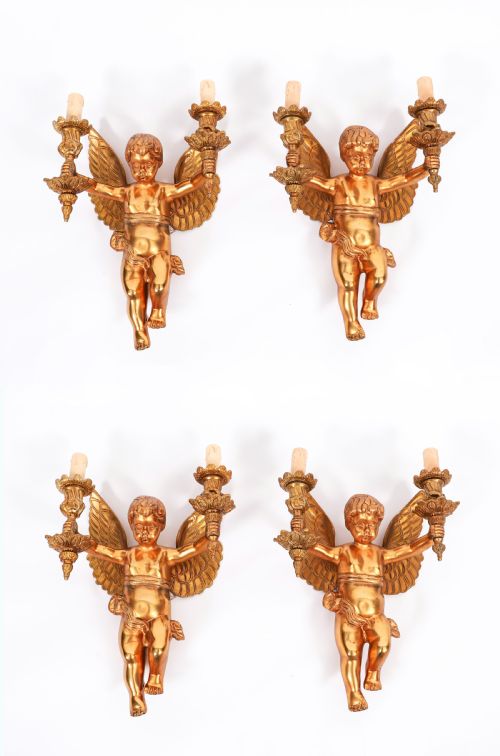
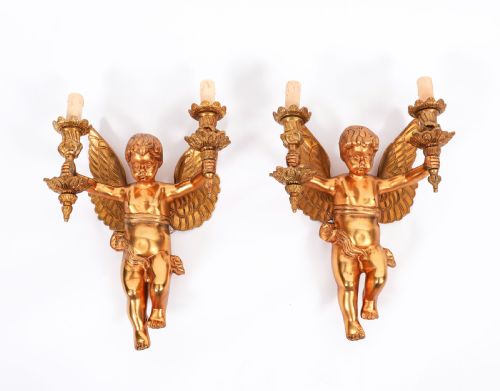

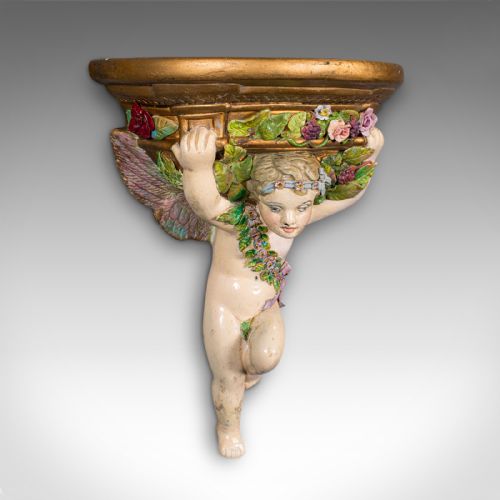


Gilded Putti Wall Sconce
A gilded putti wall sconce brings dramatic sculptural presence and reflective candlelight to a room, combining carved figures with rich metallic finishes.
Gilded Putti Wall Sconce
A gilded putti wall sconce presents carved, moulded or cast figures of winged cherubs integrated into functional lighting fixtures, brackets and mirrors. These wall-mounted decorative objects emerge most frequently from nineteenth-century revival movements, channelling earlier continental aesthetics.
The selections available here span from Italian giltwood and Murano glass combinations to French ormolu twins and English plaster mounts. Buyers encounter pairs and single pieces spanning the nineteenth and early twentieth centuries, particularly associated with Rococo Revival and Baroque Revival styles.
Forms extend beyond traditional candle arms to include wall brackets, corbels, hanging lanterns and bracket mirrors. Each variation incorporates the central cherub motif into architectural or decorative wall furniture designed to catch and project light.
How they were made
Wood pieces rely on carved giltwood and gesso surfaces finished with applied gold leaf, creating deep texture and reflective warmth. Carvers shaped timber frames and brackets before applying fine layers of metallic leaf over prepared grounds.
Materials recorded across the inventory include giltwood, gesso, ormolu, porcelain, Murano glass, and cast metal.
What varies in quality
The refinement of the carving or casting defines the upper tier of these works, where facial expressions, feather details on wings, and anatomical proportions remain sharp and expressive. Lesser examples show softer, generalized moulding that loses definition in the drapery and hair.
The integrity of the surface finish dictates visual depth, with genuine gold leaf and aged ormolu retaining subtle tonal variations rather than flat, uniform paints. Superior pieces integrate the lighting arms and brackets harmoniously with the sculptural figures rather than attaching them as an afterthought.
The Gilded Putti Wall Sconce Glossary
- Putti
- Plaster, carved or cast representations of small winged infants or cherubs, frequently depicted in seventeenth- and eighteenth-century art revivals. They serve as the central figurative element in these wall sconces.
- Giltwood
- Timber that has been coated with a thin layer of gold leaf or gold paint. This technique gives wooden carvings the appearance of solid gold while maintaining a lighter structural weight for wall hanging.
- Ormolu
- Finely chased and gilt bronze used extensively in decorative hardware and lighting fixtures from the eighteenth century onward. The term denotes the bright, warm metallic finish applied to cast metal mounts.
- Rococo Revival
- A nineteenth-century design movement characterised by asymmetrical scrolls, naturalistic motifs, and elaborate ornamentation. This style heavily influences many of the cherub wall lights and brackets found here.
- Corbel
- A structural piece of stone, wood or plaster projecting from a wall to weight a load, often interpreted here purely as a decorative wall bracket supporting a light or figure.
Gilded Putti Wall Sconce: Frequently Asked Questions
How do I hang a heavy giltwood sconce safely?
Wall fixtures incorporating carved wood, bronze, or porcelain require secure anchoring directly into wall studs or the use of appropriate masonry fixings depending on your wall type.
Given the projection of multi-branch arms and heavy giltwood, professional installation ensures the weight distributes evenly without damaging plaster.
Can these antique wall lights be rewired for modern electricity?
Many older wall brackets and sconces have been adapted for electrical wiring during the twentieth century, while others retain candle-holders for traditional use.
A qualified electrician can safely update internal wiring or convert candle sockets to meet current safety standards without altering the external appearance.
How do I clean and maintain gilt surfaces?
Dust giltwood, gesso, and ormolu gently using a soft, dry brush or a feather duster to prevent accumulation in the intricate recesses of the putti carvings.
Avoid liquid cleaners, abrasives, and harsh chemicals, as these can strip the delicate gold leaf or damage the underlying gesso preparation.
How do I date a nineteenth-century putti wall sconce?
Dating relies on examining the construction methods of the backplate, the composition of the wood or metal, and the style of the casting or carving.
Revival pieces often blend historical motifs like Baroque and Rococo with nineteenth-century manufacturing techniques such as machine-cast brass or standardised screw threads.