
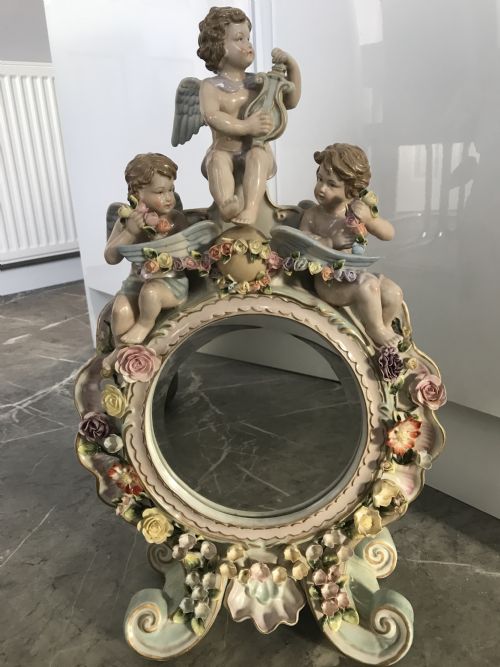


Antique Porcelain Mirror
These antique porcelain mirrors bring exuberant floral decoration and gilt bronze mounts into the interior.
Antique Porcelain Mirror
When you search for an antique porcelain mirror, you are looking at ornamental looking-glasses framed or mounted in glazed ceramic, often shaped in curves and scrolls. These pieces range from small hand-mirror formats and dressing table glass to larger wall mirrors and easel-backed designs.
Continental factories produced the majority of these examples during the nineteenth century, drawing heavily on revival tastes. You will frequently meet pieces adorned with applied porcelain flowers, cherubs, and painted blue or cream grounds.
The aesthetic leans strongly towards nineteenth-century revivalism, particularly French Rococo interpretations. Such mirrors served as decorative accessories for dressing tables and boudoirs across the Victorian era and into the early twentieth century.
How they were made
Makers combined ceramic bodies with reflective glass and metalwork, utilising porcelain alongside ormolu, gilding, and gold leaf. Many frames feature hand-painted enamel decoration and moulded floral motifs applied directly to the porcelain surface.
Support structures frequently incorporate ebonised wood or burr walnut alongside metal easel backs and mounts. Individual components such as cherubs and flowers were hand-modelled before firing and glazing at factories across the continent.
Materials recorded across the inventory include porcelain, mirror glass, ormolu, gold leaf, enamel, and ebonised wood.
What varies in quality
Quality rests primarily on the crispness of the modelling and the finesse of the painted or gilded details. Finer examples display delicately shaped porcelain frames with well-defined floral elements and securely fitted ormolu mounts.
The reputation of the producing factory and the integration of the mirror glass into the ceramic frame also separate standard production from superior pieces. Heavier framing materials and careful attention to the reverse support indicate higher execution standards.
Jean Gille·Joseph Meissonnier·Rudolstadt Volstedt·Sitzendorf
The Antique Porcelain Mirror Glossary
- Ormolu
- Gilded bronze or brass mounts used extensively to frame and accent porcelain objects. This technique added decorative weight and metallic contrast to the ceramic surfaces.
- Easel mirror
- A freestanding looking-glass supported by a hinged prop at the back. These were designed for placement on dressing tables and mantelpieces.
- Sitzendorf
- A nineteenth-century German porcelain factory known for figured and floral decorative wares. Pieces bearing this origin often feature elaborate moulded ornamentation.
- Rococo Revival
- A nineteenth-century design movement characterised by asymmetrical C-scrolls, shell motifs, and naturalistic curves. This style heavily influenced the frames of antique porcelain mirrors.
- Silver deposit
- A chemical process used to bond pure silver designs directly onto a glass or ceramic surface. It creates a metallic overlay pattern integrated with the material beneath.
Antique Porcelain Mirror: Frequently Asked Questions
Where should I place an antique porcelain mirror?
These mirrors suit dressing tables, mantelpieces, or small wall spaces where their detailed frames can be appreciated close up. They function as decorative accent pieces rather than primary looking-glasses.
Keep them away from areas of heavy household traffic to protect the delicate applied porcelain flowers and gilt mounts from accidental knocks.
How do I clean an antique porcelain mirror?
Dust the porcelain frame gently with a soft, dry brush to remove particles without damaging the raised floral elements or paintwork. Avoid using liquid cleaners on the ceramic surface.
For the glass plate, apply a small amount of window cleaner to a cloth rather than spraying directly onto the mirror, preventing moisture from seeping behind the frame.
Are these mirrors fragile?
The applied porcelain flowers and protruding sculptural details make these pieces delicate to handle. Extra care is required when moving or dusting them.
Most surviving examples have endured well by remaining stationary on dressing tables or walls, supported by sturdy easel backs or wall hooks.
How do I date an antique porcelain mirror?
Dating relies on the stylistic markers of the nineteenth century, such as Rococo Revival curves and the presence of factory marks on the porcelain base. Ormolu quality and the construction of the wooden or metal backing also provide chronological clues.
Comparative examples from continental factories help narrow down the period of manufacture between the mid-nineteenth century and the early twentieth century.