
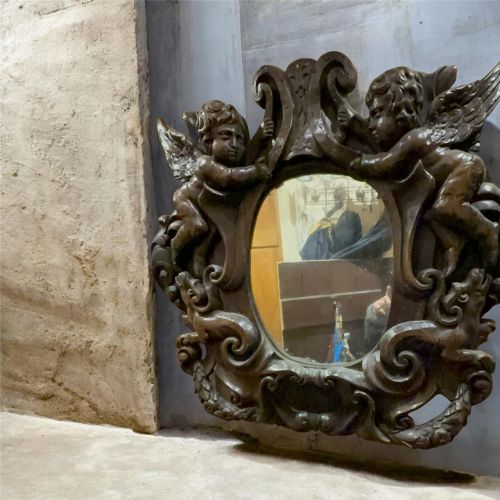


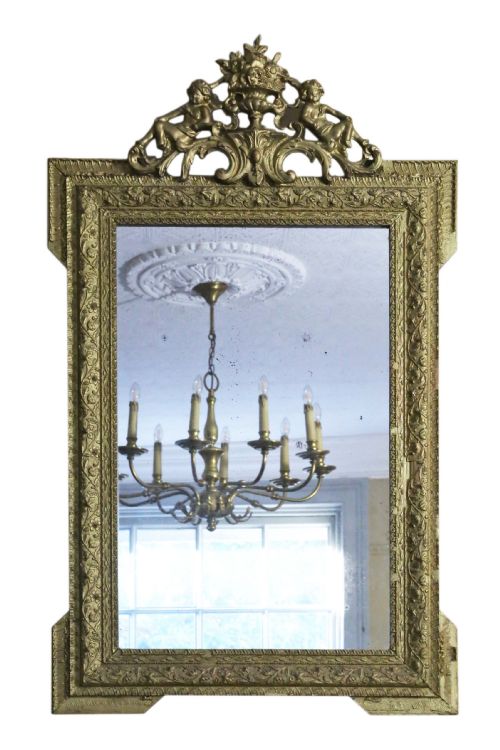


Putti Wall Mirror
A putti wall mirror brings winged cherubic figures into a room, offering both functional glass and sculptural ornament that collectors prize.
Putti Wall Mirror
When you search for a putti wall mirror, you encounter decorative looking glasses adorned with carved or cast figures of cherubs, spanning the eighteenth, nineteenth, and early twentieth centuries. These pieces appear in varied regional idioms, including French parcel gilded examples, Italianate and Florentine designs, and English revival styles.
The most common formats on this page include overmantel mirrors with crestings, oval wall mirrors, and bracket mirrors. They draw upon Baroque, Rococo Revival, and Renaissance Revival vocabularies, integrating mythical infants into the overall carved woodwork or gilded frame.
How they were made
Maker's workshops built these frames using traditional timber carcasses of oak, walnut, or carved wood, subsequently applying gesso layers to receive gold leaf or paint. Carvers shaped the intricate scrollwork and winged figures by hand before finishing the surfaces with parcel gilding or polychrome highlights.
Certain industrial interpretations utilised cast iron, as seen in foundry pieces bearing mottos, while others incorporated bevelled mirror glass held within heavy wooden rebates. The union of glass production and sculptural framing required distinct carpentry and foundry skills.
Listings span the eighteenth, nineteenth, and early twentieth centuries, incorporating materials such as carved oak, walnut, cast iron, gesso, and gold leaf.
What varies in quality
The distinction between standard commercial pieces and finer examples rests upon the depth and vigour of the carving. Skilled carvers rendered the putti with anatomical nuance and expressive detail, whereas lesser items rely on heavy, repetitive gesso moulding over simple wooden blanks.
Original mercury or early plate glass surfaces, combined with untouched period gilding displaying natural patination, elevate the standing of a piece. The structural integrity of the frame's joints and the harmony between the cresting figures and the primary mirror plate dictate lasting worth.
Coalbrookdale
The Putti Wall Mirror Glossary
- Putto
- A figure of a small winged infant, frequently depicted in classical art and architectural decoration. Sculptors rendered these figures in wood, gesso, or cast iron atop mirror crestings.
- Giltwood
- Timber that has been coated with a thin layer of gold leaf or gold paint. This finish catches domestic light and defines the ornate profiles of nineteenth-century frames.
- Gesso
- A plaster-like mixture applied to wooden frame foundations to create a smooth surface for gilding. Artisans carved intricate relief details directly into this hardened material.
- Overmantel mirror
- A large looking glass specifically designed to hang above a fireplace mantelpiece. These frames often feature prominent decorative crestings or architectural pediments.
- Parcel gilded
- Partially gilded, leaving portions of the underlying wood or painted finish exposed. This technique creates visual contrast against the bright gold leaf sections.
Putti Wall Mirror: Frequently Asked Questions
How do I hang a heavy putti wall mirror safely?
Due to the dense wooden carcasses, gesso ornamentation, and heavy glass plates, these mirrors require secure wall fixings into masonry or direct wooden studs. Utilising sturdy mirror plates screwed into the frame back ensures the weight distributes evenly.
Professional installation prevents strain on the historical joinery and protects the fragile carved putti crestings from accidental impact during everyday domestic use.
What rooms suit a putti wall mirror best?
These decorative looking glasses function effectively above drawing-room mantelpieces, in grand hallways, or as focal points in dining spaces. Their reflective glass expands spatial perception while the sculptural frames introduce architectural presence.
Placing them away from direct moisture prevents deterioration of the original gesso and preserves the delicate gold leaf finishes over time.
How can I tell a nineteenth-century revival mirror from an eighteenth-century original?
Eighteenth-century examples typically display hand-carved solid timber frames with tool marks appropriate to period joinery and softer, worn gilding patination. Nineteenth-century revival pieces often employ heavier gesso composition layers over machine-sawn carcasses and feature crisp, revivalist stylistic cues.
Examining the backboards, holding fixings, and the composition of the glass plate helps determine the exact period of manufacture.