


Victorian Cherub Centrepiece
A Victorian cherub centrepiece brings sculptural figures and elaborate bowls together to anchor a formal table setting.
Victorian Cherub Centrepiece
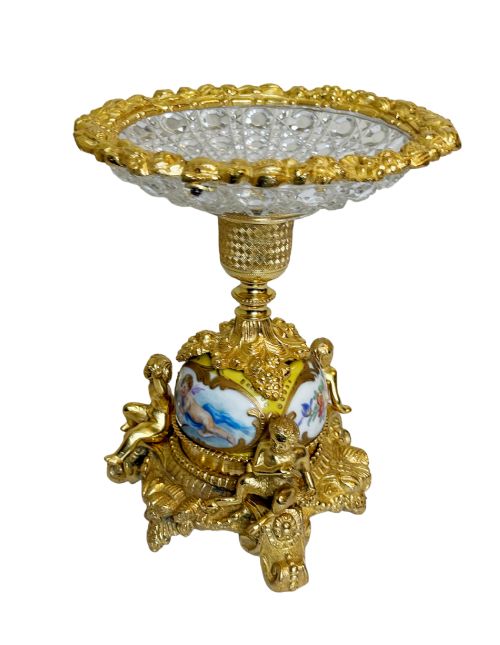
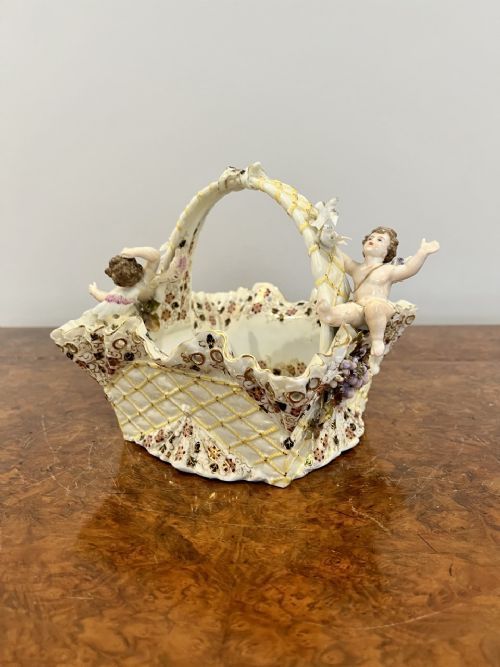
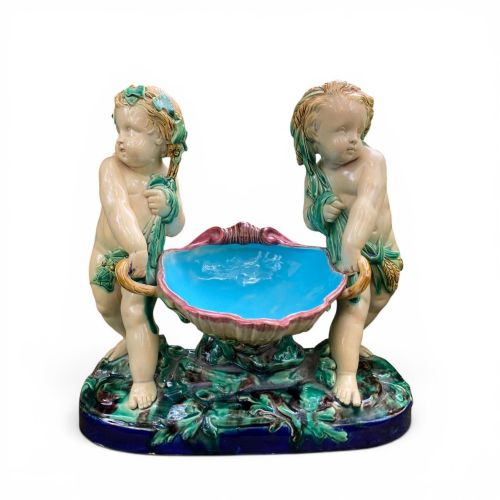
A Victorian cherub centrepiece combines figurative sculpture with a functional vessel designed for display on a dining table or sideboard. These pieces frequently manifest as porcelain baskets, majolica tazzas, or cut crystal bowls supported by putti or winged infants.
The objects span the nineteenth century and incorporate related forms such as compotes, tazzas, jardiniere platters, and figural candelabra. Continental porcelain factories and English potteries dominate the origins, alongside metalwork utilising gilt bronze and silver plate.
Buyers encountering this group will find that figural mounts and winged figures dominate the designs, whether cast in metal or modelled in glazed ceramic. The scale ranges from compact single-tier dishes to multi-light candelabra combinations.
Materials and construction
The manufacture relies heavily on ceramic and porcelain bodies, alongside cast metals including gilt bronze, ormolu, and silver plate. Glazed ceramic and majolica techniques provide vibrant colour surfaces, while cut crystal and mother-of-pearl supply contrasting textures for the bowls.
Metal components involve intricate casting and chasing for the figural putti, combined with plating or fire gilding. Ceramic versions depend on mould-forming followed by detailed hand-finishing and glazing before firing.
Listings demonstrate materials spanning porcelain, earthenware, gilt bronze, silver plate, and cut crystal across the nineteenth century.
Evaluating quality and execution
Secondary elements such as cut crystal quality, chasing depth in bronze mounts, and the preservation of original gilding or silver plating determine the standing of an individual piece.
Minton·Elkington·Plaue Schierholz·Sevres
The Victorian Cherub Centrepiece Glossary
- Putti
- Winged infant figures frequently depicted in Renaissance and Revival art. These sculptural elements form the central support or decorative motif on figural centrepieces.
- Tazza
- An elevated shallow bowl or cup resting on a stem and foot. This form serves as a primary vessel style for fruit or floral display.
- Majolica
- A type of earthenware coated with an opaque tin glaze and painted with metallic oxide colours. The technique produces rich polychrome surfaces found on Victorian table wares.
- Ormolu
- Finely chopped gold applied to a bronze base using a mercury amalgamation process. The method yields a distinct warm metallic lustre on nineteenth-century metalwork.
- Comport
- A standing dish used for holding fruit or sweetmeats at dessert. The form corresponds closely to the centrepiece tazza or pedestal bowl.
Victorian Cherub Centrepiece: Frequently Asked Questions
How were centrepieces used?
These pieces occupied the middle of the dining table during formal meals, often holding fruit, flowers, or sweetmeats.
They functioned primarily as decorative focal points to impress guests during multi-course dinners.
What materials are common?
The listings show a split between ceramic bodies like porcelain and majolica, and metal structures in bronze, ormolu, and silver plate.
Cut crystal and glass frequently form the dish portion held by the figures.
How do I date a piece?
Dating relies on registry marks, factory ciphers, and stylistic indicators such as Rococo Revival or Neoclassical motifs.
Nineteenth-century manufacturing techniques and material choices further narrow the production window.
Are candelabra and centrepieces combined?
Certain designs integrate candle arms directly into the figural centrepiece structure.
These hybrid objects served dual purposes for illumination and table decoration.