
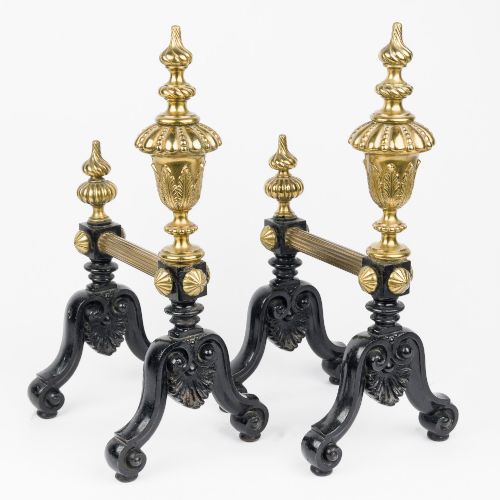
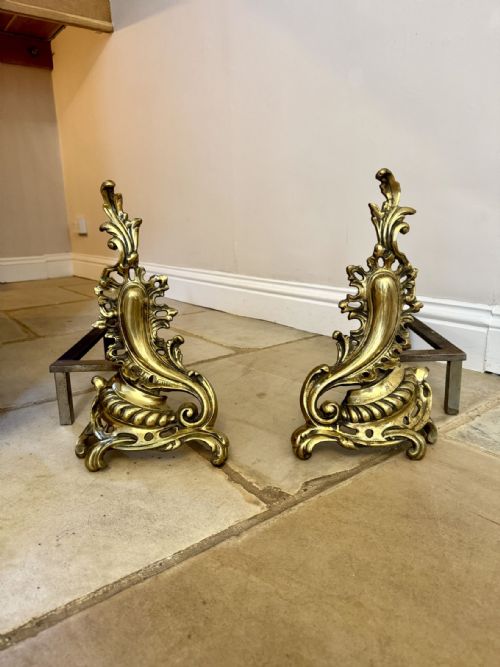
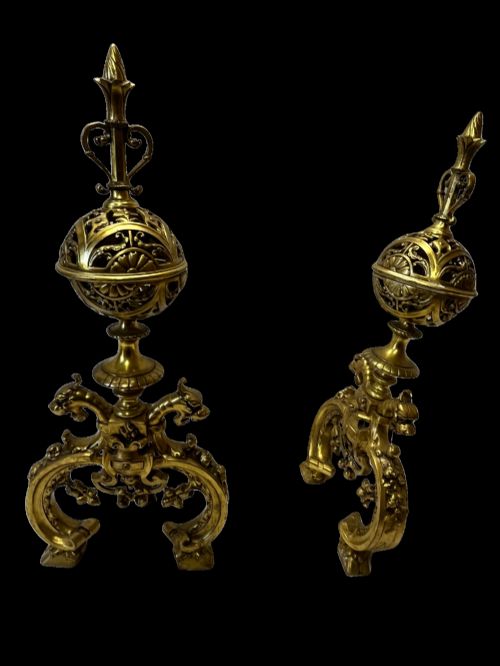


Victorian Chenets Pair
These Victorian chenets pair ornamental metalwork with hearth utility, offering substantial period character to any fireplace opening.
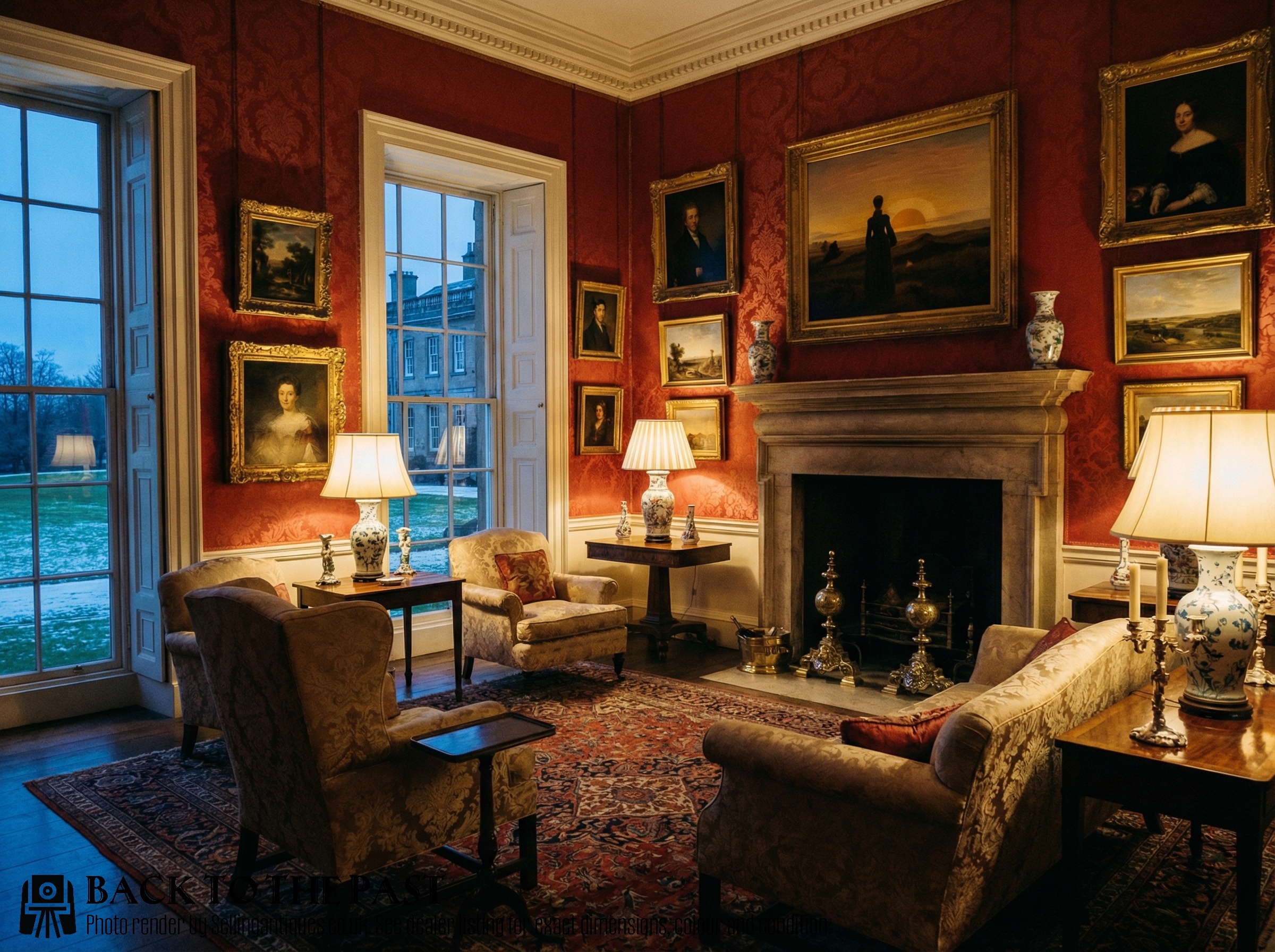
Victorian Chenets Pair
A victorian chenets pair comprises matched metal supports designed to hold logs within an open hearth, functioning both as practical fireplace accessories and decorative focal points. These pieces appear in forms such as andirons, fire dogs, and fender chenets, fulfilling the role of supporting firewood above the hearth floor.
The selections span the nineteenth century and early twentieth century, incorporating periods like the Victorian era alongside revival aesthetics such as French Rococo, Gothic Revival, and Baroque Revival. Makers and workshops produced these items in solid brass, iron, bronze, steel, and ormolu.
Buyers encounter items ranging from neat steel designs to ornate figural bronzes and solid brass owl face pieces. Their origins cross British and French traditions, often reflecting continental styles adapted for Victorian interiors.
How they were made
Foundries utilised casting techniques to shape heavy metals including brass, iron, and bronze into detailed sculptural forms. Artisans then finished surfaces through chasing, polishing, or applying fire gilding to create ormolu and gilt bronze effects.
Steel and iron components underwent forging and shaping to achieve robust utility frames for supporting wood within the grate. Cast iron and cast brass elements were assembled with secure mechanical joints to withstand high hearth temperatures.
Listings feature materials spanning brass, iron, bronze, steel, and ormolu across nineteenth-century and early twentieth-century periods.
What varies in quality
Weight and metal thickness distinguish substantial castings from lighter alternatives, influencing the structural integrity of the supports. Finer examples display crisp detail in figural elements, rococo scrolls, and cast ornamentation without surface blurring.
The distinction between standard production items and exceptional work lies in the depth of hand-finishing, such as the precision of the chasing on bronze or the richness of the ormolu gilding. Articulation of design styles, from Italian Renaissance Revival to Art Nouveau, shows varying degrees of sculptural ambition.
James Cartland & Son
The Victorian Chenets Pair Glossary
- Chenet
- An alternative term for an andiron or fire dog, frequently used in French contexts to describe ornamental hearth supports. These items sit at the front of the fireplace.
- Andiron
- A horizontal metal support raised on legs, used in pairs to hold logs in an open fireplace. They often feature decorative front standards.
- Ormolu
- Finely ground high-carat gold applied to a bronze base using a mercury amalgamation process, creating a rich golden surface. This technique appears on decorative French pieces.
- Fire dog
- A heavy metal support for firewood that combines functional utility with a decorative front pillar. They form the primary matching pair by the hearth.
- Fender
- A low metal guard placed around the hearth to contain ash and embers, sometimes matching the design of the associated chenets. Sets occasionally incorporate adjustable fender forms.
Victorian Chenets Pair: Frequently Asked Questions
How do chenets differ from andirons?
Chenets and andirons serve the identical function of supporting firewood within an open hearth, though the term chenet often denotes French or highly decorative designs.
Both items sit in matched pairs facing into the room, combining practical log support with ornamental metalwork.
Were these pieces used for burning wood?
These metal supports were built to hold logs above the hearth floor, allowing air circulation beneath the fire for better combustion.
Their heavy construction in cast iron, brass, and bronze enabled them to withstand intense heat during daily use.
How do I identify a revival style?
Revival styles draw upon specific historical periods, such as the seventeenth century, Baroque, or Rococo, reinterpreting those motifs within nineteenth-century manufacturing methods.
Details like asymmetric scrolls, classical urns, or figural castings point directly to the specific design movement influencing the maker.
Can these be placed in a non-working fireplace?
These pieces function effectively as decorative hearth furnishings in decorative or blocked fireplaces, introducing period character to a room.
Their substantial weight and sculptural forms allow them to stand independently as focal points without requiring an active fire.