



Victorian Ceramic Cheese Stand
A Victorian ceramic cheese stand brings the warmth of the nineteenth-century dining room to your table with its heavy dome and matching base.
Victorian Ceramic Cheese Stand
A victorian ceramic cheese stand comprises a heavy underplate and a tall, domed cover designed to keep soft and hard cheeses fresh on the Victorian dining table. Most examples encountered here take the form of substantial covered dishes or bells paired with matching serving plates.
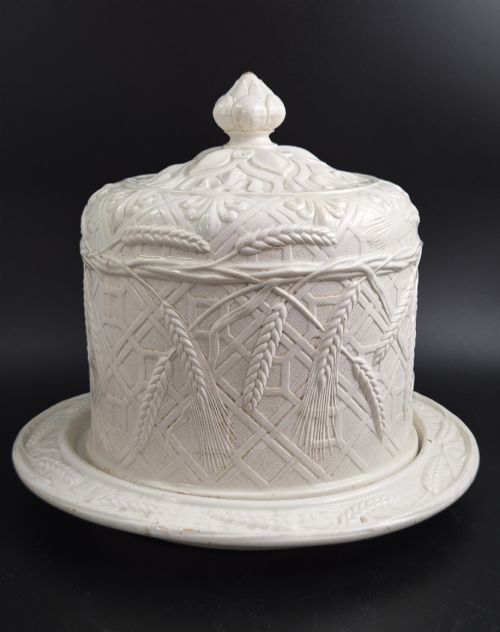
The objects span the nineteenth century, including pieces from the eighteen sixties, seventies, and eighties, reflecting the domestic habits of the period. Forms range from utilitarian white ironstone to highly decorative majolica and blue and white earthenware.
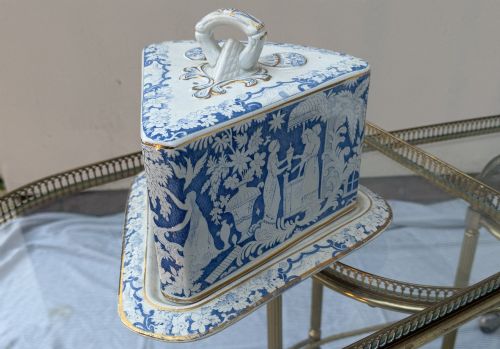
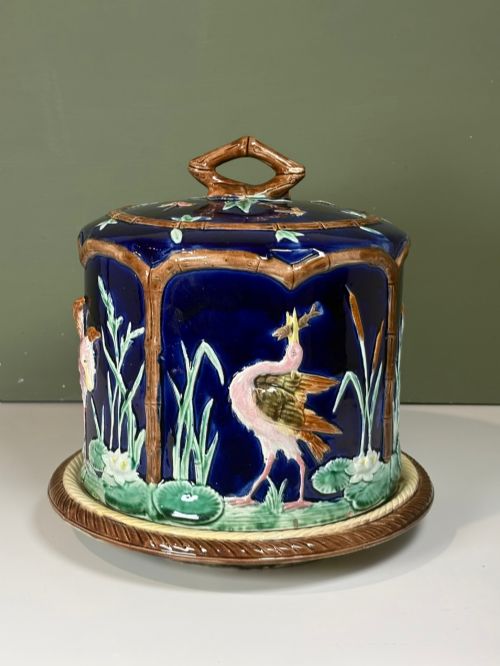
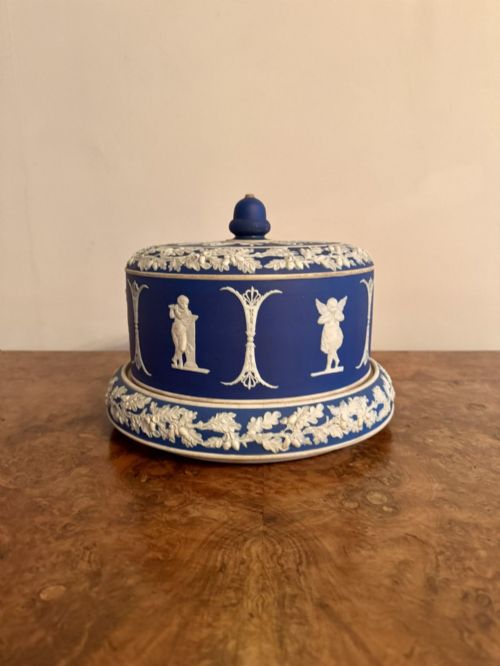
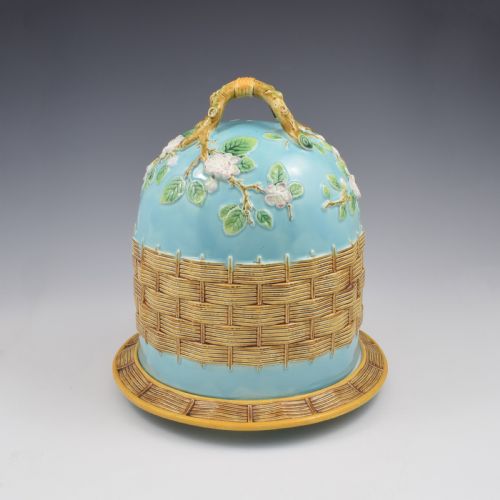
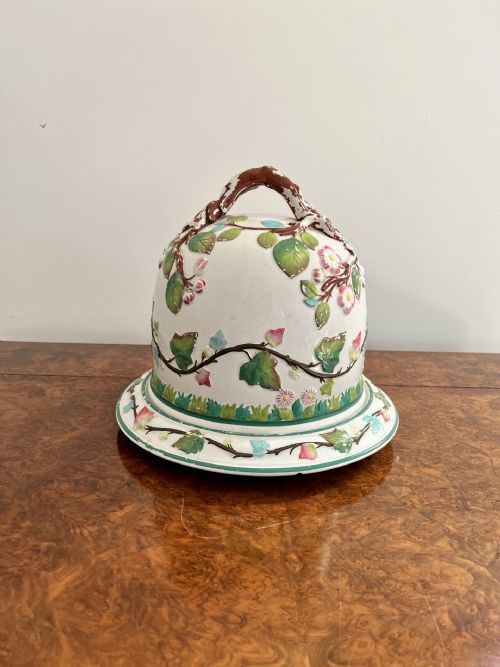
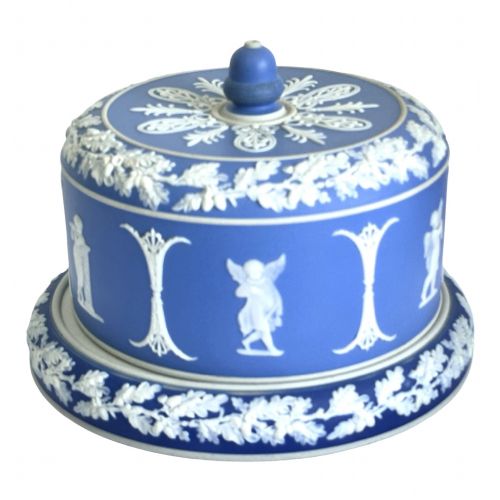
Makers produced these stands in various styles, encompassing neoclassical reliefs, Chinoiserie pagoda patterns, and naturalistic majolica motifs such as apple blossoms. They functioned as both practical serveware and centrepieces for formal meals.
How they were made
Potters utilised durable earthenware, ironstone, and stoneware bodies to form the thick walls necessary for large domes and stands. These ceramic bodies were shaped into substantial circular plates and bell covers to withstand daily nineteenth-century use.
Surfaces received rich glazes, hand-painted blue and white designs, or moulded reliefs, sometimes accented with gilding. Majolica pieces employed colourful lead glazes fired over moulded plant and floral motifs, while jasperware utilised contrasting matte clay reliefs.
Victorian Ceramic Cheese Stand Retail Price Guide 2026
Typical asking prices for victorian ceramic cheese stand among the pieces listed under this phrase on Sellingantiques today, from the lower quarter to the upper quarter. They describe what is for sale here now, not the wider market.
Listings feature nineteenth-century earthenware, ironstone, and stoneware, spanning forms from plain white ironstone to colourful majolica and jasperware.
What varies in quality
The standard of modelling and moulding sets the better examples apart, visible in the crispness of a wheat and lattice pattern or the sharp relief of jasperware figures. Softer details on moulded foliage or indistinct transfer-printed lines indicate a simpler commercial grade.
The richness and depth of the glaze application also distinguish finer wares, particularly in majolica where vibrant, even colour distribution matters. Plain white ironstone relies entirely on the purity of the ceramic body and the precision of the form.
Wedgwood·George Jones·James Dudson·Copeland·Mason's
The Victorian Ceramic Cheese Stand Glossary
- Ironstone
- A dense, durable type of earthenware patented in the nineteenth century to imitate Chinese porcelain. It provided a robust surface for utilitarian kitchen and dining wares.
- Majolica
- A Victorian earthenware type covered in colourful lead-based glazes applied over moulded botanical or figurative reliefs. It created a glossy, vibrant finish popular for decorative serveware.
- Jasperware
- A fine-grained, unglazed stoneware developed by Josiah Wedgwood, characterised by contrasting applied white clay reliefs against a coloured matte background.
- Cheese dome
- A large, bell-shaped ceramic cover fitted to an underplate to protect cheese from drying out and to contain odours on the dining table.
- Chinoiserie
- A European decorative style imitating Chinese artistic traditions, often seen in pagoda patterns transfer-printed onto nineteenth-century ceramics.
Victorian Ceramic Cheese Stand: Frequently Asked Questions
What was a cheese stand used for?
These large covered dishes held large portions of cheese on the nineteenth-century dining table, particularly during dessert or breakfast courses. The heavy dome trapped moisture to keep the cheese from drying out between meals.
Servants would bring the entire stand to the table, allowing guests to serve themselves before replacing the ceramic bell over the remaining wedge.
How do I clean a ceramic cheese stand?
Wash the ceramic base and dome gently in warm soapy water using a soft cloth, avoiding harsh abrasive pads that might scratch the glaze or gilding. Because nineteenth-century bodies can be porous where glazes have crazed, do not submerge them for long periods.
Dry each piece thoroughly before storing or displaying it to prevent moisture from settling into any hairline cracks in the glaze.
How do I date a Victorian cheese dome?
Examine the base for impressed maker's marks, registry diamonds, or pottery names, which often provide exact decades of production or specific years like eighteen eighty. The style of decoration, such as a crisp Gothic revival motif or a bright majolica glaze, also points to specific decades within the nineteenth century.
Heavier white ironstone examples without coloured decoration frequently date from the eighteen sixties and seventies, while elaborate majolica and coloured jasperware often appear towards the eighteen eighties.
Can I still use these for serving food?
Many collectors continue to use these nineteenth-century stands for serving hard cheeses, provided the glaze is intact and free from deep staining or major cracks. Ensure the piece is clean and has no repairs that might be affected by contact with food.
Hand wash the pieces carefully after use and avoid placing them in modern dishwashers or microwaves, which can damage old earthenware and ironstone.