
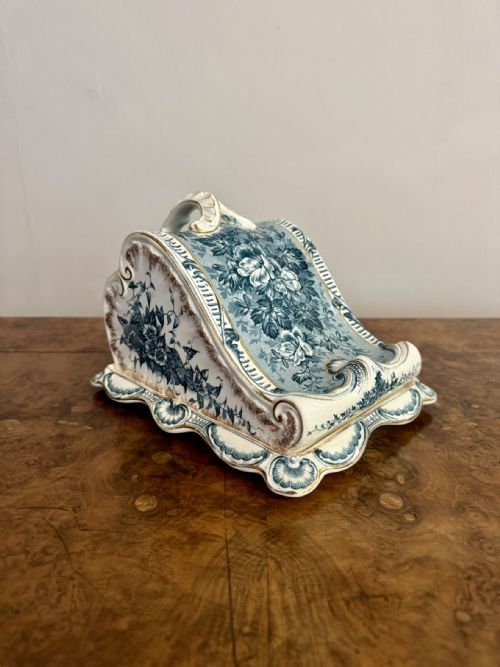
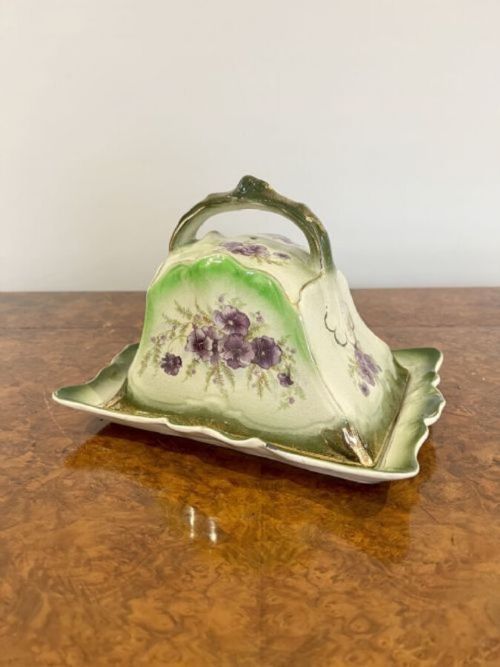
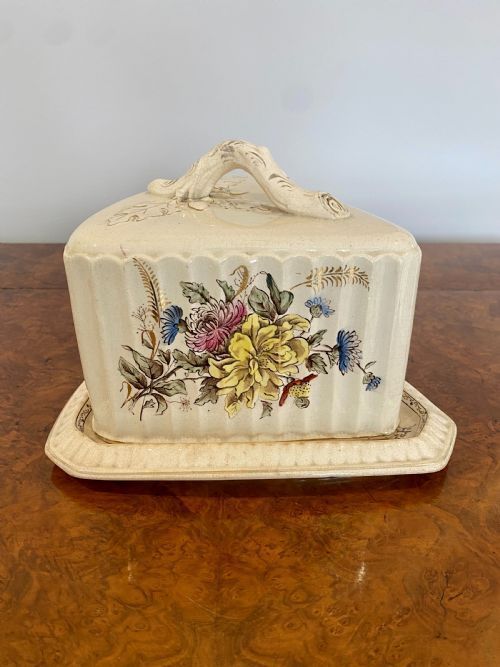
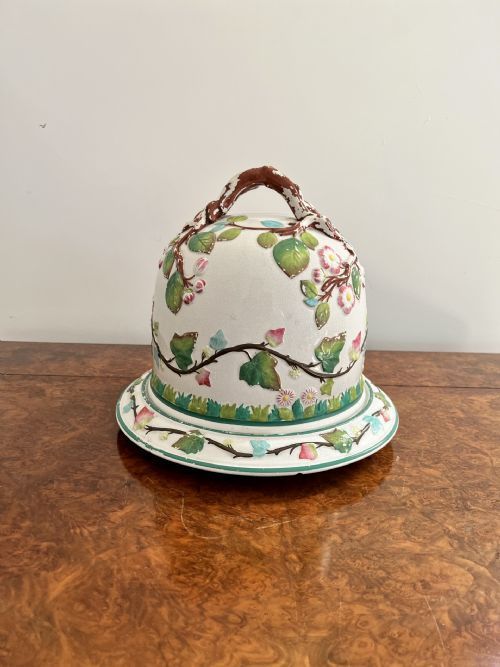


Victorian Ceramic Cheese Dome
A victorian ceramic cheese dome protects your cheese while bringing sculptural presence to the table.
Victorian Ceramic Cheese Dome
When you search for a victorian ceramic cheese dome, you are looking at substantial serveware designed to keep cheese fresh before refrigeration became common. These pieces consist of a fitted domed cover resting on a matching flat stand or dish.
The versions you are most likely to meet on this page hail from the nineteenth century, particularly the eighteen-eighties, taking the form of large cheese dishes, bells, and Stilton domes.
Originating in English potteries during the Victorian and Edwardian eras, these covers often showcase generous proportions to accommodate hefty wheels of cheese.
What varies in quality
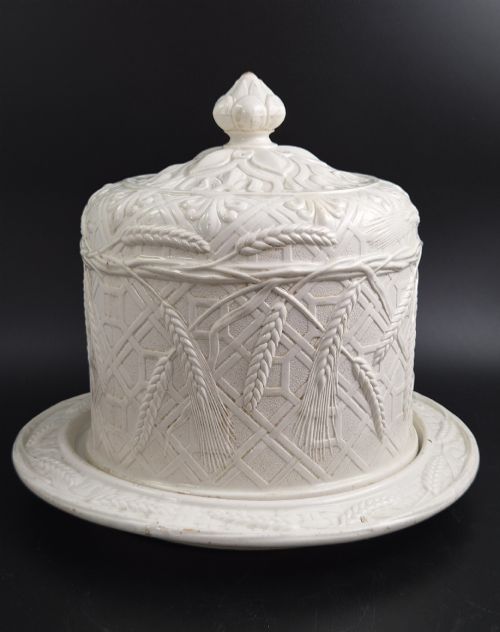
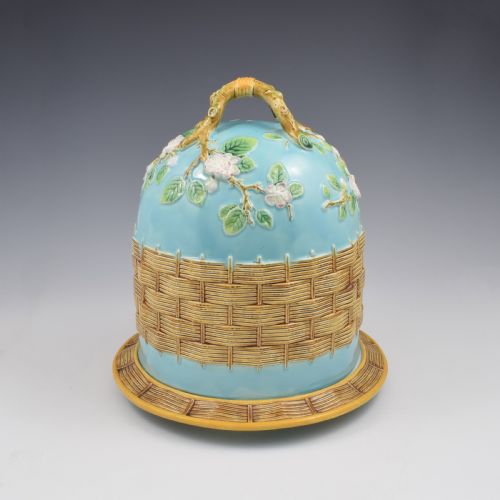
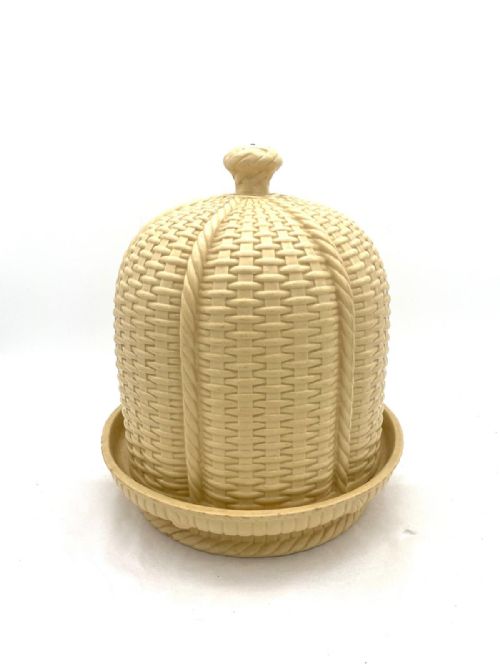
Quality in a victorian ceramic cheese dome rests upon the crispness of the moulded decoration, whether it is a delicate wheat and lattice pattern, basket weave, or bold apple blossom.
The richness and depth of the glaze application also distinguish finer examples, alongside the harmonious fit between the heavy bell cover and its matching stand.
Some nineteenth-century cheese covers feature moulded agricultural motifs like wheat stalks and basket weaves, reminding diners that cheese once lived closer to the farmyard.
George Jones·Wedgwood·James Dudson·Copeland·Masons
The Victorian Ceramic Cheese Dome Glossary
- Jasperware
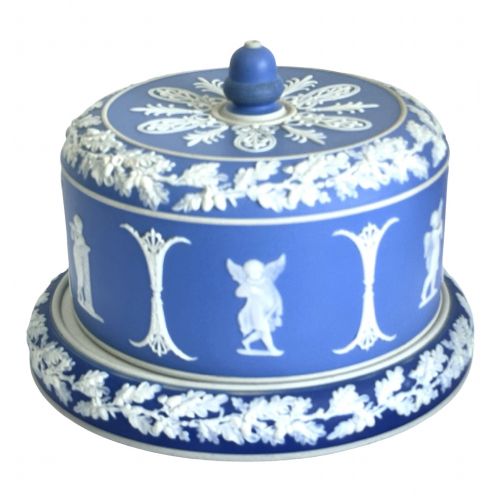
- A type of fine stoneware developed by Josiah Wedgwood featuring a matte surface, typically with white relief figures contrasting against a coloured clay body. It provides a tactile, neoclassical finish popular throughout the nineteenth century.
- Majolica
- A colourful lead-glazed earthenware characterised by vibrant hues and rich, high-relief moulding. It became immensely popular during the Victorian period for decorative tableware.
- Ironstone
- A dense, durable type of earthenware patented in England, prized for its strength and resemblance to true porcelain. It forms the robust body of many large nineteenth-century serving dishes.
- Drabware
- A ceramic body coloured in muted shades of grey-brown or olive, popular during the nineteenth century for utilitarian and decorative wares. Its understated tone lets floral and basket-weave reliefs stand out.
- Stilton dome
- A tall, cylindrical variation of the cheese dish specifically designed to accommodate the high, narrow shape of a whole Stilton cheese. These pieces often feature matching stands and substantial proportions.
Victorian Ceramic Cheese Dome: Frequently Asked Questions
How do I use a cheese dome?
Place your block or wheel of cheese directly on the matching ceramic stand and cover it with the domed lid. This traditional method helps retain moisture and shields the dairy from ambient air.
Ensure the dome sits squarely in the recess of the tray to maintain a proper seal and protect the cheese during storage on your sideboard or dining table.
Were these domes meant for Stilton?
Certain tall, cylindrical domes were specifically built to house tall wheels of Stilton cheese. Other broader, lower domes accommodated everyday cheddar and mixed cheeses.
Maker inscriptions and proportions often indicate whether a piece was tailored for a specific type of English cheese or general household service.
How do I date a ceramic cheese dish?
Look to the overall ceramic body, glaze type, and registration marks or maker stamps stamped underneath the base. Nineteenth-century pieces frequently exhibit heavier ironstone or majolica glazes distinctive to that era.
Stylistic cues such as aesthetic movement patterns or classical jasperware reliefs also help narrow down the manufacturing decade.
Are majolica cheese domes food safe?
Most antique majolica and earthenware pieces are intended primarily for display or gentle serving use rather than modern daily food storage. The lead-based glazes common in nineteenth-century majolica require careful consideration if used with moist foods.
Many collectors prefer to use them as decorative centrepieces or for dry presentation during special dining occasions.
How should I clean my cheese dome?
Wash the ceramic pieces gently by hand using warm water and mild dish soap with a soft cloth. Avoid harsh scouring pads that can scratch the delicate nineteenth-century glaze or wear away gilt accents.
Dry the dome and stand thoroughly with a soft towel before reassembling them for display to prevent moisture retention in the porous clay body.