





Victorian Cat Portrait
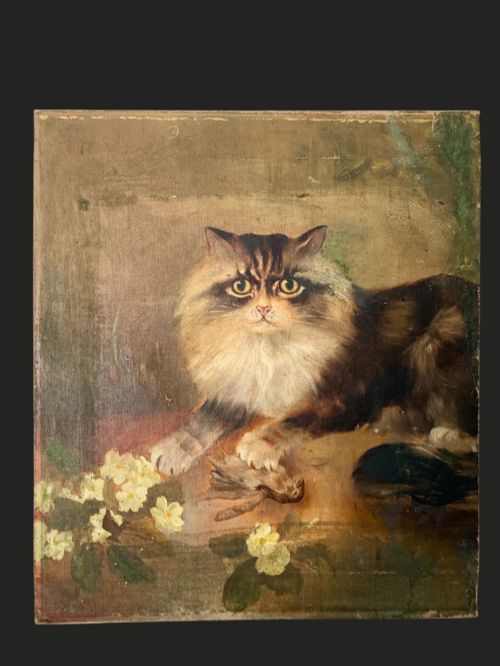
A victorian cat portrait captures the distinct personality of a feline subject through traditional oil painting techniques.
Victorian Cat Portrait
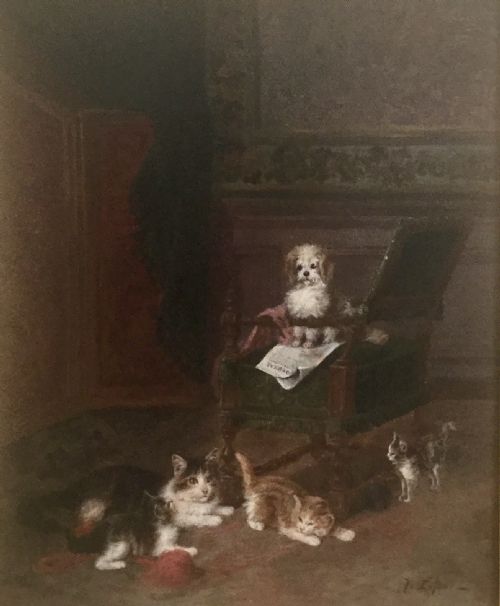
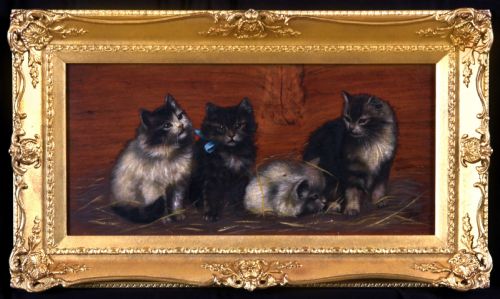
When searching for a victorian cat portrait, buyers encounter oil paintings executed on canvas or board that capture feline subjects in various domestic and playful settings. These works range from naive school depictions to finely detailed realist studies produced during the nineteenth century.
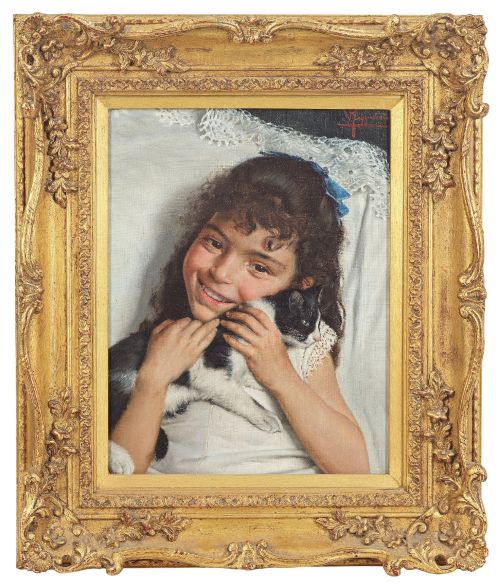
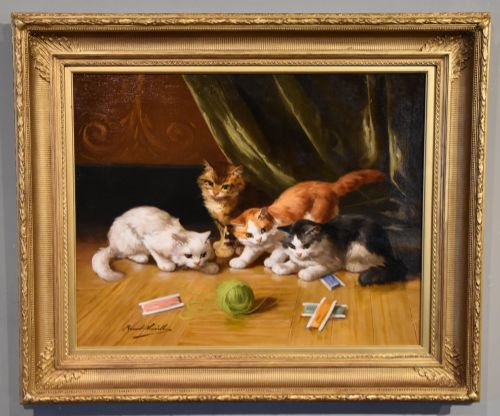
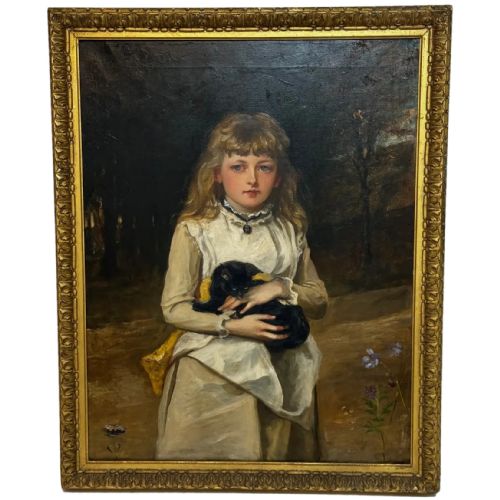
The pieces on this page include solo cat studies, groups of kittens at play, and genre scenes featuring cats alongside human companions. Stylistic approaches vary from provincial English naive works to accomplished continental animalier painting.
Most examples originate from the nineteenth century, though the selection extends into the early twentieth century with related works by established painters. Buyers will find both framed canvases with gesso and giltwood frames and oil on board formats.
How They Were Made
These works utilise oil paint applied to prepared canvas or wooden board supports, allowing artists to build rich textures and deep tones. Painters layered oil colours to render soft fur, gleaming eyes, and detailed domestic interiors.
Many of these paintings retain their original or period frames constructed from gesso and gilt wood, which provide structural support and ornamental presentation. The craftsmanship encompasses both the painter's brushwork and the joiner's work on the decorative frames.
Several canvases capture kittens caught in the middle of tea parties and play sessions.
What Varies in Quality
Quality in these works rests upon the precision of the brushwork and the artist's ability to render the anatomy and expression of the animal convincingly. Finer pieces demonstrate careful attention to the texture of the fur and the quality of light falling on the subject.
The framing contributes significantly to the overall presentation, with original giltwood and gesso frames enhancing the visual impact of the canvas. Attribution to a recorded artist or a distinguished school also elevates the standing of a piece within the field.
Vittorio Reggianini·Alfred Arthur Brunel de Neuville·Charles Burton Barber·Agnes Augusta Talboys·Henry Weigall·Horatio Henry Couldery·Francisco Jose Domingo y Marques·Geza Vastagh·Cuthbert Edmund Swan·Jules Le Roy·Bessie Bamber
The Victorian Cat Portrait Glossary
- Animalier
- Art focusing on the realistic portrayal of animals. This style was particularly popular in the nineteenth century among specialised painters.
- Naive School
- Art produced by painters with little or no formal academic training, often characterised by a flat perspective and charming simplicity. These works offer a direct and unfiltered view of the subject.
- Genre Painting
- Depictions of aspects of everyday life by depicting ordinary people or animals engaged in common activities. Many nineteenth-century cat paintings fall into this descriptive category.
- Gesso
- A plaster-like mixture applied to wood or canvas as a base for painting or applied to carved wood to create ornate mouldings on picture frames. It provides a smooth surface for gilding.
Victorian Cat Portrait: Frequently Asked Questions
What periods do these paintings cover?
The available selection primarily spans the nineteenth century into the early decades of the twentieth century. Dating relies on stylistic evidence, artist signatures, and framing materials.
Most pieces date from the Victorian era, reflecting the period's fondness for animal subjects and domestic genre scenes.
Are all these works painted on canvas?
While many examples utilise oil on canvas, several pieces are executed on wooden boards. Both supports were standard practice for artists working during the nineteenth century.
The choice of support often depends on the scale of the work and the artist's personal preference.
How should I display an antique oil painting?
Antique oil paintings require placement away from direct sunlight and excessive humidity to protect the canvas and the giltwood frame. Maintaining a stable indoor environment preserves the integrity of the paint layers.
Hanging the work securely using appropriate hardware ensures the safety of both the canvas and its period frame.