




Antique Feline Oil Painting
These antique feline oil painting works capture the distinct character of cats through traditional hand-painted portraiture.
Antique Feline Oil Painting
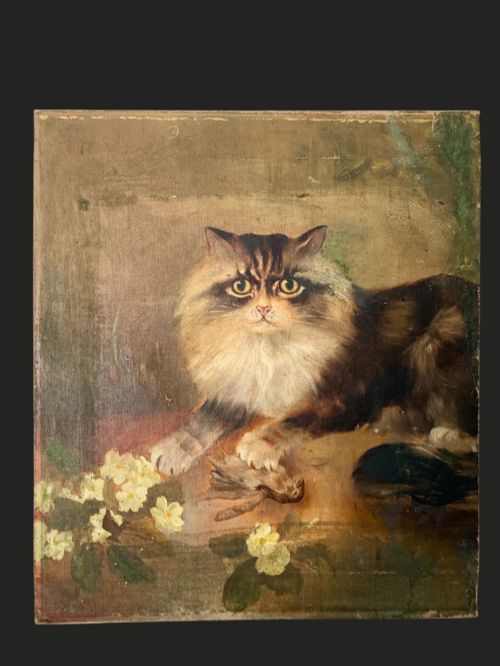
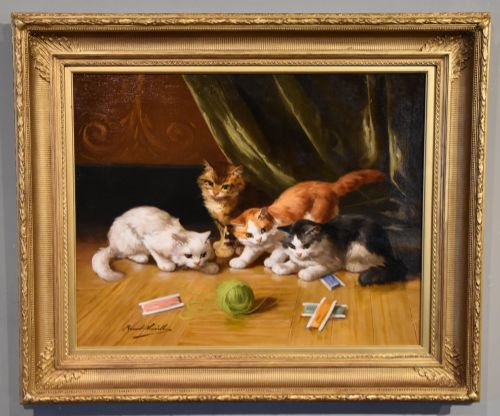
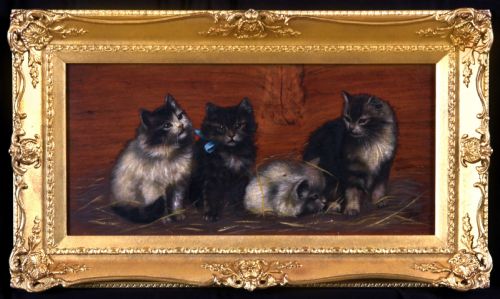
An antique feline oil painting depicts cats and kittens through traditional painted portraiture, capturing domestic subjects from past centuries. These works range from intimate studies of single pets to playful group scenes involving multiple kittens.
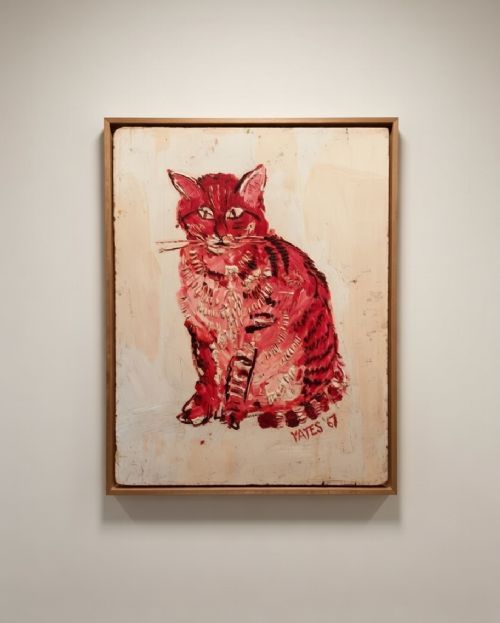
The pieces appearing on this page most commonly date from the nineteenth century, reflecting Victorian tastes for animalier art and domestic realism. Buyers encounter various compositions, including naive school studies and detailed traditional realism.
Subjects frequently show kittens at play, cats with fish, or posed portraits of Persian breeds. These artworks span canvas, wood panel, and board supports, framed in period gilt wood.
How they were made
Artists painted these works using oil paint applied to prepared canvas, wood panel, or board surfaces. The technique allowed for rich blending of fur textures and warm lighting effects.
Frames made from gilt wood and gesso complemented the oil paintings, providing ornate or traditional presentation for Victorian interiors.
Several Victorian paintings capture mischievous kittens caught mid-play during imaginary tea parties.
What varies in quality
The skill of the brushwork in rendering animal anatomy and fur texture marks the distinction between standard decorative works and finer artistic achievements. Master artists capture light and expression with notable precision.
The condition of the original oil paint surface and the preservation of the period gilt wood frame influence the overall integrity of the piece.
Alfred Arthur Brunel de Neuville·Agnes Augusta Talboys·Horatio Henry Couldery·Francisco Jose Domingo y Marques·Bessie Bamber
The Antique Feline Oil Painting Glossary
- Oil paint
- A slow-drying paint made from pigment particles suspended in a drying oil, typically linseed oil. This medium allows for smooth blending and rich depth of colour.
- Gilt wood
- Wood that has been coated with a thin layer of gold leaf or gilt powder. It is commonly found on traditional frames surrounding Victorian paintings.
- Naive school
- An art style characterised by a childlike simplicity in perspective and proportion, often produced by self-taught painters. These works possess a charming directness.
- Oil on panel
- A painting executed on a flat piece of wood rather than stretched canvas. This rigid support offers a smooth and stable ground for fine brushwork.
- Animalier
- Artworks that focus primarily on the depiction of animals. The genre gained significant popularity during the nineteenth century.
Antique Feline Oil Painting: Frequently Asked Questions
What periods do these paintings date from?
The available selection primarily spans the nineteenth century, including works from around nineteen hundred and the mid-twentieth century.
These dates align with Victorian artistic movements and traditional realism styles.
How should I display a gilt wood frame?
Gilt wood frames benefit from placement away from direct sunlight and excessive humidity to protect the delicate surface.
Regular light dusting with a dry cloth helps maintain the appearance of the gesso and gold leaf.
What are common subjects in these paintings?
Artists frequently depicted kittens at play, Persian cats, and domestic pets interacting with household items like fish or tea sets.
These playful domestic scenes reflect nineteenth-century sentimental tastes.
What is the difference between canvas and panel?
Canvas involves woven fabric stretched across a wooden frame, offering slight flexibility and texture under the paint layers.
Panels provide a rigid wooden support that prevents the flexing associated with stretched canvas.