





Oil Canvas Cat Portrait
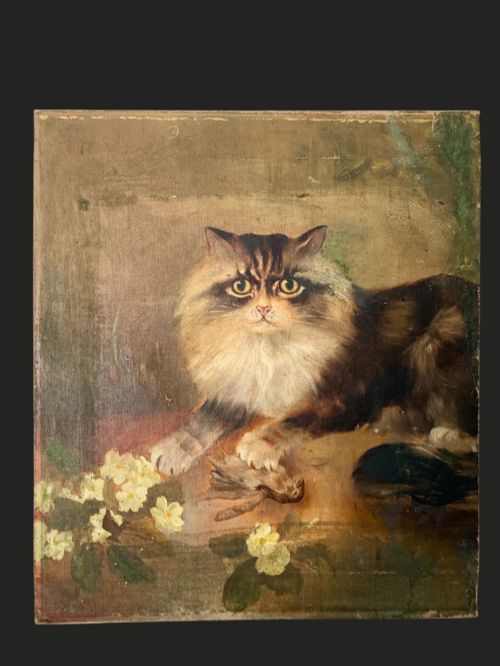
An oil canvas cat portrait captures the distinct personality of a feline subject through layered pigments and textured brushwork on woven fabric.
Oil Canvas Cat Portrait
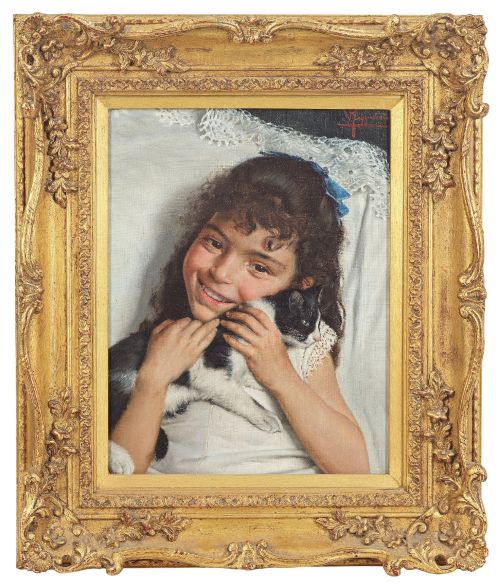
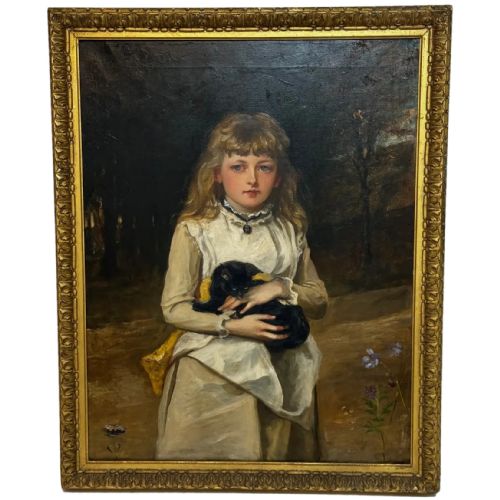
An oil canvas cat portrait brings together historical artistry and domestic affection, preserving feline subjects across various centuries. When searching for this specific phrase, buyers encounter works ranging from naive school depictions to detailed Victorian genre scenes.
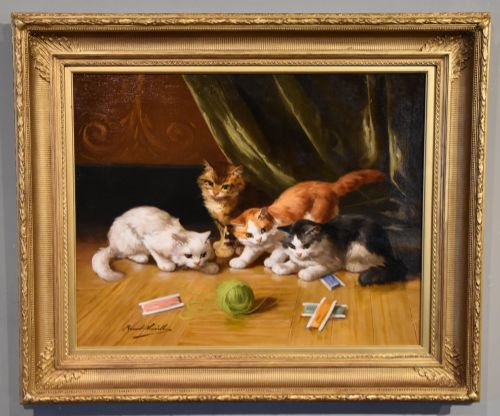
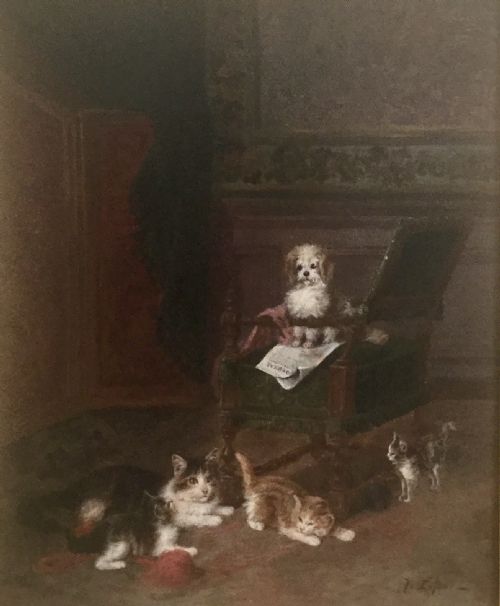
The pieces available on this page lean heavily towards nineteenth-century creations, featuring individual cats, playful kittens at tea parties, or companions alongside human subjects. These artworks reflect changing domestic attitudes toward pets throughout the Victorian era and into the early twentieth century.
Makers and provincial schools alike utilised the malleability of oil paint to render soft fur, gleaming eyes, and distinct postures. Whether attributed to known artists or emerging from anonymous hands, each canvas offers a window into historical animal portraiture.
Materials and construction
These works rely on a foundation of woven canvas, stretched across wooden frames and primed to receive oil paint. Artists applied layers of pigmented oil to build depth, capturing the sheen of fur and the warmth of domestic interiors.
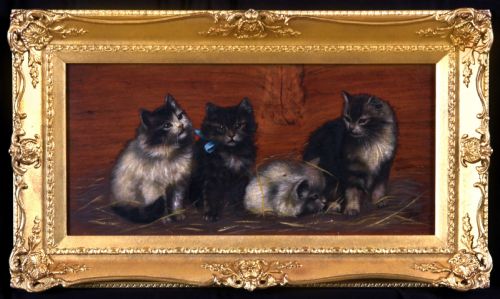
Many surviving examples retain their period frames, constructed from wood and embellished with gesso and gilt finishes. The combination of durable oil paint and sturdy canvas substrates ensures these feline likenesses survive across generations.
Several canvases capture Victorian kittens caught mid-mischief, proving that feline distraction remains entirely unchanged across the centuries.
Distinguishing quality in feline portraiture
Quality rests in the anatomical accuracy of the feline subject and the expressive handling of light across the fur. Master painters rendered the texture of whiskers and the luminescence of eyes with precise, deliberate brushwork rather than rigid outlines.
The distinction between a standard provincial record and a superior composition lies in the vitality of the pose and the harmony of the background elements. Works showing complex groupings, such as multiple kittens interacting, demand a higher level of compositional skill from the artist.
Alfred Arthur Brunel de Neuville·Agnes Augusta Talboys·Horatio Henry Couldery·Francisco Jose Domingo y Marques·Bessie Bamber
The Oil Canvas Cat Portrait Glossary
- Canvas
- A heavy woven fabric, usually linen or cotton, used as a support surface for oil paintings. It provides a flexible yet resilient base for layered brushwork.
- Gesso
- A plaster-like mixture applied to wooden frames or panels to prepare a smooth surface for gilding. It gives ornamental frames their crisp architectural details.
- Giltwood
- Wood that has been coated with a thin layer of gold leaf or metallic powder. Period frames often feature this finish to enhance the artwork within.
- Naive school
- A classification for art produced by self-taught or provincial painters working outside academic traditions. These pieces charm through their direct perspective and honest representation.
- Genre scene
- A painting that depicts aspects of everyday life, often featuring domestic animals or human figures in familiar settings. In feline art, this includes kittens at play or participating in human tea parties.
Oil Canvas Cat Portrait: Frequently Asked Questions
How do I care for an oil painting?
Keep the canvas away from direct sunlight and sudden temperature shifts to prevent the oil paint from cracking. Dust the surface gently with a dry, soft brush without applying pressure.
Avoid using water or chemical cleaners on the paint or the giltwood frame. Professional conservators should handle any deeper cleaning or structural repairs.
Were these portraits painted from life?
Many nineteenth-century artists observed domestic pets directly, capturing individual markings and characteristic lounging postures. Working with live animals required skill, as subjects rarely remained still for long periods.
Some provincial or naive works relied on quick sketches combined with studio conventions. This approach explains the varied anatomical proportions found across different pieces.
How can I date an antique cat painting?
Examine the preparation of the canvas, the weave of the fabric, and the construction of the wooden stretcher frame behind the artwork. Older canvases often show oxidation and stable craquelure in the oil paint layer.
The style of the accompanying giltwood frame and any signatures or inscriptions on the reverse provide further clues. Stylistic markers, such as Victorian dress or interior decor, help narrow down the decade.
Why are gilt frames important?
Period frames complete the historical presentation of an oil painting and protect the edges of the canvas from physical damage. Original gesso and giltwood mouldings reflect the aesthetic tastes of the era in which the portrait was created.
Matching a canvas to its period frame maintains the integrity of the object. Collectors value pieces that retain their original framing setup.