





Victorian Cast Iron Wiper
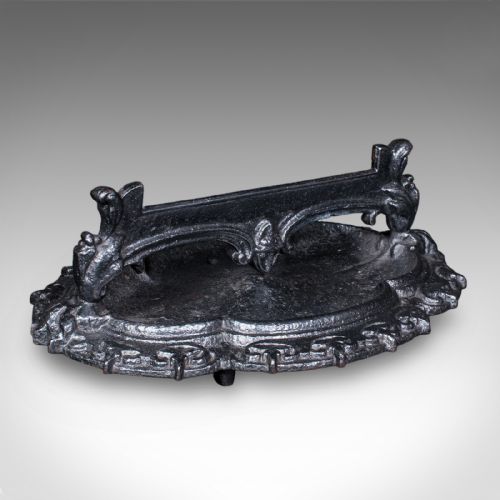
These Victorian cast iron wiper pieces are robust entrance accessories designed to clean muddy footwear before stepping indoors.
Victorian Cast Iron Wiper
A victorian cast iron wiper is a utilitarian entrance fixture designed to remove mud and dirt from boots before entering a house. These items range from simple domestic models to elaborate town house designs with integrated shoe pulls.
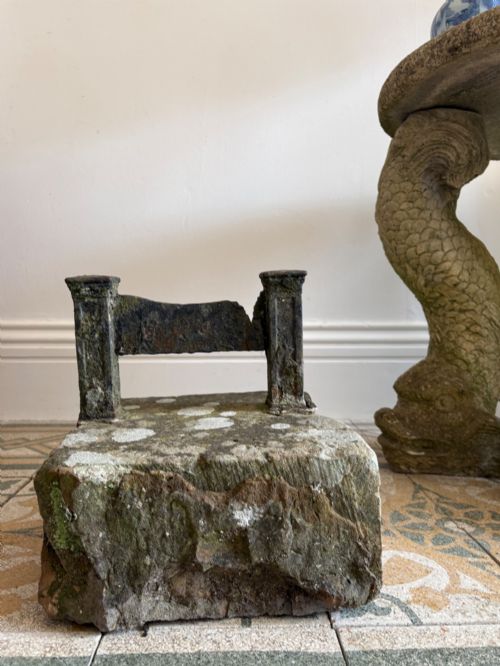
Most examples found here date from the nineteenth century, spanning the Victorian and late Regency eras. They typically take the form of sturdy iron blades mounted on stone blocks or freestanding frames.
Buyers frequently encounter variants styled in the Gothic Revival manner or featuring sculptural elements like lions. These functional antiques served as essential doorstep furniture for country houses and town residences alike.
Construction and materials
Makers utilised durable cast iron to form the scraper blades and structural mounts, ensuring they could withstand heavy daily use outdoors. This metal was poured into moulds to create both plain utility items and decorative forms.
Many heavy iron scrapers are inset directly into hewn stone blocks to provide stable anchorage at the threshold. The combination of dense stone and cast iron created substantial weight, keeping the cleaner firmly in place.
Victorian Cast Iron Wiper Retail Price Guide 2026
Typical asking prices for victorian cast iron wiper among the pieces listed under this phrase on Sellingantiques today, from the lower quarter to the upper quarter. They describe what is for sale here now, not the wider market.
A cast iron lion stands ready to guard your porch against mud.
Assessing quality
Quality in these pieces is dictated by the crispness of the casting and the presence of sculptural detail. Plain utilitarian models contrast with ornate Gothic Revival designs or figural examples featuring animal motifs.
The integration of secondary functions, such as shoe pulls or combined stone mounting blocks, elevates the sophistication of the piece. Finer examples display harmonious proportions and heavier metal gauge rather than simple mass production.
The Victorian Cast Iron Wiper Glossary
- Boot scraper
- A metal blade mounted near a doorway specifically for scraping mud from the soles of boots. They were standard exterior fixtures on nineteenth-century properties.
- Shoe pull
- A small hook or loop attached to the scraper assembly used to steady footwear or aid in removal. This feature is often found on townhouse examples.
- Gothic Revival
- An architectural and decorative style popular during the nineteenth century, characterised by pointed arches and medieval motifs. Scrapers from this movement reflect these heavier ornamental traits.
- Cast iron
- An iron-carbon alloy poured into moulds to create solid objects. It forms the primary durable body of these entrance cleaners.
Victorian Cast Iron Wiper: Frequently Asked Questions
Where were these placed?
These boot scrapers were positioned immediately outside front doors, porches, or carriage entrances of period properties. Their primary function was catching heavy mud before visitors crossed the threshold.
Many remain mounted in original stone steps or entrance pathways of historic houses. They formed a standard part of nineteenth-century domestic exterior hardware.
How do I date them?
Dating relies on stylistic clues such as Regency proportions or Gothic Revival ornamentation seen in the ironwork. The presence of a hewn stone mounting block also provides context regarding the period of installation.
Most surviving pieces originate from the nineteenth century, spanning from the Regency era through to the late Victorian period. Examining the casting texture assists in placing the item within this broad timeframe.
Can I use them outdoors?
These items are designed for exterior placement and naturally withstand weathering due to their heavy iron and stone construction. They require minimal maintenance when left outside on a porch or path.
Placing them on a stable surface ensures safe daily use as functional shoe cleaners today. Their robust materials are inherently suited to the elements.
What is a shoe pull?
A shoe pull is an integrated loop or hook accompanying the main scraper blade. It helped residents steady their footwear while scraping away debris.
This addition marks out better quality town house models intended for polite entranceways. It adds a practical secondary function to the basic iron blade.