
Antique Cast Iron Tray
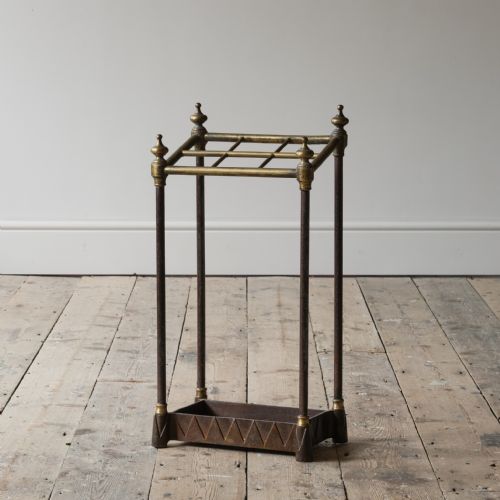
An antique cast iron tray or umbrella stand holds the hallway water and mud, bringing robust Victorian utility to the floor.
Antique Cast Iron Tray
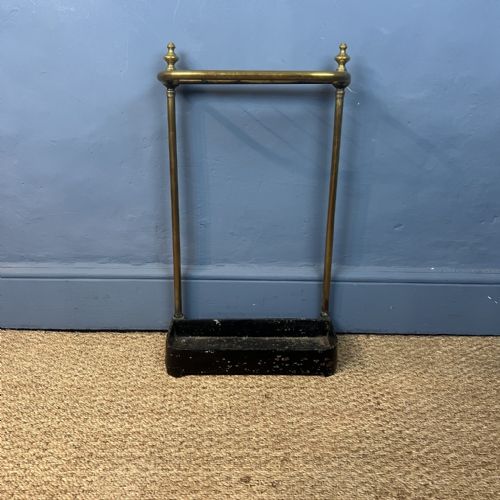
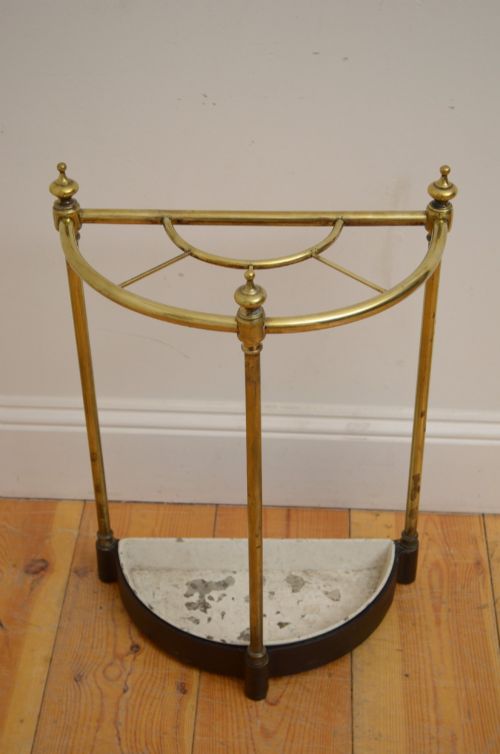
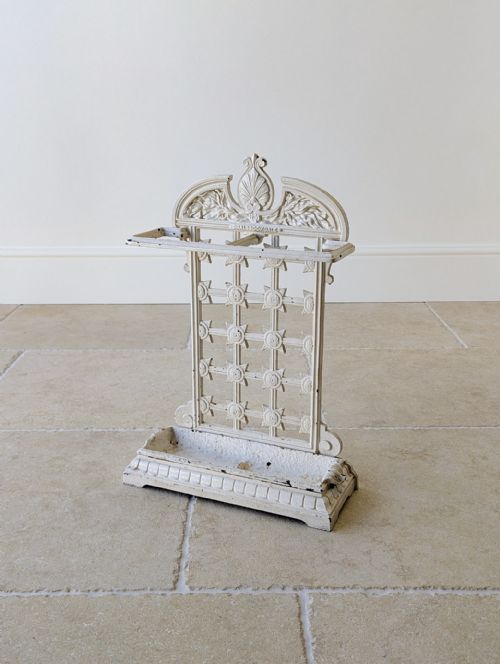
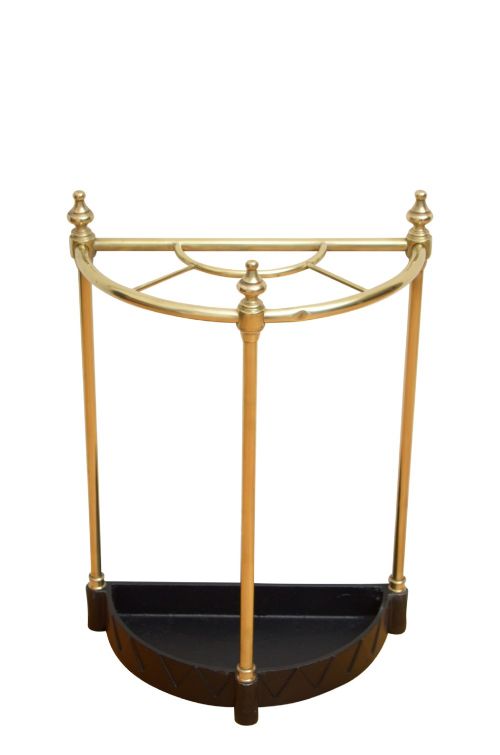
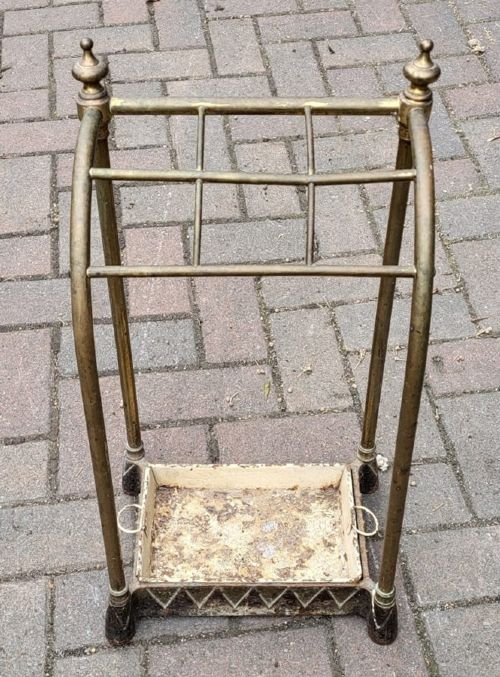
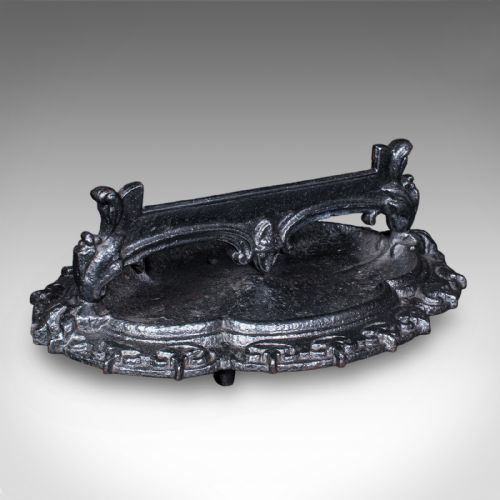
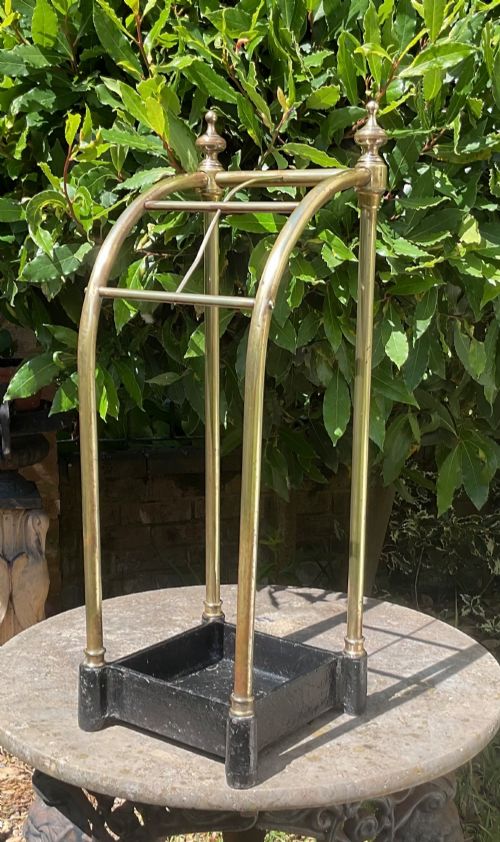
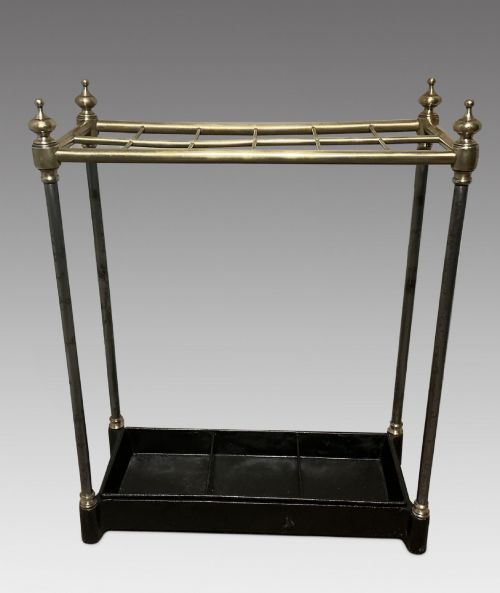
When you search for an antique cast iron tray, you find sturdy hallway accessories designed to catch water and dirt from umbrellas, sticks and boots. Most examples on this page take the form of heavy umbrella and stick stands or dedicated boot scrapers fitted with integrated drip pans.
The objects span periods from the mid nineteenth century through the Edwardian era and into Art Deco designs. Victorian and late nineteenth century items dominate the selection, often combining cast iron framework with brass components or removable trays.
Makers and foundries produced these pieces for domestic entrance halls, country houses and town residences alike. Alongside umbrella stands, the category includes functional boot scrapers and shoe cleaners intended for external doorsteps.
Materials and construction methods
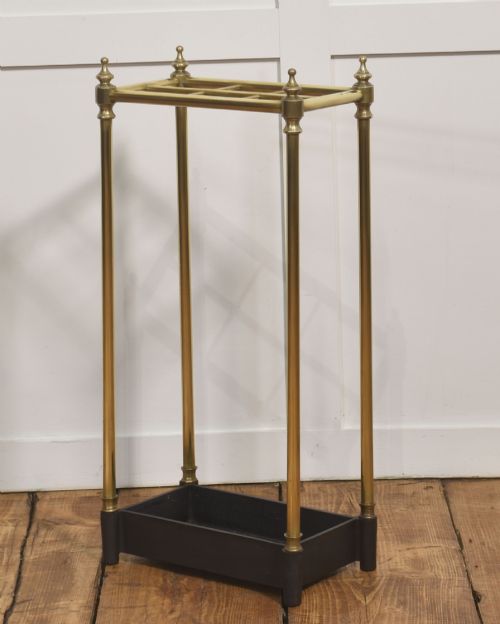
Foundries utilised durable cast iron for the main structural bodies and heavy bases, ensuring the stands remained stable when loaded with wet walking sticks. Iron components were frequently paired with brass rails, decorative ball finials, steel rods and nickel plating.
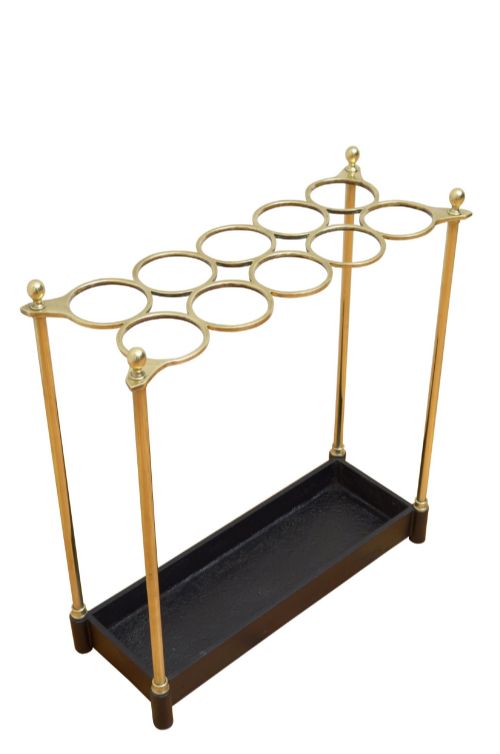
Many items incorporate built-in or removable drip trays designed to collect water, preventing moisture from reaching wooden floors. Certain models utilise tubular metal and pitch pine alongside the core iron and brass elements.
Surface finishes range from painted black iron to polished brass and nickel plating, reflecting the decorative shifts from Gothic Revival and Rococo styles toward clean Art Deco geometry.
Listings feature Victorian, Edwardian and Art Deco periods, employing cast iron, brass, steel, glass and pitch pine.
Distinctions in quality and execution
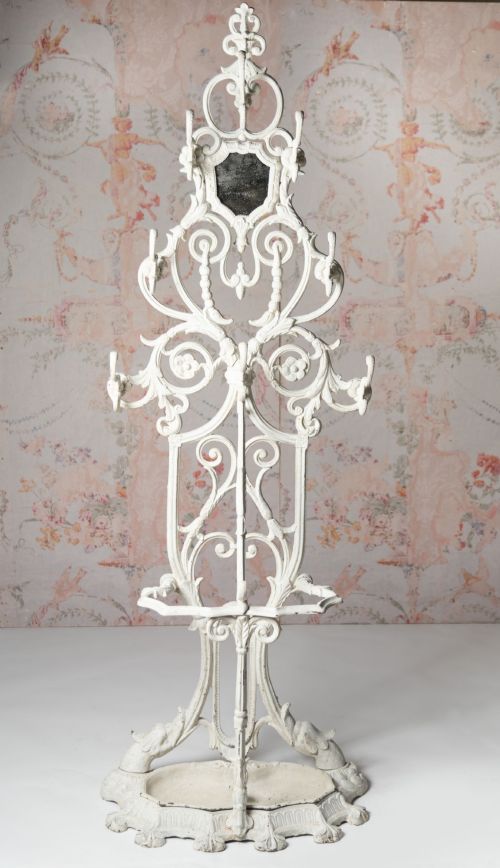
The standard of an antique cast iron tray or stand rests upon the crispness of the foundry work and the complexity of the casting. Finer examples display sharp relief in ornamental mouldings, naturalistic animal motifs such as gun dogs, and clean architectural lines.
Material combination also elevates a piece, particularly where heavy cast iron bases meet well-turned brass divisions, substantial ball finials, and original matching drip trays. Retaining the correct removable inner tray marks a higher grade of preservation.
Coalbrookdale·A. Kenrick & Sons
The Antique Cast Iron Tray Glossary
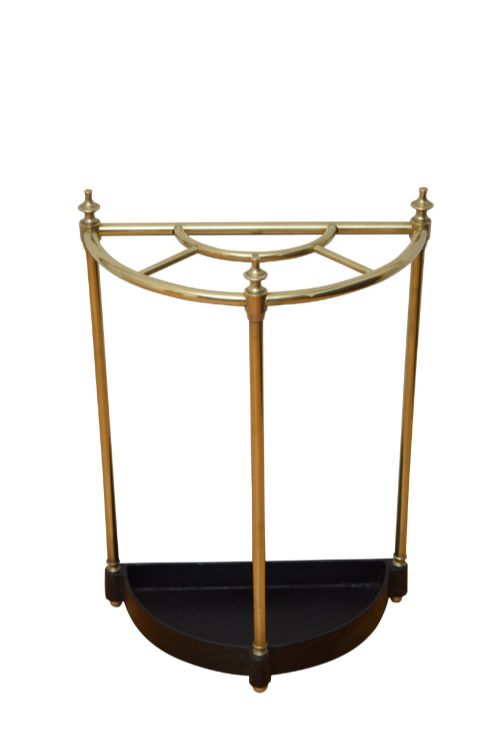
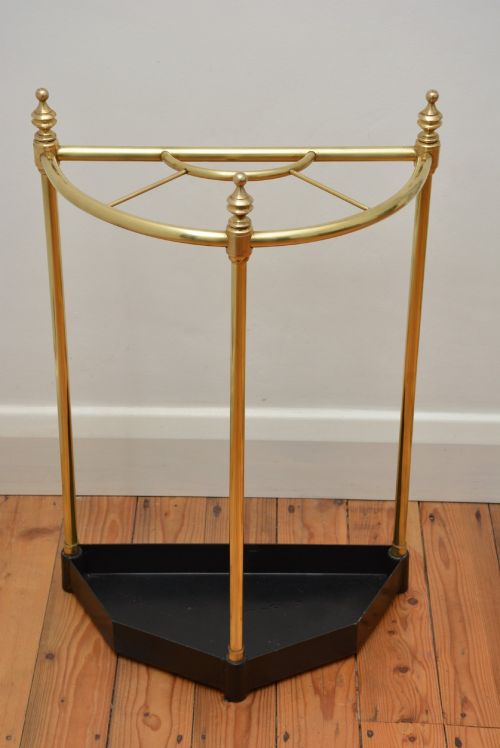
- Demi-lune
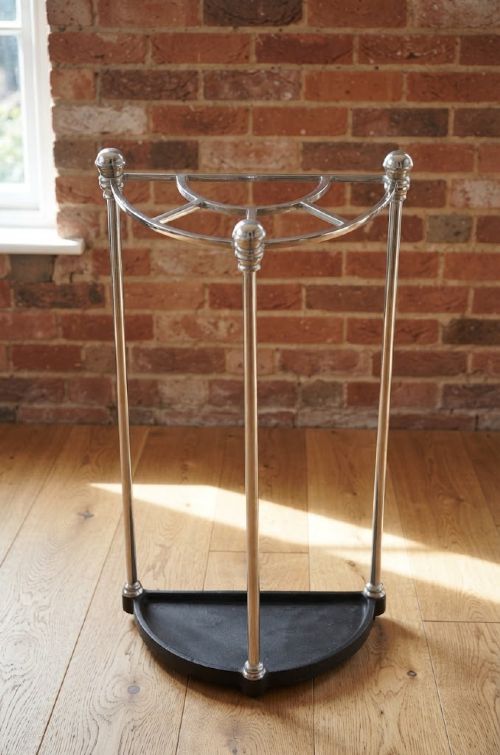
- A half-moon shape used for umbrella and stick stands designed to sit flat against a hallway wall.
- Boot scraper
- A heavy iron blade and frame fixed near an entrance to clean mud from the soles of boots before entering the house.
- Finial
- A decorative terminal ornament, often cast in brass, topping the vertical posts of a stick stand.
- Gothic Revival
- An architectural and decorative style drawing on medieval ecclesiastical forms, seen in nineteenth century metalwork.
- Nickel plating
- A protective and reflective coating applied over base metals during the late nineteenth and early twentieth centuries.
Antique Cast Iron Tray: Frequently Asked Questions
How do I date an antique stick stand?
Dating relies on stylistic clues, ranging from elaborate Victorian Gothic Revival and Rococo patterns to cleaner Edwardian lines and geometric Art Deco forms. Material choices such as nickel plating or pitch pine also point towards specific decades.
Foundry marks and registration numbers cast into the iron often provide precise manufacturing periods or maker attributions.
Are original drip trays important?
Original removable trays are significant because they complete the functional design intended by the maker and prevent water damage to floors. Finding an example with its matching inner tray preserves both utility and historical integrity.
Many surviving stands lost their shallow pans over decades of heavy domestic use, making complete sets notably desirable.
How do I care for cast iron and brass?
Maintenance involves keeping the metal dry and occasionally applying a light coat of wax or microcrystalline polish to protect the surface finish. Avoid abrasive cleaners that can strip original patination or painted details.
Regular dusting keeps both the cast iron body and any brass or nickel elements in stable condition.