





Cast Iron Shoe Wiper
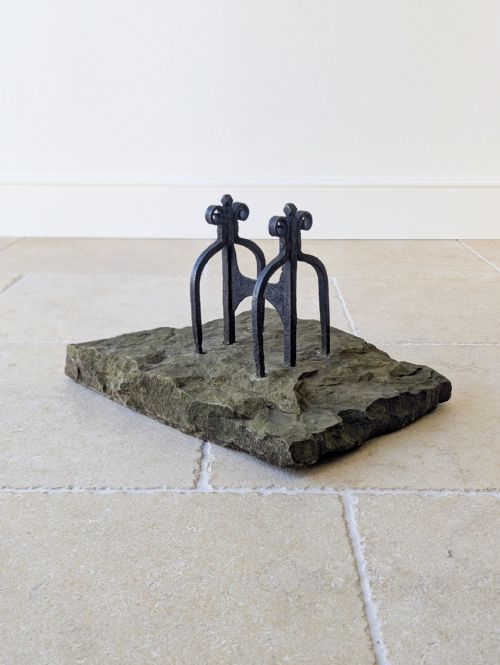
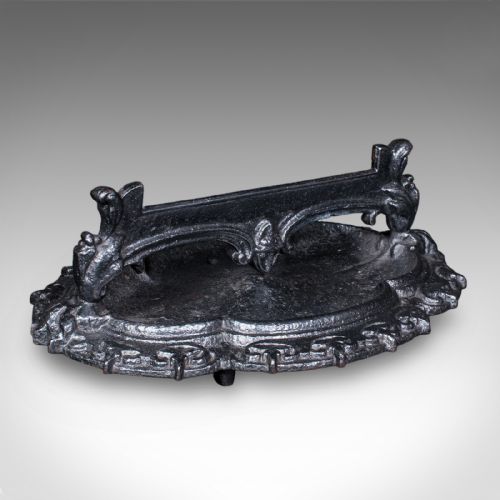
These cast iron shoe wiper pieces are heavy doorway ironmongery designed to clean mud off footwear before entering the house.
Cast Iron Shoe Wiper
A cast iron shoe wiper sits beside a doorway to clear mud and dirt from footwear before entering the house. The search phrase covers functional entrance ironmongery from several distinct periods.
The pieces appearing on this page take the form of boot scrapers and shoe cleaners, often combined with a boot pull. They range from simple town house designs to substantial country house examples.
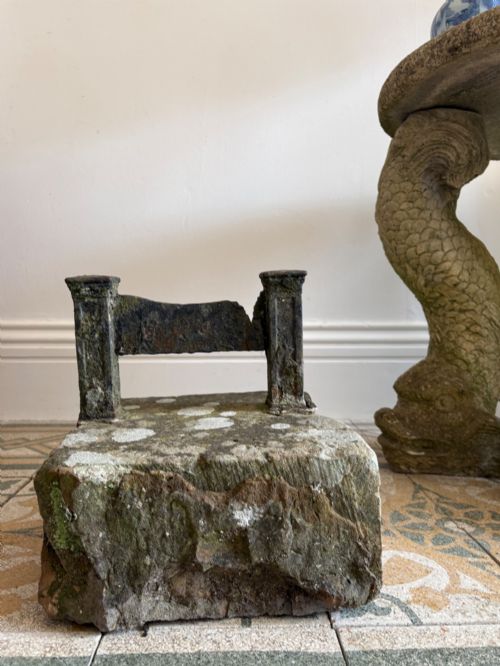
Origins span the Georgian, Regency, and Victorian eras, alongside specific styles such as Gothic Revival. Many examples mount a cast iron blade directly into a hewn stone block or Yorkstone base.
How they were made
Makers utilised durable cast iron for the scraper blades and structural mounts, shaped through traditional foundry casting techniques. Wrought iron also appears in earlier country house examples.
Many heavy pieces combine metalwork with natural materials, inserting the cast iron blade firmly into a hewn stone block or Yorkstone base to anchor the weight securely at the doorway.
Cast Iron Shoe Wiper Retail Price Guide 2026
Typical asking prices for cast iron shoe wiper among the pieces listed under this phrase on Sellingantiques today, from the lower quarter to the upper quarter. They describe what is for sale here now, not the wider market.
The listings on this site show pieces spanning the Georgian, Regency, and Victorian periods, utilising cast iron, wrought iron, and Yorkstone.
What varies in quality
Quality rests upon the crispness of the casting and the integration between the metal blade and its stone base. Simpler utility designs differ markedly from decorative Gothic Revival or sculptural forms.
The Cast Iron Shoe Wiper Glossary
- Boot scraper
- A metal blade fixed near an entrance to scrape mud from the soles of boots. It forms the primary component of these entryway pieces.
- Boot pull
- A projecting hook or handle used to leverage footgear off the wearer's foot. It frequently accompanies the scraper blade on Victorian entrance ironmongery.
- Yorkstone
- A tough, durable sandstone quarried in Yorkshire, frequently used as a heavy base block for outdoor ironmongery. It anchors the scraper firmly outside the doorway.
- Gothic Revival
- An architectural and decorative style drawing on medieval pointed arches and structural motifs. Pieces in this style display ornate detailing distinct from plain utility models.
Cast Iron Shoe Wiper: Frequently Asked Questions
Where were shoe wipers placed?
These pieces sat immediately outside the main entrance of a house, typically by the front door or side porch.
Their heavy stone bases kept them stationary without requiring permanent masonry fixings into the ground.
How do I clean a cast iron shoe wiper?
Brush away loose dirt and dried mud using a stiff natural bristle brush, avoiding harsh metal implements.
Applying a light coat of protective wax helps preserve the surface metal from outdoor moisture.
Did all scrapers have stone bases?
Many examples utilised heavy Yorkstone or hewn stone blocks to anchor the cast iron blade securely in place.
Other configurations relied entirely on robust metal frames designed to bolt directly to doorsteps.
How do I date a cast iron scraper?
Dating relies upon stylistic markers such as Gothic Revival detailing, alongside material combinations like wrought iron versus cast metal.
Georgian and Regency examples tend towards country house utility, whilst Victorian versions often incorporate elaborate decorative casting.