


Victorian Cast Iron Single Bed
These Victorian cast iron single bed frames offer robust metal construction and classic nineteenth-century proportions for compact bedroom schemes.
Victorian Cast Iron Single Bed
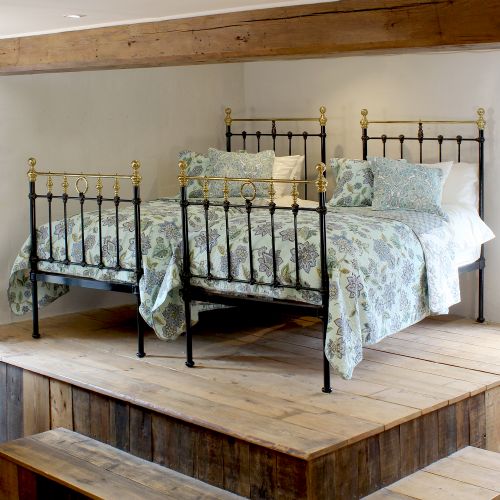
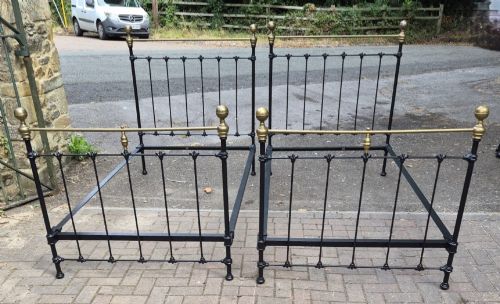
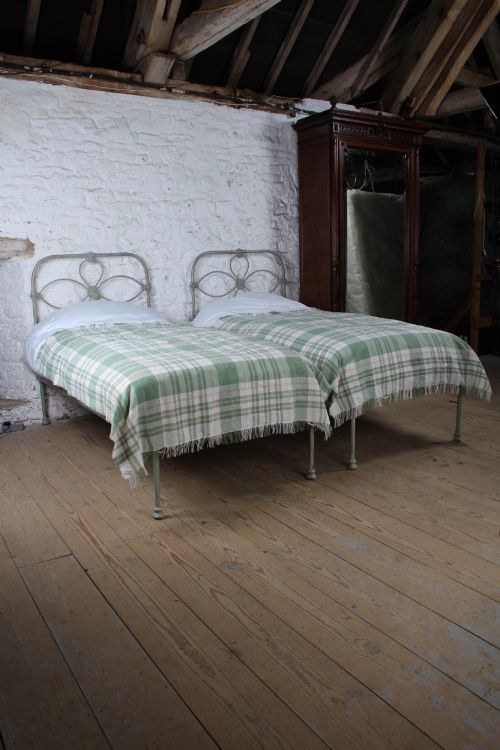
A Victorian cast iron single bed provides a sturdy sleeping platform typically measuring three feet in width, originating from periods spanning the middle of the nineteenth century through to the early twentieth century. These pieces appear in single formats as well as matching pairs that often feature mechanisms allowing them to be joined together or utilised independently.
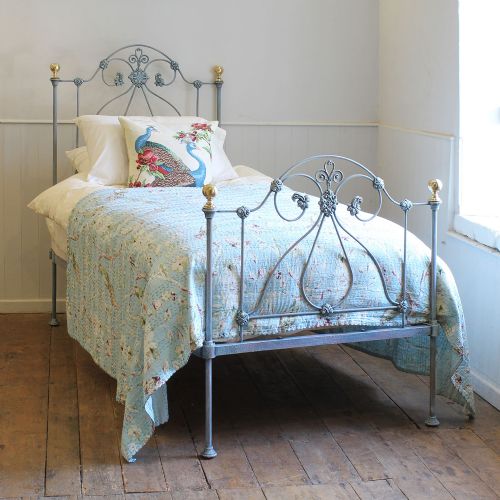
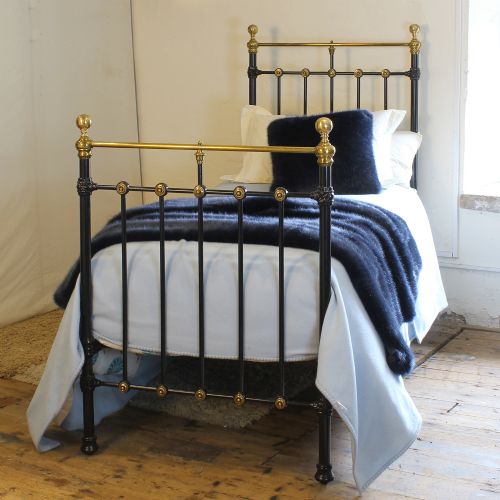
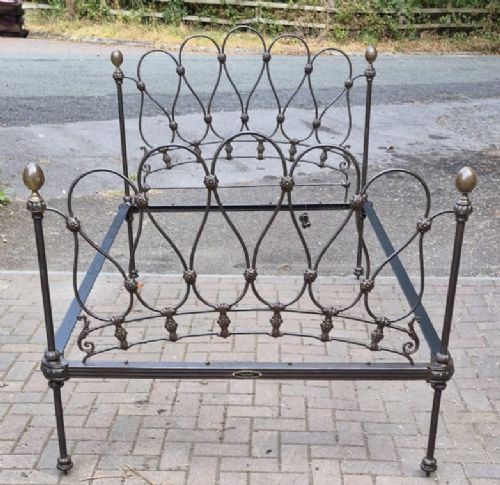
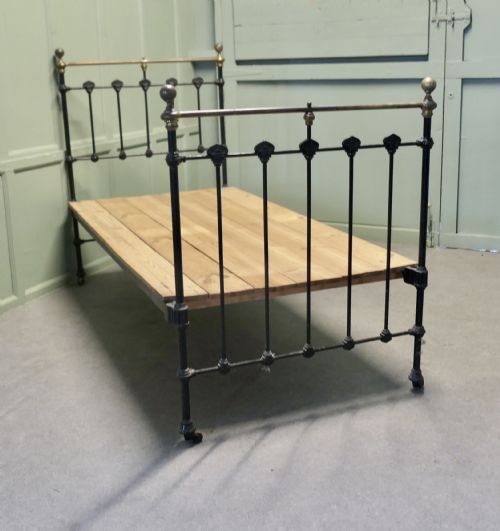
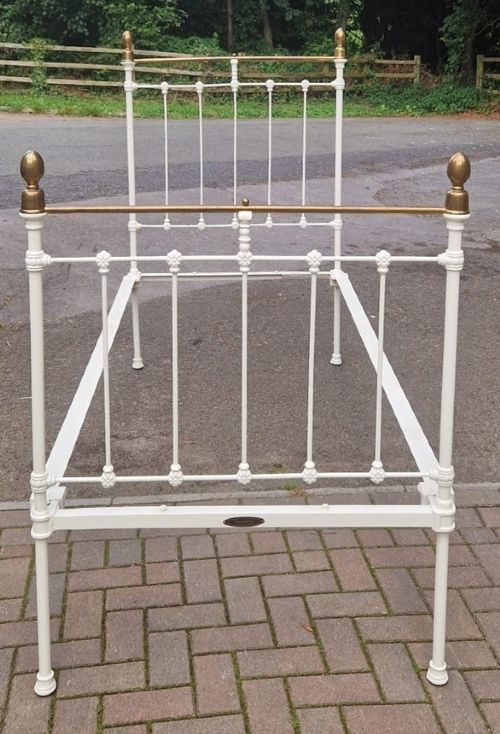
The surviving forms include straightforward no-end designs, curly iron frames, and platform styles embellished with contrasting brass details or ceramic components. Makers frequently combined cast iron with wrought iron and brass elements, painting the primary metal surfaces in black, cream, blue verdigris, or other traditional colour schemes.
How They Were Made
Foundries cast molten iron into decorative components and structural rails, often pairing the heavy metal with hand-forged wrought iron elements and polished brass tubing. The components were assembled using robust mechanical joints, dovetails, or threaded fasteners designed to be dismantled easily.
Finished surfaces received protective and decorative coats of paint, ranging from simple black applications to verdigris effects, cream pigments, and ceramic accents. Brass finials and mountings were polished and fitted to the iron frames to create visual contrast.
Several beds include clever linking brackets designed so Victorian siblings or guests could sleep side by side or separately with a simple adjustment.
What Varies in Quality
The distinction between standard examples and superior pieces rests on the intricacy of the ironwork, the presence of matching pairs, and the quality of the brass ornamentation. Well-executed castings exhibit sharp detail in decorative rings, crests, and joint housings without excessive pitting or rough seams.
R W Winfield
The Victorian Cast Iron Single Bed Glossary
- Cast iron
- Iron poured into a mould to shape it into decorative and structural bed components. This material forms the rigid framework of the majority of these antique beds.
- Wrought iron
- Iron beaten and worked by hand into specific forms. This tougher material was often utilised for structural bars and forged elements alongside cast sections.
- Bedstead
- The complete supporting framework of a bed, including the headboard, footboard, and side rails. These metal structures hold the base and mattress off the floor.
- Finial
- A decorative knob or terminal ornament fitted to the top of bed posts. Brass finials frequently cap the vertical iron corners of Victorian frames.
- Verdigris
- A green patina formed naturally or artificially on copper, brass, or iron surfaces. This greenish finish appears on specific antique painted metal beds.
Victorian Cast Iron Single Bed: Frequently Asked Questions
How do I assemble a Victorian iron bed?
Most antique metal bed frames use interlocking wedge joints or slot-in side rails that require no modern screws or bolts. The side rails simply drop into the receiving brackets on the headboard and footboard posts.
Tapping the joints gently with a rubber mallet helps seat the metal components securely into place. Ensure the frame sits square on the floor before placing the mattress base inside.
Can I use a modern mattress on these beds?
Standard modern mattresses often fit these antique frames, provided you check the internal width and length measurements carefully. Many nineteenth-century single beds measure around three feet wide, but lengths can vary compared to contemporary standards.
You will need to install a suitable modern slatted base or wooden support platform that rests safely within the side rails to support a contemporary mattress properly.
How do I clean and care for the iron?
Dust the iron frame regularly with a dry cloth and avoid harsh chemical cleaners that can strip original painted finishes. Light applications of microcrystalline wax help protect exposed metal and painted surfaces from moisture.
Polish brass components sparingly with a suitable metal cleaner, taking care not to let the polish stain adjacent painted iron areas.
Were these beds made as pairs?
Makers frequently produced matching pairs of single beds for shared guest rooms or children's dormitories in large nineteenth-century households. Many of these surviving pairs retain clever connecting brackets that allow them to be joined together as a larger bed or separated as needed.
Finding matching pairs remains particularly helpful for unified interior schemes, though single examples are equally common.