







Victorian Carved Work Desk
These victorian carved work desk pieces offer genuine period character and practical surfaces, combining nineteenth-century craftsmanship with enduring utility.
Victorian Carved Work Desk
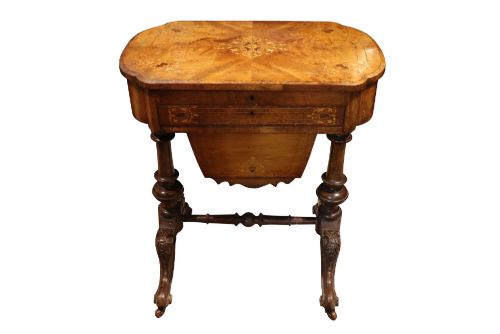
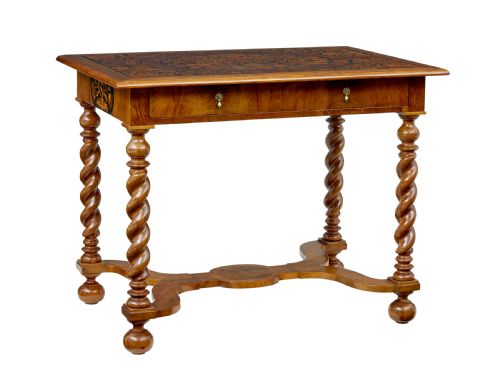
When you search for a victorian carved work desk, you encounter nineteenth-century furniture designed for writing and needlework, often featuring drop leaves or integrated compartments. Walnut, burr walnut, rosewood and mahogany dominate the selection available on this page, reflecting the timber preferences of the Victorian era.
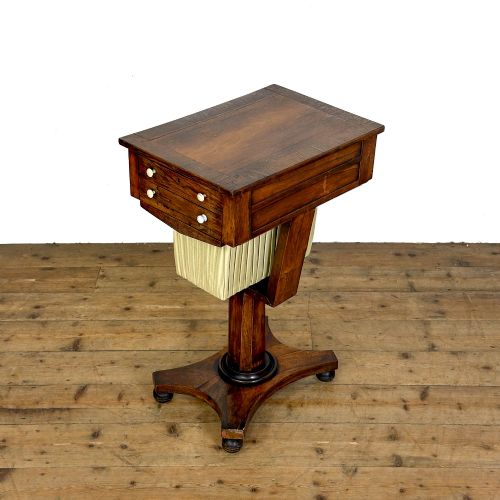
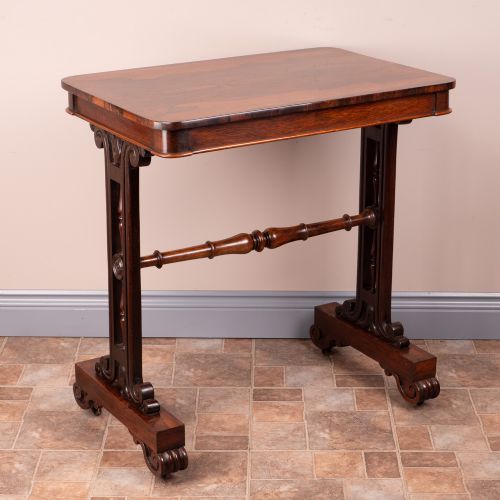
The forms span from compact writing tables and sewing tables to elaborate games tables and occasional desks. Makers of the period frequently incorporated carved details and wood inlay to elevate the appearance of these functional domestic pieces.
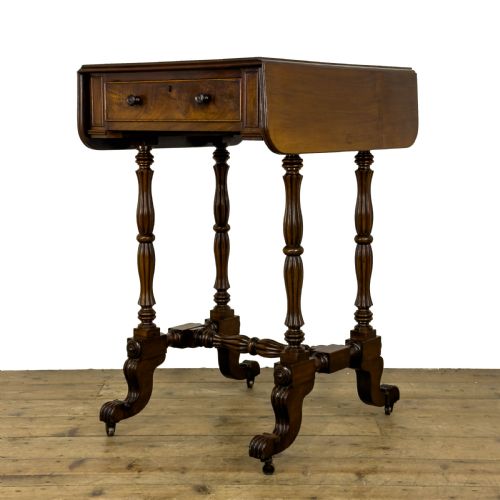
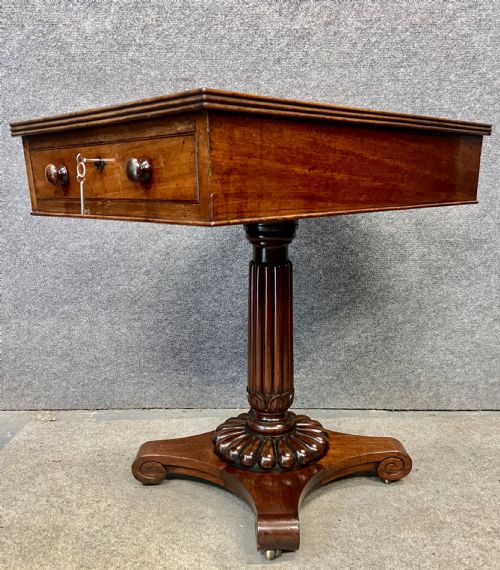
Most examples date from the mid-to-late nineteenth century, spanning periods noted as Victorian, William IV, Regency, and Late Victorian. Pieces range from straightforward mahogany drop-leaf designs to serpentine-shaped burr walnut marquetry examples equipped for multiple uses.
Materials and construction methods
Cabinetmakers constructed these tables using solid hardwoods alongside decorative veneers like burr walnut and rosewood applied to stable secondary timbers. Wood inlay, marquetry and brass fittings appear regularly on finer examples, adding decorative contrast to the dark polished surfaces.
Joinery techniques from the period relied on solid framing for drawers and drop leaves, allowing functional compartments to operate smoothly within domestic furniture. Carved elements were hand-executed by skilled artisans directly into the solid wood components.
Victorian Carved Work Desk Retail Price Guide 2026
Typical asking prices for victorian carved work desk among the pieces listed under this phrase on Sellingantiques today, from the lower quarter to the upper quarter. They describe what is for sale here now, not the wider market.
Listings feature woods including walnut, burr walnut, mahogany, rosewood and oak, alongside brass work and fabric components.
Distinctions in quality and execution
The choice of timber creates a primary distinction, as highly figured burr walnut and richly grained rosewood command greater attention than standard mahogany or oak. The complexity of the carving and the precision of the wood inlay distinguish workshop-produced items from simpler utilitarian pieces.
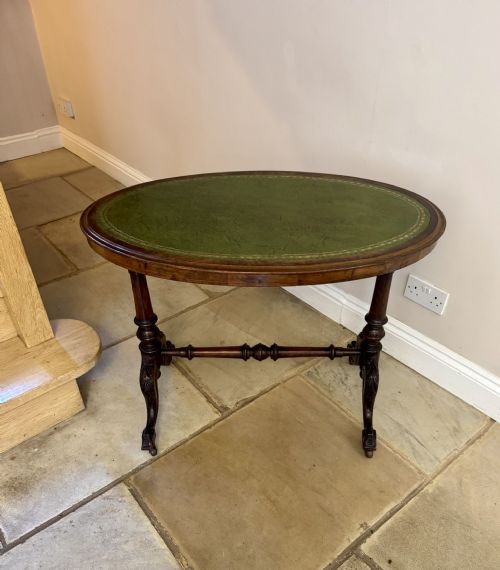
Structural integrity and the retention of original interior compartments, leather writing surfaces or brass hardware heavily influence the standing of an individual table. Finer pieces demonstrate superior proportion, balanced serpentine shapes and meticulous attention to secondary details.
Waring & Gillow·J Kingerley Manchester
The Victorian Carved Work Desk Glossary
- Burr walnut
- A figured timber obtained from walnut tree growths, valued for its swirling grain patterns. Cabinetmakers utilised burr walnut veneers on the top surfaces of desks and work tables.
- Marquetry
- The art of applying decorative veneer pieces in various woods to create pictorial patterns. This technique appears on the tops of nineteenth-century writing and games tables.
- Drop leaf
- A hinged flap on the side of a table that raises to extend the surface area. Many work tables incorporate drop leaves to provide extra space for sewing or writing.
- Work table
- A small domestic table fitted with drawers or fabric bags intended for needlework and small crafts. Victorian examples frequently combine this function with a writing surface.
- Serpentine
- A shaped furniture front or edge that curves outward centrally and inward at the sides. This contour requires skilled carpentry and signals a more ambitious design.
Victorian Carved Work Desk: Frequently Asked Questions
What is a work table used for?
These tables served nineteenth-century households as compact stations for sewing, needlework and light correspondence. Their internal compartments kept small tools and writing materials neatly organised.
Today, they function well as bedside tables, lamp tables or small writing desks in contemporary rooms. Their versatile design allows them to fit easily into modest spaces while offering surface area and concealed storage.
How do I identify a Victorian desk?
Victorian desks and work tables typically exhibit nineteenth-century timber choices such as walnut, rosewood and mahogany. Look for traditional construction methods, hand-cut dovetails in the drawers, and period-appropriate carving styles.
Dates usually span from the mid-nineteenth century through to eighteen-hundred-and-ninety or nineteen-hundred. Stylistic details often align with Victorian, William IV or Late Victorian design vocabularies.
Are these desks suitable for daily use?
These antique pieces were built from solid hardwoods and veneers designed for active domestic life. Their sturdy construction permits regular use as occasional desks or writing surfaces.
Placing them away from direct heat sources and using coasters or protective blotters helps preserve the polished wood finishes. Routine dusting and occasional wax care keep the timber conditioned.