



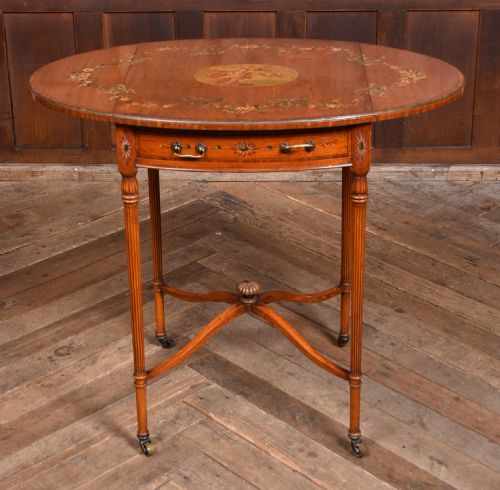
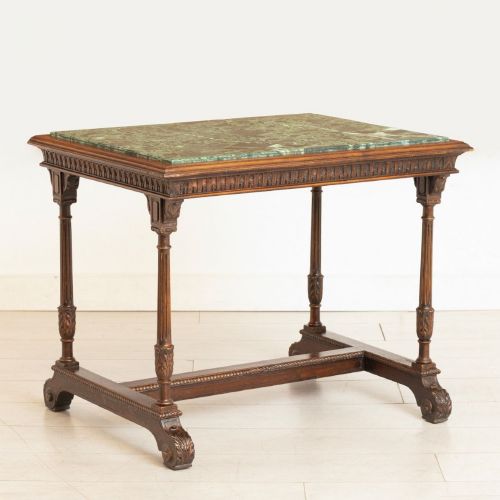
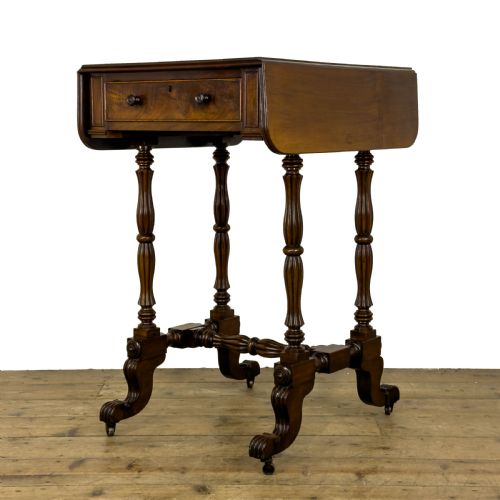


Fluted Leg Occasional Table
A fluted leg occasional table brings architectural line and compact surface space to a room, drawing on Georgian, Victorian, and Edwardian design traditions.
Fluted Leg Occasional Table
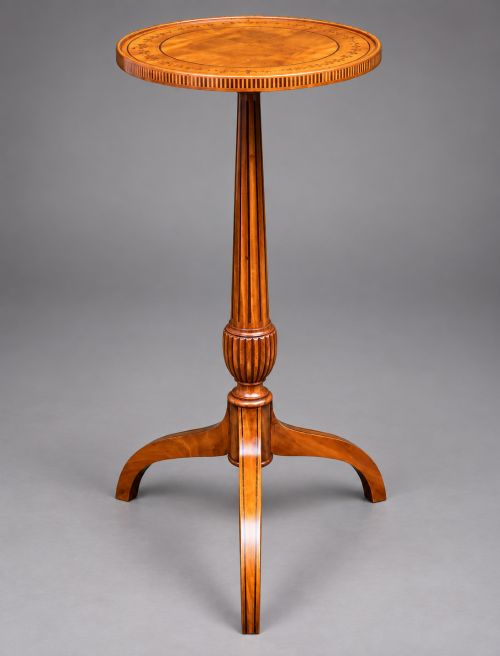
A fluted leg occasional table is a versatile small surface designed for flexible placement throughout a home, taking forms such as side tables, centre tables, lamp tables, and gueridons. When you explore this selection, you encounter pieces spanning the eighteenth century through the Edwardian period and the 1920s.
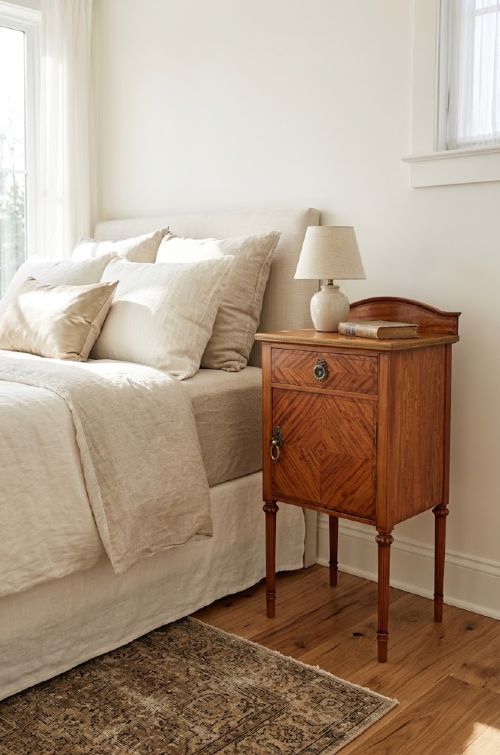
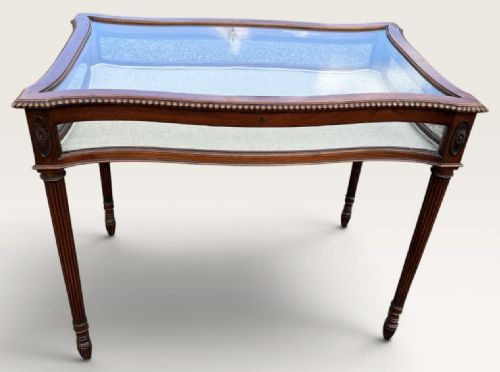
The English and French examples reflect the dominant tastes of their eras, ranging from Georgian and Regency proportion to Victorian mahogany work tables and Louis XVI revival pieces. These smaller tables served various domestic roles, functioning as bedside cupboards, display surfaces, and drop-leaf tea tables.
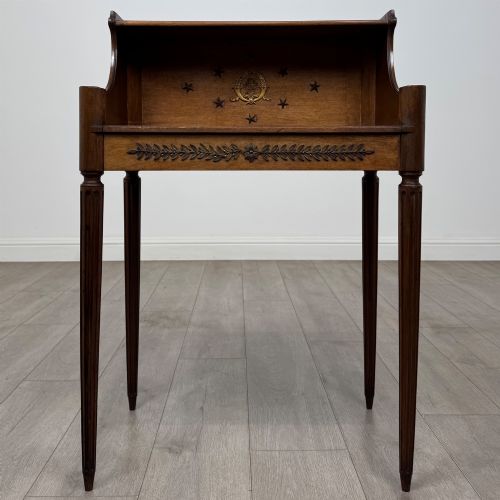
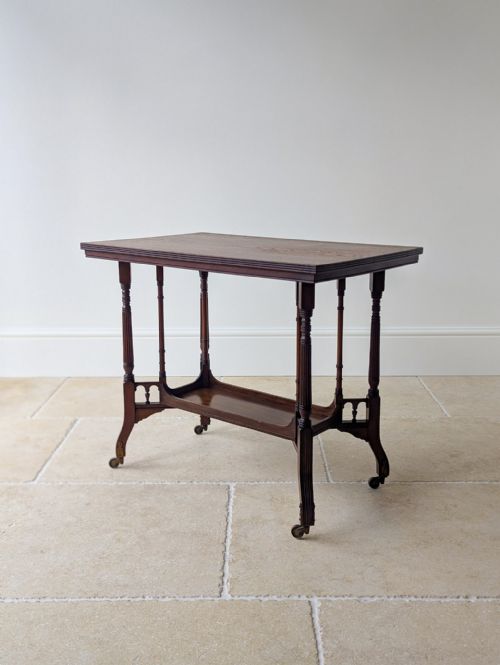
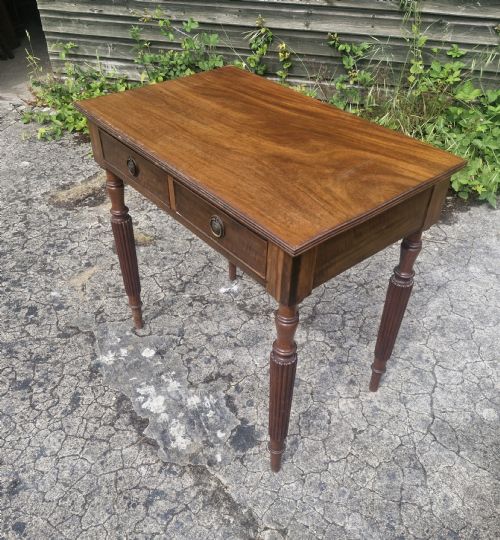
On this page, the most common iterations combine mahogany, walnut, or satinwood with distinct architectural supports. Makers applied vertical fluting to legs to introduce classical proportion and visual lightness to domestic furniture.
What varies in quality
Quality in a fluted leg occasional table rests on the crispness of the carved fluting and the selection of timber veneers. Superior examples display sharp, hand-carved channels and well-figured mahogany or satinwood grain that has aged with a deep, warm patina.
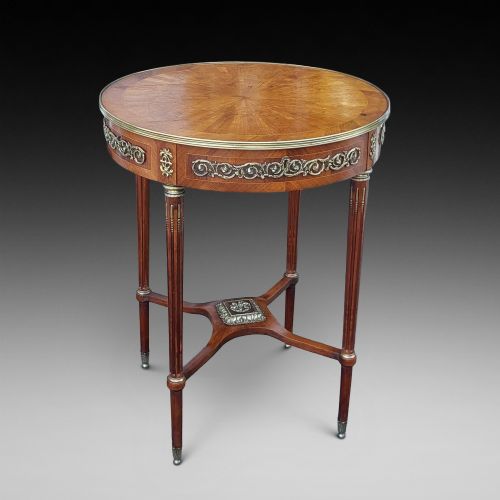
The integration of secondary materials dictates the tier of craftsmanship, particularly the weight of cast ormolu mounts, the polish of marble inserts, and the precision of brass stringing. Workshops known for high-end production achieved seamless joints and robust under-framing that endured generations of use.
Listings span multiple decades from the 1800s to the 1920s, showcasing materials such as mahogany, walnut, satinwood, and marble.
Gregory & Co·Gillow Lancaster·Francoise Linke·Gillows·Holland & Sons·Henry Dasson
The Fluted Leg Occasional Table Glossary
- Fluting
- Vertical parallel grooves carved into a column or furniture leg for decorative effect. This classical detail originates from ancient Greek architecture.
- Gueridon
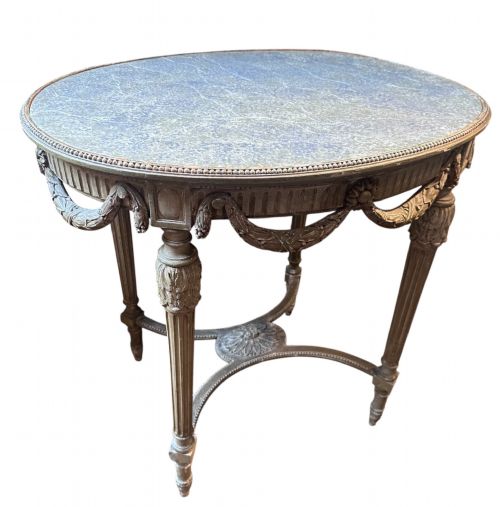
- A small French occasional table, often round and supported by a central pillar or three to four legs. They frequently feature marble tops and gilt bronze mounts.
- Marquetry
- Decorative veneer applied to furniture in patterns using wood pieces, shell, or ivory. Craftsmen arrange these contrasting materials to form pictorial or geometric designs.
- Ormolu
- Gilt bronze ornamentation applied to the mounts, feet, and edges of fine furniture. The technique involves creating a finely chased bronze object coated in gold amalgam.
- Serpentine
- A furniture shape featuring a curved front or edge that undulates inward and outward in a continuous wave. This contour requires skilled woodworking to shape solid timber accurately.
Fluted Leg Occasional Table: Frequently Asked Questions
Where should I place an occasional table?
These compact tables suit positions beside seating, in hallways, or serving as bedside lamp stands. Their modest scale allows them to fit into corners and narrow gaps without dominating a room.
Position one where you need a stable surface for books or lighting. Their varied heights and shapes make them adaptable to both living spaces and bedrooms.
How do I care for marble tabletops?
Wipe marble surfaces with a soft, damp cloth and avoid acidic cleaners that can etch the stone. Use coasters under drinks to prevent staining on porous white or Italian marble.
Routine dusting keeps the polished finish intact. Periodic gentle cleaning preserves the natural veining and historical character of the stone.
What distinguishes Edwardian tables from Victorian ones?
Victorian tables often utilise heavier dark mahogany and robust proportions, reflecting the substantial furniture styles of the nineteenth century. They frequently include functional additions like drop leaves and work bags.
Edwardian pieces generally favour lighter woods like satinwood and walnut, embracing airier neoclassical revivals. The lines tend to be more slender and understated.
How do I identify Louis XVI style tables?
Look for straight, fluted legs that taper toward the foot, contrasting with the curved cabriole legs of earlier periods. This geometric restraint defines the neoclassical aesthetic.
They frequently feature gilt bronze mounts, marquetry inlay, and occasionally round marble tops. The overall silhouette prioritises symmetry and classical architectural proportions.