


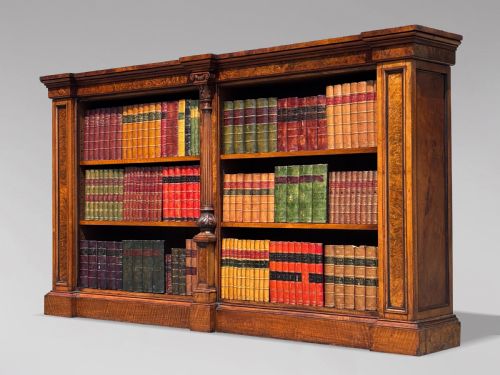
Victorian Carved Walnut Shelf
Victorian carved walnut shelf examples combine figured timber and architectural display tiers, offering practical vertical storage for small collections.
Victorian Carved Walnut Shelf
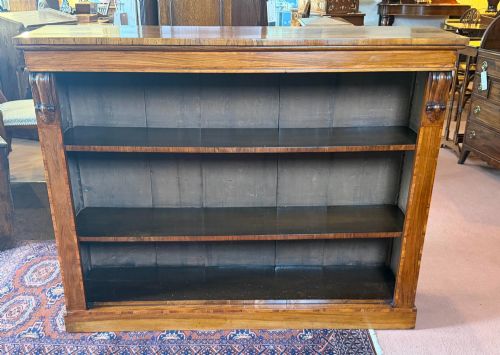
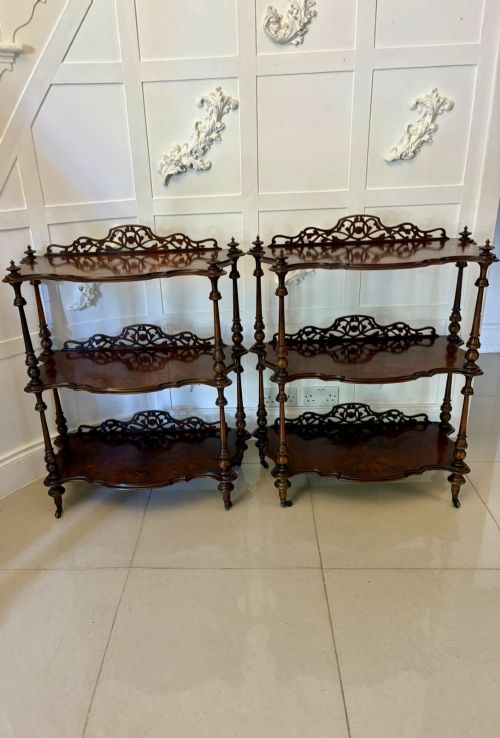
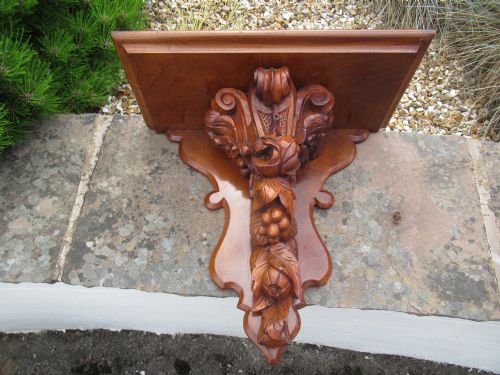
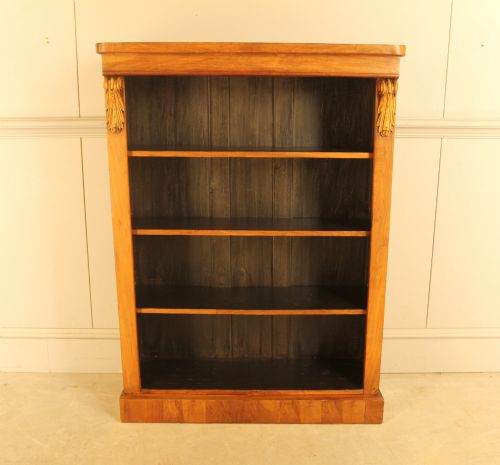
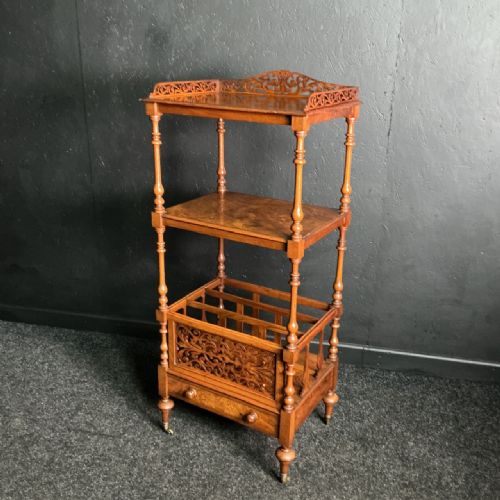
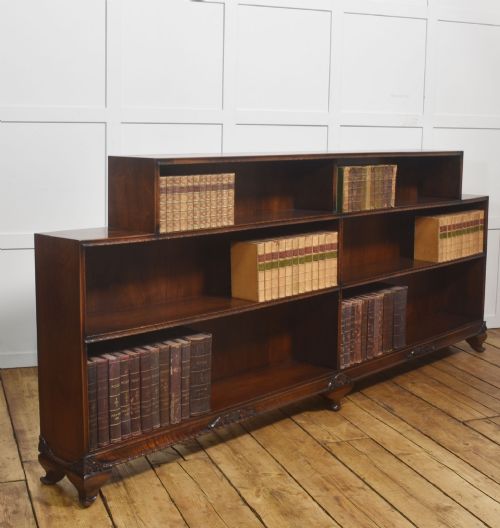
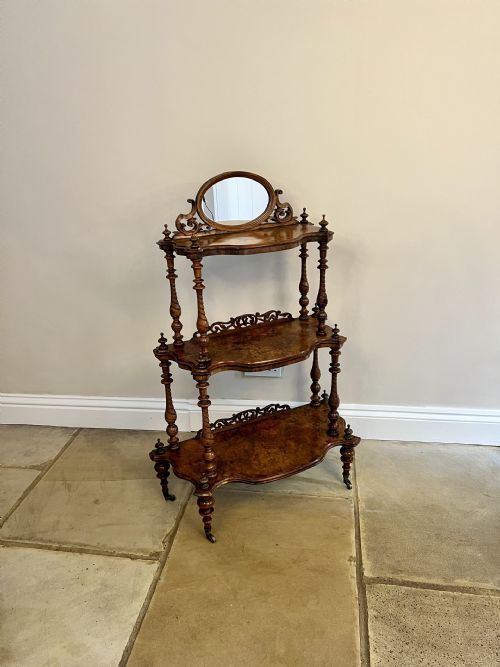
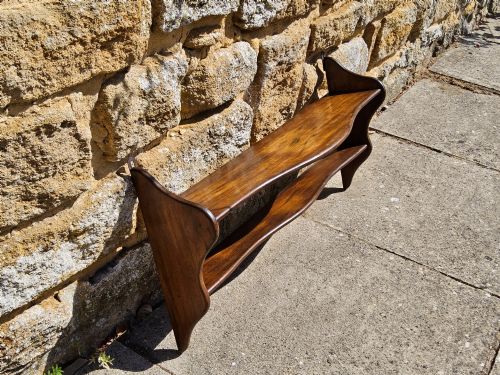
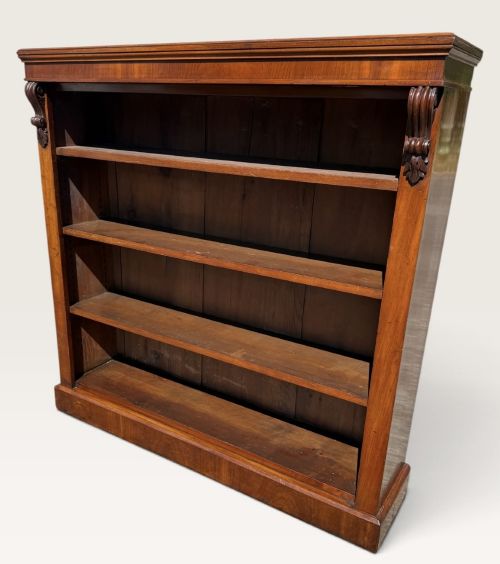
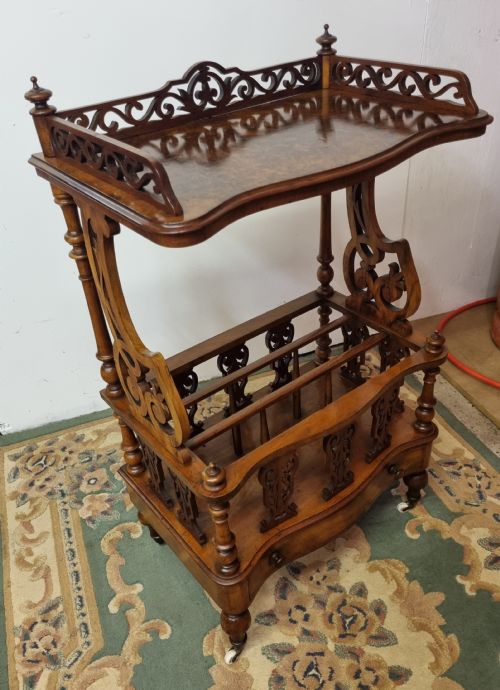
A Victorian carved walnut shelf appears in several distinct forms across domestic interiors, including wall brackets, hanging wall shelves, and multi-tiered whatnots. These pieces serve to display decorative objects while utilising vertical wall space.
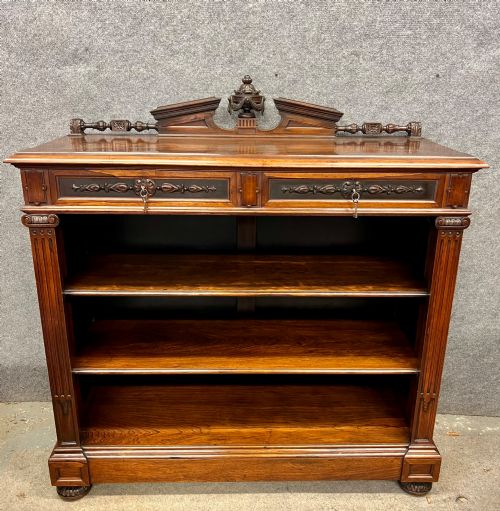
The material palette centres on walnut and burr walnut, sometimes enhanced by mirror glass, brass, or ceramic elements. Examples span the nineteenth century and incorporate varied styles such as the Aesthetic Movement, French Chateau, and Victorian Rococo Revival.
Buyers encounter corner models alongside linear wall shelves and freestanding étagères. The construction accommodates both compact rooms and larger reception spaces through varying heights and tier counts.
Materials and construction
Cabinet makers utilised solid walnut and figured burr walnut veneers applied to secondary timbers such as pine. Carved details define brackets and corbels, while turned supports secure tiered platforms.
Associated materials include mirror glass backing plates and brass hardware fixtures. Surface finishes protect the grain while accentuating the natural warmth and colour of the walnut timber.
Some shelves include fully adjustable internal components, proving that nineteenth-century domestic organisers appreciated modular convenience just as much as modern collectors do.
Factors of quality
The refinement of the carving separates standard production items from exhibition pieces. Crisp execution in foliage or structural corbels demonstrates superior craftsmanship by the maker.
Timber selection dictates visual depth, where highly figured burr walnut veneers command attention over plain walnut boards. Joinery stability and original hardware integrity complete the assessment.
Gabriel Viardot·Connell of London·German H.A.C.
The Victorian Carved Walnut Shelf Glossary
- Whatnot
- A freestanding or hanging piece of furniture comprising multiple open shelves for displaying ornaments. These units often feature turned supports and serpentine shaping.
- Étagère
- A piece of furniture consisting of a set of open shelves for displaying small objects or ornaments. The form shares similarities with the whatnot.
- Burr walnut
- Timber taken from a tree growth where the grain has grown in a deformed manner, producing intricate patterns. Cabinet makers prized this veneer for high-status furniture.
- Corbel
- A structural piece of stone or wood projecting from a wall to carry a weight. In shelf design, these elements function as decorative support brackets.
- Aesthetic Movement
- A late nineteenth-century design style emphasising visual beauty over narrative subject matter. Pieces from this movement often display clean lines and artistic carving.
Victorian Carved Walnut Shelf: Frequently Asked Questions
How do I hang a wall shelf safely?
Ensure the fixing brackets align with internal wall studs or use appropriate heavy-duty wall anchors suitable for the plaster type. Check that the weight distribution across the walnut tiers remains balanced once mounted.
Verify the structural integrity of the back panel and hanging loops before installation to prevent strain on historical joints.
Where should I place a corner shelf?
Corner units occupy underutilised room angles, making them suitable for hallways, drawing rooms, or compact studies. They provide display space without encroaching on primary floor area.
Pairing a corner shelf with surrounding nineteenth-century furniture maintains period context within the room scheme.
How do I clean burr walnut surfaces?
Dust the carved details and flat shelves regularly with a soft, dry lint-free cloth. Avoid silicone sprays or harsh chemical polishes that can degrade historical finishes.
Apply a microcrystalline wax periodically to nourish the walnut timber and preserve the chatoyancy of the burr grain.
What distinguishes an étagère from a whatnot?
An étagère generally incorporates more decorative framing and console elements, whereas traditional whatnots focus on stacked open tiers supported by columns. Both terms describe tiered display furniture from the period.
Individual maker designations often overlap between these categories depending on regional terminology and specific form variations.