




Victorian Carved Walnut Figures
These Victorian carved walnut figures encompass distinct animal and human studies alongside decorative objects shaped from rich timber.
Victorian Carved Walnut Figures
When seeking victorian carved walnut figures, buyers encounter sculptural objects alongside functional items embellished with carved timber details. The selection spans animal studies and figural groups originating from continental workshops as well as English cabinet makers.
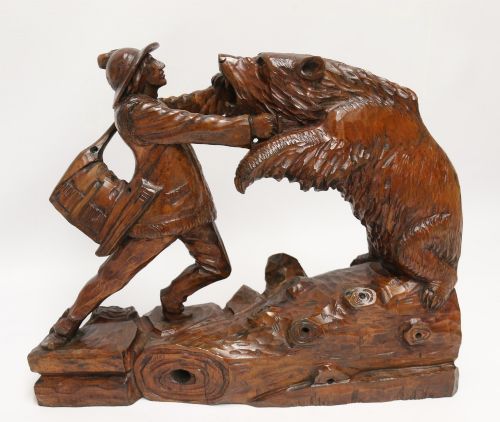
Black Forest animal carvings and monk studies represent the principal figural types present in this category. These pieces often take the form of freestanding sculptures, inkstands, nutcrackers, and decorative stands.
The objects date predominantly from the nineteenth century, aligning with the broader Victorian period and later decades of that era. Walnut remains the defining medium across all listed items.
Materials and construction methods
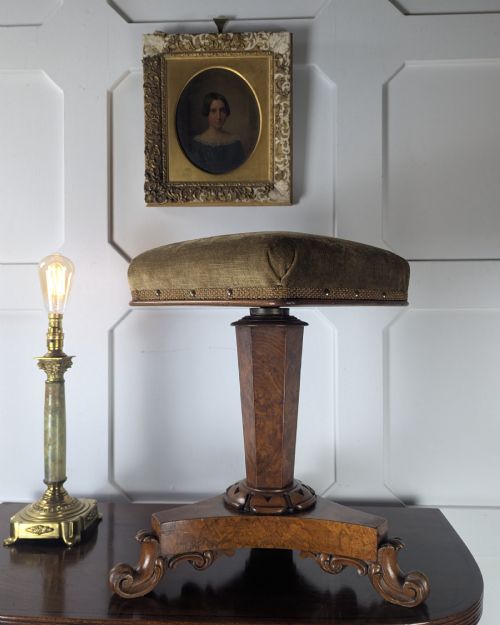
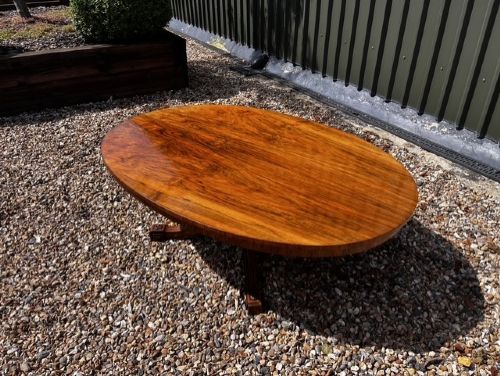
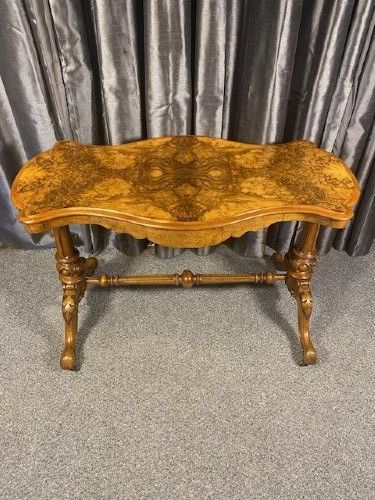
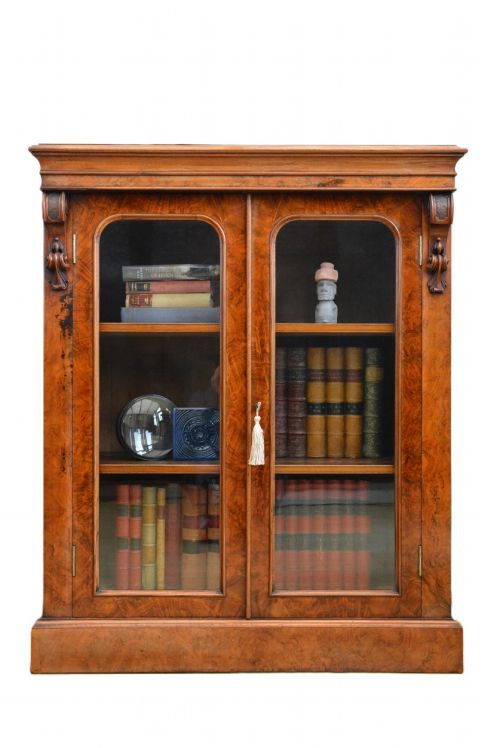
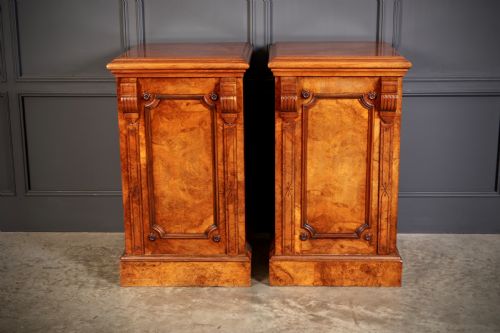
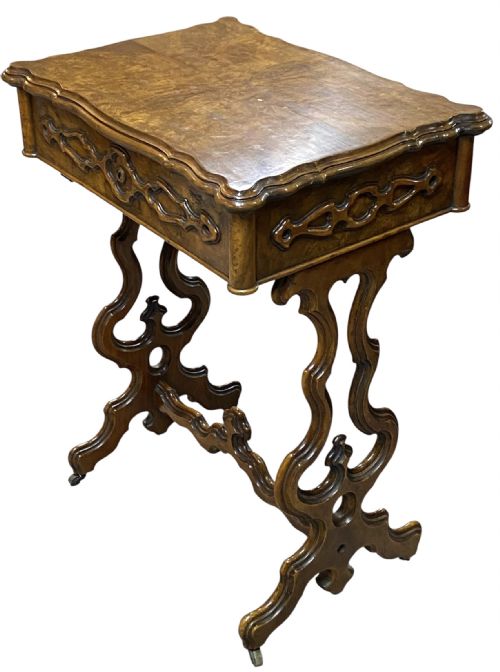
Makers utilised walnut, burr walnut, and figured walnut veneers over solid secondary timbers to construct the structural forms and cabinets. Cabinet makers matched veneer leaves symmetrically to create decorative grain patterns on table tops and door panels.
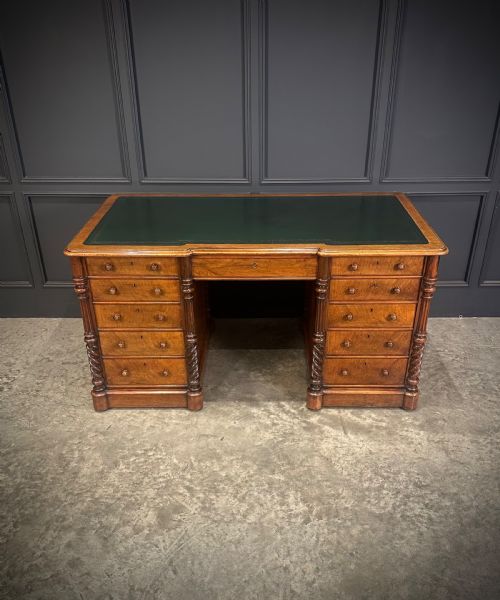
Carvers shaped solid walnut blocks by hand to produce three-dimensional animal and human figures with detailed textures. Artisans incorporated glass eyes in animal subjects and utilised brass hardware for functional items like desks and tables.
The inventory spans the Victorian period, Regency era, and early twentieth century, highlighting the enduring popularity of walnut timber.
Standards of craftsmanship
Excellence in figural carving depends upon anatomical accuracy, depth of relief, and vitality in the expression of animals or human subjects. Superior pieces display intricate hand tool marks rather than mechanical smoothing.
Cabinet work quality is judged by the selection of burr or figured walnut veneers and the precision of marquetry inlay work. Structural integrity and original surface patina further separate standard examples from exceptional ones.
Holland & Sons
The Victorian Carved Walnut Figures Glossary
- Burr walnut
- Timber taken from the growth growths or burls of walnut trees, yielding complex swirling grain patterns. Cabinet makers prized this wood for high-status Victorian furniture surfaces.
- Black Forest
- A geographic region in Germany renowned during the nineteenth century for intricate wood carving. Artisans there produced dynamic animal figures, bears, and functional desk accessories in walnut.
- Marquetry
- Decorative veneer work arranged in pictorial or geometric patterns on furniture surfaces. Craftsmen inlaid contrasting woods to form floral and scroll motifs.
- Figured walnut
- Timber exhibiting distinctive grain variations such as ripples, mottling, or flames. This material was selected for prominent panels and table tops.
- Davenport
- A compact pedestal desk featuring a sloping writing surface and internal drawers. Victorian examples frequently incorporate burr walnut and carved supports.
Victorian Carved Walnut Figures: Frequently Asked Questions
What defines Black Forest walnut figures?
These carved wooden objects originate from nineteenth-century European workshops and typically depict bears, birds, or human studies. Artisans used solid walnut to create highly realistic textures and expressions.
They function as standalone sculptures, inkstands, or decorative stands. The carving style emphasises naturalistic detail and dynamic posture.
How do I care for antique walnut furniture?
Keep walnut pieces away from direct heat sources and strong sunlight to prevent the timber and veneers from drying out or fading. Maintain a stable indoor humidity level.
Apply traditional beeswax periodically to nourish the wood and preserve the surface shine. Avoid modern silicone-based polishes.
What is figured walnut timber?
Figured walnut refers to wood grain containing natural distortions such as curls, waves, or burls that create decorative patterns. Cabinet makers sliced this timber into thin veneers for furniture surfaces.
This material was utilised on table tops, cabinet doors, and desk lids during the Victorian era to create visual contrast.
How were nineteenth-century figures used?
Carved walnut figures served primarily as decorative ornaments or novelties displayed on mantelpieces, tables, and desks. Some items combined art with utility, such as inkstands and nutcrackers.
Victorian interiors frequently incorporated these detailed wooden sculptures to showcase craftsmanship and natural themes.