
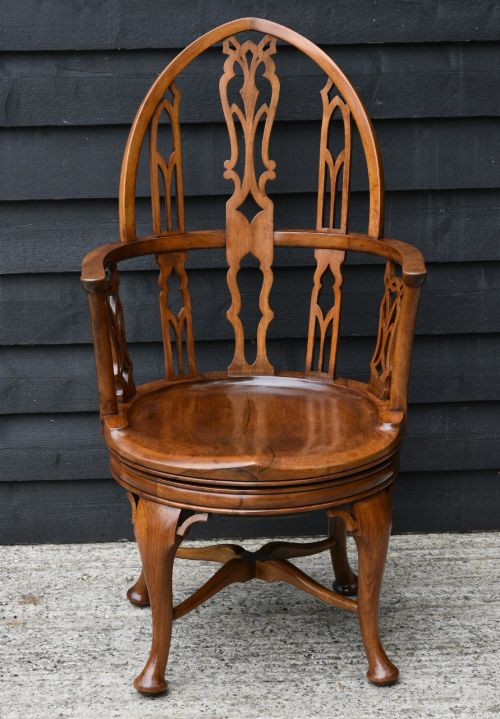
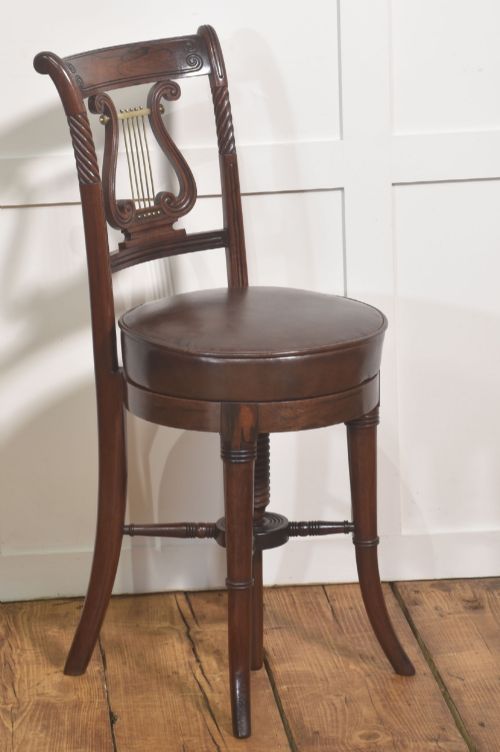
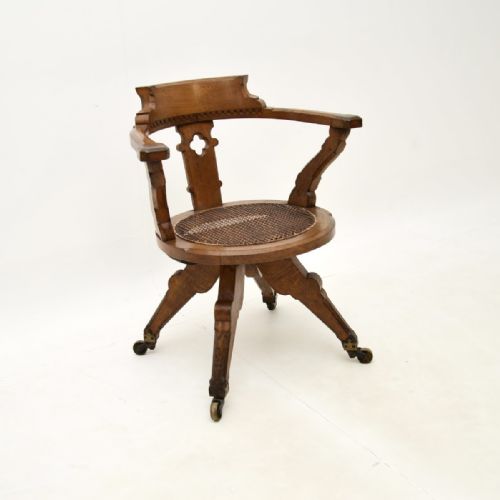
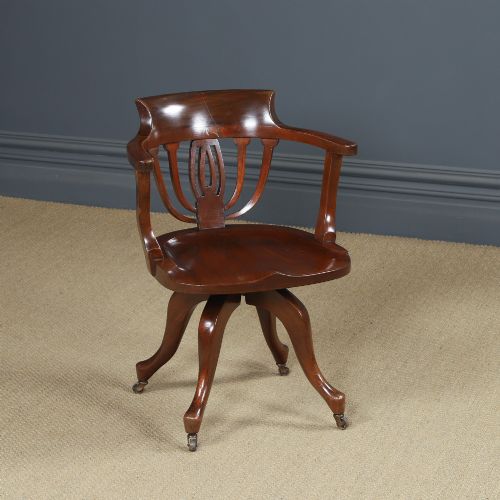


Victorian Carved Swivel Chair
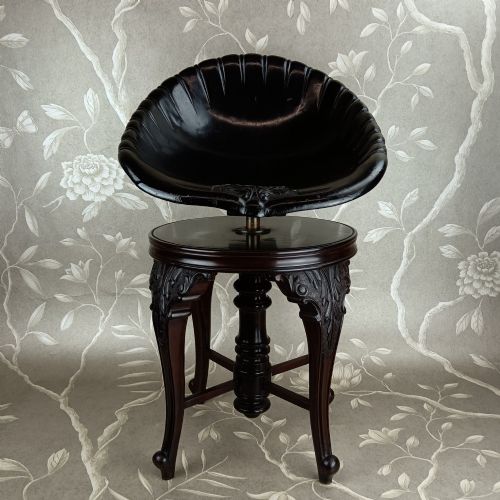
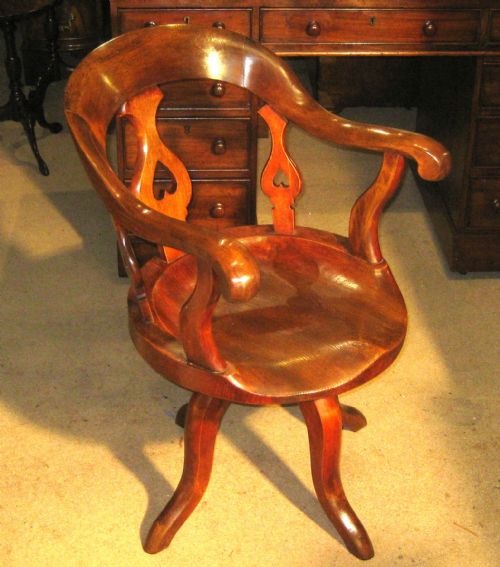
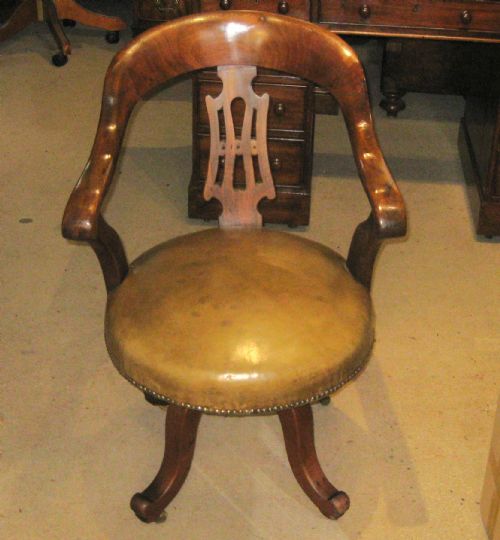
These Victorian carved swivel chairs combine mechanical ingenuity with robust timbers, offering adjustable height and movement for the Victorian workspace or music room.
Victorian Carved Swivel Chair
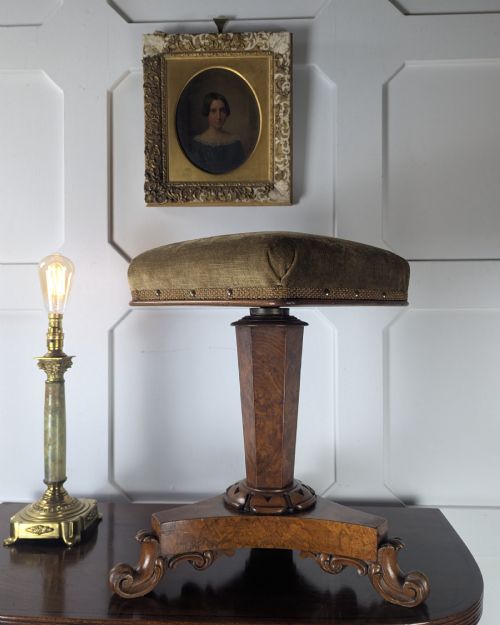
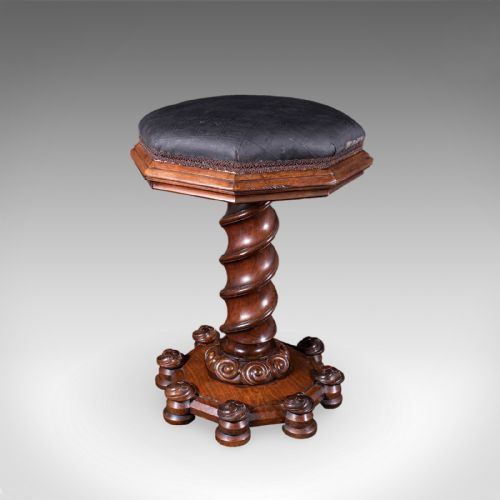
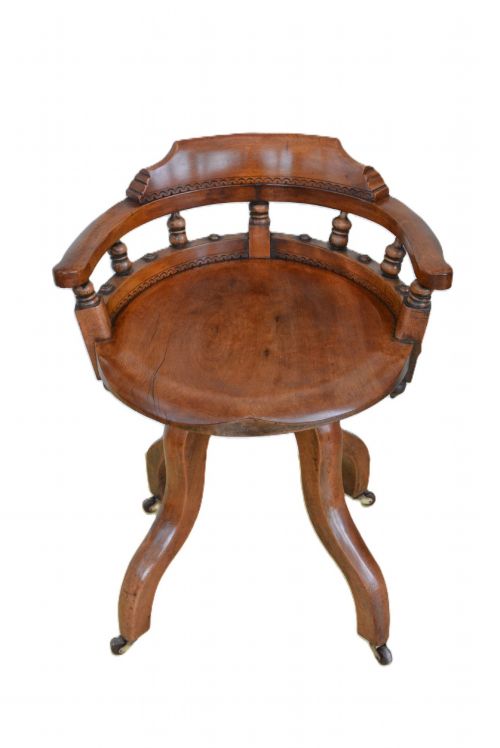
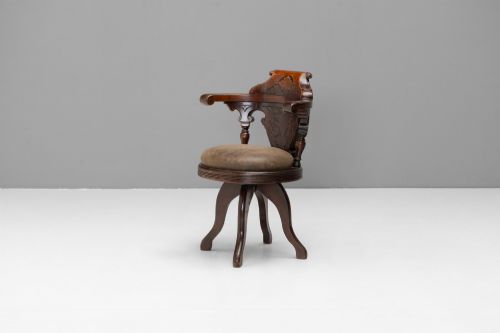
A Victorian carved swivel chair is a seating form engineered with a rotating mechanism, frequently encountered as a revolving desk chair, an office chair, or an adjustable piano stool. The pieces span the nineteenth century, including specific iterations from the William IV, Gothic Revival, Aesthetic Movement, and Edwardian periods.
Buyers will find these seating options fashioned in various woods such as mahogany, walnut, oak, and rosewood, often paired with leather, velvet, or fabric upholstery. The selection ranges from heavily carved ship's chairs and harpist stools to revolving desk armchairs designed for administrative tasks or musical performance.
Materials and construction
Cabinet makers utilised dense hardwoods including mahogany, walnut, and oak to provide the structural integrity required for a pivoting seat. These timbers were often intricately carved in Gothic Revival or late Victorian styles, while specialised variants incorporated papier-mâché, bentwood, rosewood, and padouk.
Mechanical components relied on brass and iron hardware to facilitate the revolving action and the rise and fall adjustment mechanisms. Upholstered elements featured inserted leather or plush velvet and fabric seating surfaces secured to the rotating wooden frames.
Chapel organists and harpists needed good seating just as much as desk clerks.
Evaluating distinction and craftsmanship
Quality in a revolving chair is determined by the precision of the mechanical swivel mechanism and the crispness of the timber carving. Pieces attributed to recorded makers or superior workshops demonstrate more refined joinery and heavier gauge brass fittings compared to standard production examples.
The choice of primary wood and secondary materials dictates the stature of the piece, with figured walnut, rosewood, and solid oak achieving greater depth of finish. Furthermore, the integration of adjustable height systems that operate smoothly without lateral wobble distinguishes finer examples from simpler stools.
Jennens & Bettridge·S&H Jewell·SHOOLBRED·George Bartholomew & Co.
The Victorian Carved Swivel Chair Glossary
- Revolving desk chair
- A seating form equipped with a central spindle or pivot allowing the upper portion of the chair to rotate fully. These were utilised primarily in studies, offices, and libraries.
- Piano stool
- An adjustable seat designed for musicians, featuring a mechanism to raise or lower the height. They appear in square top, revolving, and rise and fall configurations.
- Gothic Revival
- A design style drawing inspiration from medieval architecture, characterised by pointed arches, heavy linenfold or geometric carving, and solid oak or walnut construction.
- Aesthetic Movement
- A late nineteenth-century design current emphasising visual and material beauty over narrative content. Pieces in this style often exhibit clean lines and refined walnut surfaces.
- Rise and fall
- A mechanical system utilising a threaded screw or ratchet mechanism to alter the height of the seat. This permitted the user to customise the chair for desks or musical instruments.
Victorian Carved Swivel Chair: Frequently Asked Questions
How do I adjust the height on these chairs?
Many of these pieces utilise a central screw mechanism operated by spinning the seat itself clockwise or anticlockwise to raise or lower the platform.
Other variants employ rise and fall levers or brass riser columns that lock into position to maintain the desired height for a desk or piano.
Were swivel chairs only used for desks?
While the revolving desk chair and office chair were staples of the nineteenth-century study, the mechanical swivel principle was widely applied to music seating.
Organists, harpists, and pianists required rotating and adjustable stools such as piano stools, music chairs, and harpist chairs to maintain proper posture during performance.
What is a ship's chair?
A ship's chair is a heavily carved oak seating form designed to remain stable and robust in maritime environments or large institutional settings.
They frequently feature fully rotating mechanisms and inset leather seats, combining heavy timber construction with the characteristic swivel movement found across this category.
How do I distinguish Gothic Revival examples?
Gothic Revival pieces are typically constructed from solid oak or walnut and feature architectural ornament inspired by medieval stone and timber work.
Look for deep relief carvings, pointed arch motifs, and heavy turned supports that mark them out from standard Victorian or Edwardian office chairs.