

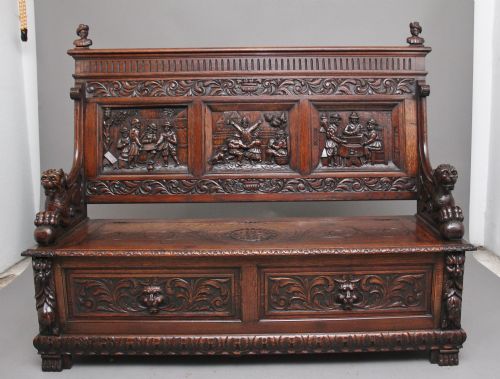


Victorian Carved Settle Seat
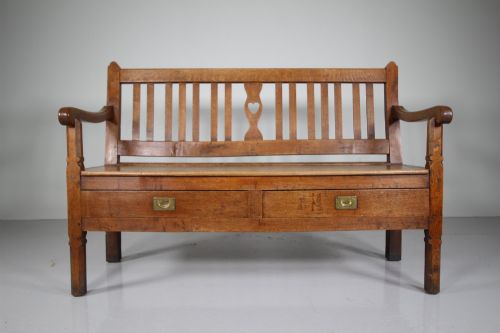
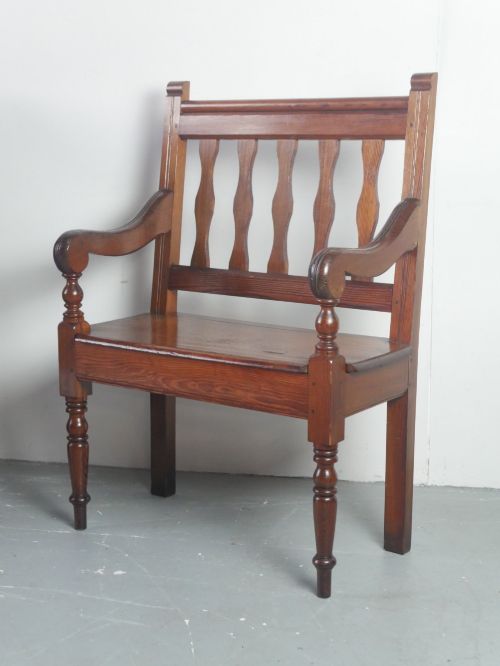
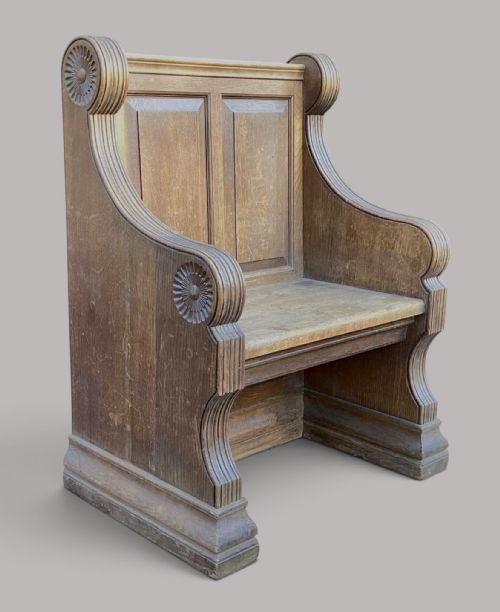
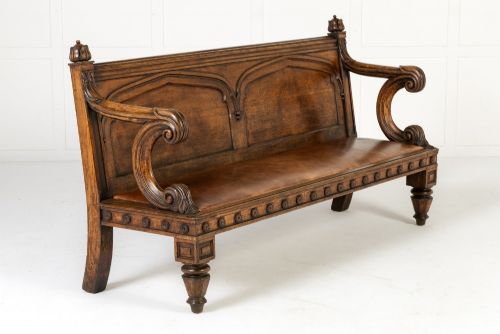
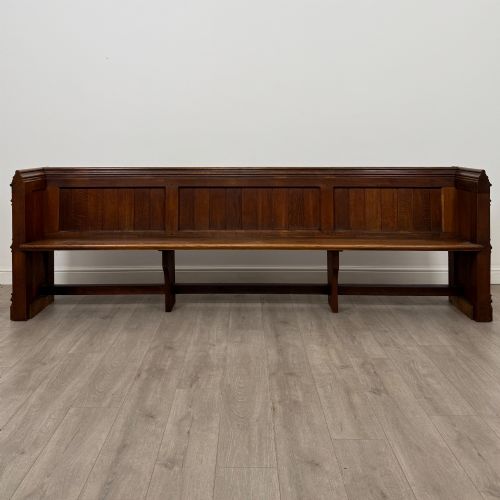
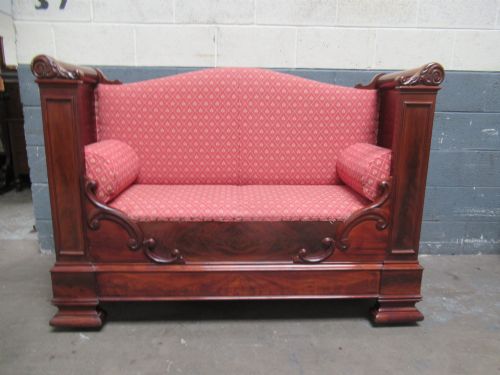
A victorian carved settle seat brings solid timber presence and architectural ornament straight into a hallway or reception space.
Victorian Carved Settle Seat
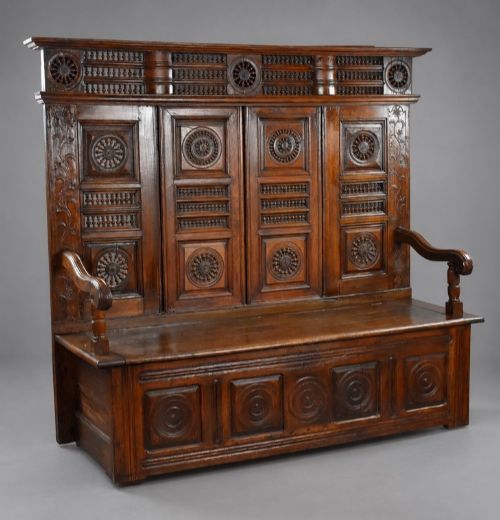
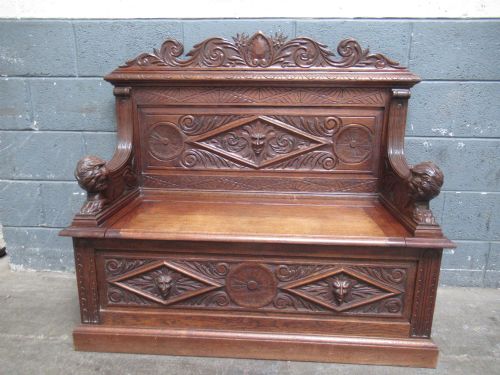
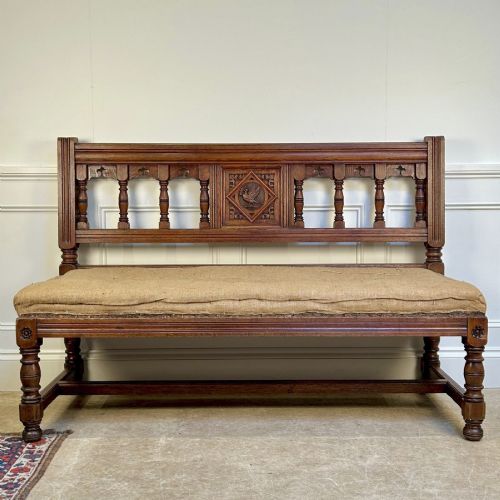
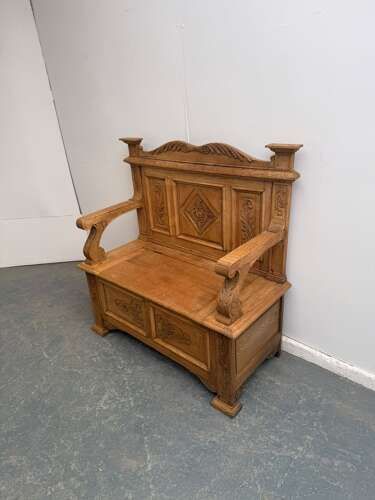
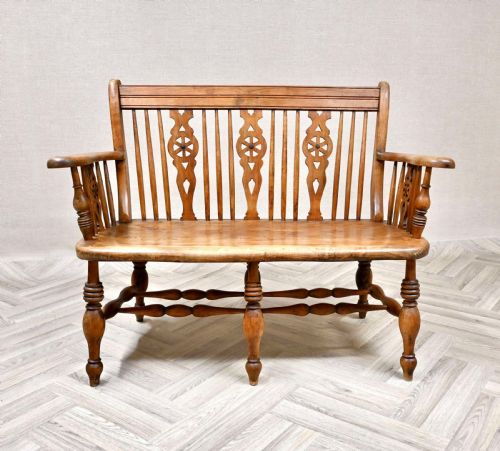
A victorian carved settle seat serves as a substantial hallway bench, often combining high panelled backs with built-in storage beneath the seat. These pieces emerge predominantly in solid oak during the nineteenth century, reflecting revivalist tastes ranging from Gothic to Jacobean.
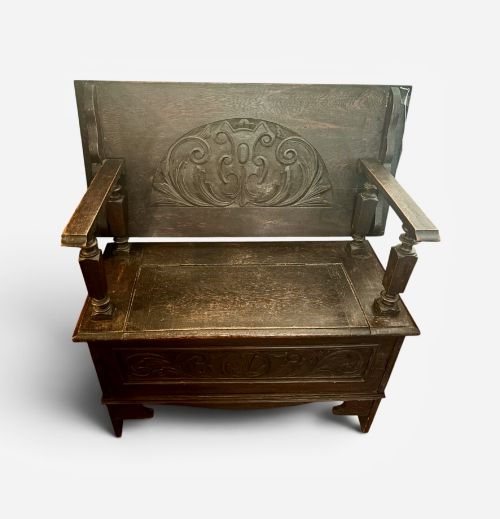
Most examples encountered on this page function as hall benches, monks benches, or box settles designed for domestic entryways. The form accommodates utilitarian storage alongside ornate surface carving, including linenfold panels, scrolling foliage, and grotesque masks.
Originating largely from British workshops of the 1850s through to the late Victorian decades, these seating items combine structural timber framing with deep relief carving. They range from compact half-seaters to imposing architectural benches intended for grand reception halls.
Materials and Construction
Makers construct these benches primarily from solid English and European oak, selected for durability and finished with traditional wax or polish. Supplementary elements incorporate brass hinges and mounts, while occasional variants utilise walnut, mahogany, elm, or teak.
Carpenters employ traditional mortice and tenon joinery alongside tongue and groove panel assembly to ensure the structural integrity of heavy backrests and lidded boxes. Surface ornamentation relies on hand-chiselled relief carving executed directly into the dense grain of the timber.
Listings feature solid oak predominantly, alongside occasional examples in walnut, mahogany, elm, and teak from the nineteenth century.
Distinguishing Quality
The distinction between standard production and exceptional craftsmanship rests in the depth, crispness, and continuity of the hand-carved ornament. Superior examples display sharply defined figures, such as Green Man masks, balanced proportions, and integrated architectural mouldings rather than shallow, mechanical stamping.
Quality also reveals itself in the timber selection and the retention of original structural elements, including period brass hardware and unaltered lidded compartments. Pieces bearing maker stamps or attributed to notable cabinet makers demonstrate a higher level of workshop execution.
GIllows·James Shoolbred & Co.·Hampton & Son's
The Victorian Carved Settle Seat Glossary
- Settle
- A wooden bench with a high back, solid arms, and frequently a box base for storage. It provides draught-proofing in older hallways.
- Monks Bench
- A convertible piece of furniture featuring a hinged back that folds down to form a table top over a box seat.
- Green Man
- A sculptural motif representing a human face engarlanded with leaves, vines, or branches, common in Gothic revival woodwork.
- Box Settle
- A bench incorporating a lidded compartment beneath the seat boards for storing boots, blankets, or household items.
- Jacobean Revival
- A nineteenth century decorative style imitating seventeenth century English oak furniture, characterised by geometric panelling and strapwork.
Victorian Carved Settle Seat: Frequently Asked Questions
Where should a settle be placed?
These benches suit entrance halls, boot rooms, and wide corridors where their high panelled backs and substantial timber frames command the space.
Positioning them against a sturdy wall allows the architectural carving and tall backrest to act as a focal point upon entering the home.
How do I use the storage safely?
The hinged seat provides a concealed compartment that functions well for stowing away household items, boots, or winter accessories out of sight.
When opening older lids, take care to support heavy oak boards and inspect historical brass hinges to ensure smooth movement without straining the timber.
How do I maintain oak furniture?
Regular dusting with a dry cloth keeps the carved recesses free of debris, while occasional applications of beeswax nourish the grain and preserve the finish.
Keep these wooden pieces away from direct heat sources and severe humidity fluctuations to prevent the solid panels from splitting or warping over time.
How can I date a piece?
Examine the timber stock, tool marks, and construction methods used in the frame, comparing the stylistic vocabulary against known nineteenth century revival periods.
Details such as hand-cut joinery, patinated wax finishes, and original brass hardware help distinguish mid to late Victorian manufacturing from later reproductions.