



Victorian Carved Seating
Victorian carved seating brings together heavy woods and detailed handwork, offering sturdy construction alongside decorative forms for the home.
Victorian Carved Seating
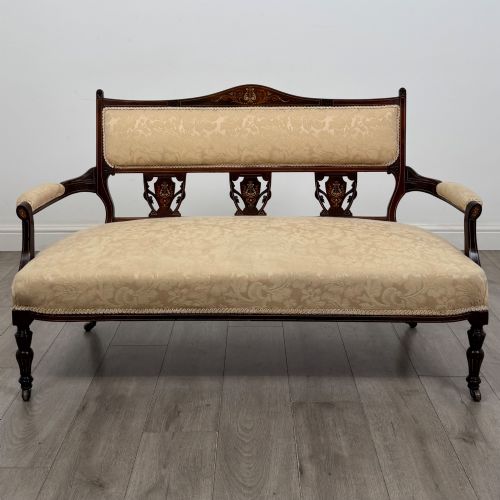
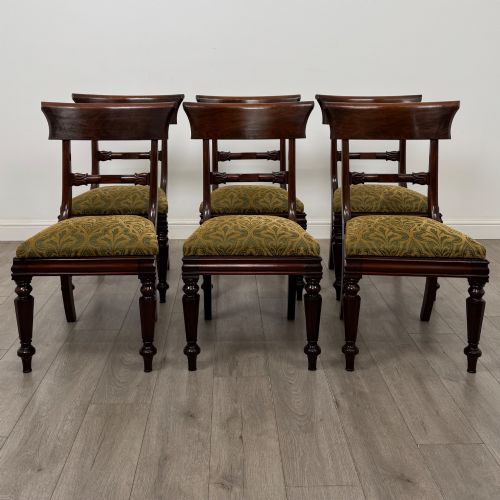
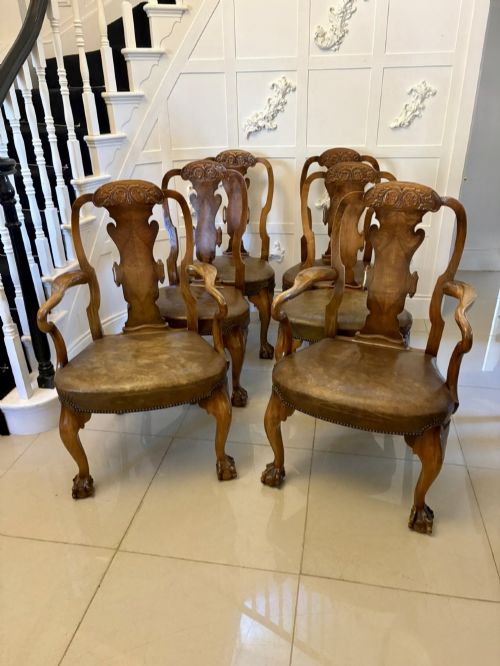
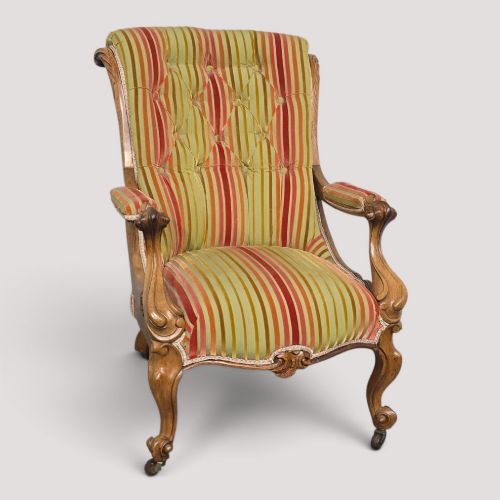
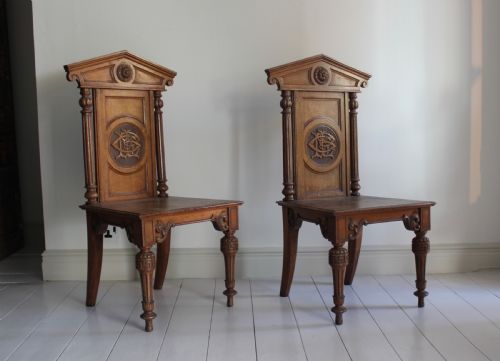
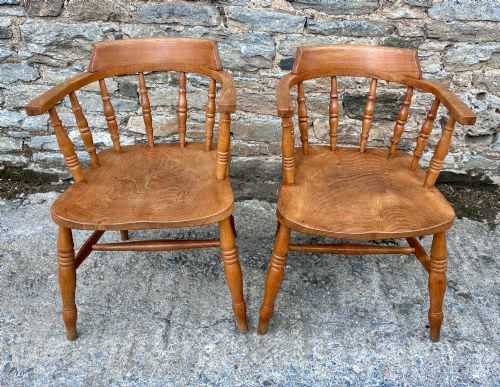
When buyers search for victorian carved seating, they encounter a broad selection of chairs, benches, and stools originating from the nineteenth century. The most common forms on this page include dining chairs, hall chairs, and library armchairs constructed during the Victorian period and surrounding decades. These pieces utilise styles ranging from Gothic Revival and Rococo Revival to simpler country interpretations.
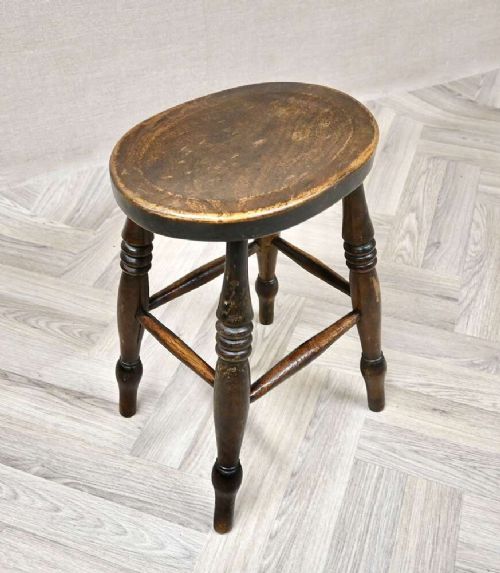
Makers and workshops of the era produced these items in woods like mahogany, oak, walnut, and rosewood, often combining solid frames with turned supports or upholstered pads. Pieces span formal reception seating down to functional domestic furniture such as monk's benches and tavern stools. Regional variations appear across England, Scotland, Wales, and the Channel Islands.
The selection reflects the diverse domestic interior requirements of the nineteenth century, accommodating both formal dining rooms and private chambers. Buyers find matching sets alongside single occasional chairs and decorative settles intended for hallways and reception spaces. The material palette extends to brass hardware, leather, fabric, and mother-of-pearl inlay.
Materials and Construction
Cabinetmakers constructed Victorian seating primarily using hardwoods such as mahogany, oak, walnut, and rosewood. These timbers provided the structural strength required for heavy carving, turned legs, and framed backs.
Joinery techniques relied on traditional mortise and tenon joints to secure frames, supplemented by turned spindles and applied mouldings. Carvers worked directly into the solid timber of the crest rails and splats to create relief ornament.
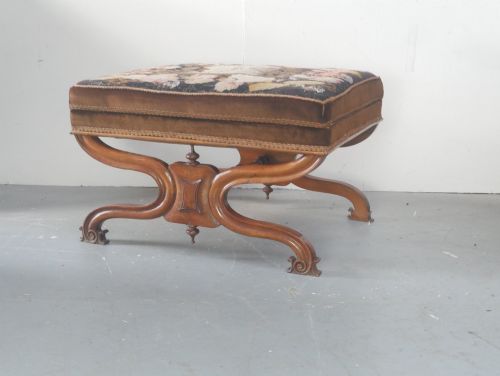
Upholstered items incorporated internal webbing, stuffing, and coverings of leather, velvet, tapestry, or fabric. Decorative details sometimes included brass fittings, cane panels, or inlaid mother-of-pearl.
Victorian Carved Seating Retail Price Guide 2026
Typical asking prices for victorian carved seating among the pieces listed under this phrase on Sellingantiques today, from the lower quarter to the upper quarter. They describe what is for sale here now, not the wider market.
Listings feature seating across the nineteenth century, utilising woods like oak, mahogany, walnut, and rosewood.
Evaluating the Pieces
The standard of carving distinguishes standard commercial production from finer workshop outputs. Crisp, deep relief work executed with control indicates skilled hand execution rather than mechanical shaping.
Timber selection and grain figure influence the overall character of a piece. Dense, well-figured walnut, mahogany, and quarter-sawn oak provide greater visual depth and stability than plain secondary woods.
Structural integrity depends on the original joinery and the survival of the frame. Pieces that retain their original bracing, tight joints, and uncompromised timber retain their intended form.
Jennens and Bettridge·W A Willcocks·Warings
The Victorian Carved Seating Glossary
- Gothic Revival
- An architectural and decorative style drawing on medieval forms, featuring pointed arches, tracery, and heavy mouldings. This aesthetic heavily influenced nineteenth-century church and domestic seating.
- Balloon Back
- A chair back style shaped in a continuous curved oval resembling a balloon, popular in nineteenth-century dining chairs. Cabinetmakers carved these frames from solid mahogany or walnut.
- Settle
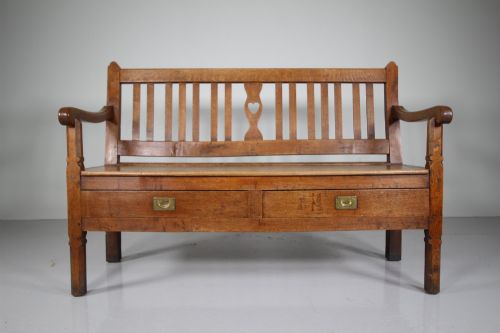
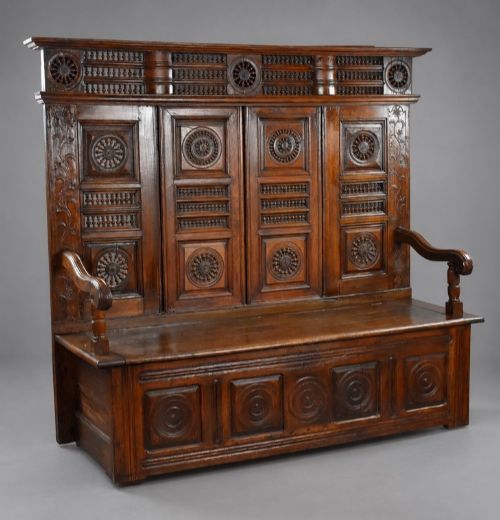
- A wooden bench with a high solid back, arms, and often a storage compartment beneath the seat. These heavy pieces typically stood in hallways or near fireplaces to block drafts.
- Prie Dieu
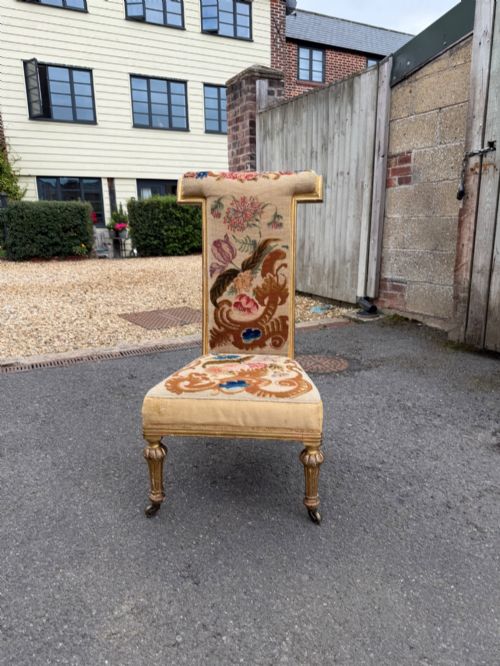
- A low devotional chair featuring an upper rest designed for kneeling and prayer during the nineteenth century. These items frequently appeared in domestic antechambers and bedrooms.
- Rococo Revival
- A nineteenth-century revival style characterised by asymmetrical scrolls, C-scrolls, and naturalistic carved foliage. Walnut and rosewood salon furniture frequently utilised these flowing outlines.
Victorian Carved Seating: Frequently Asked Questions
How do I identify a Gothic Revival chair?
Gothic Revival seating displays architectural elements borrowed from medieval buildings, including pointed arches, quatrefoils, and heavy carved tracery. These pieces are usually constructed from solid oak or walnut.
Makers often emphasised vertical lines and structural mass, creating a deliberate contrast to lighter Regency or classical forms.
What is a hall bench used for?
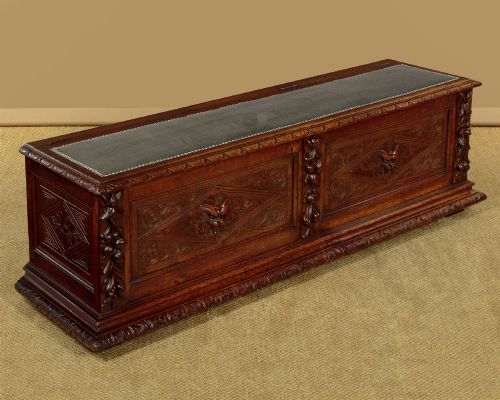
Hall benches provided seating in entrance spaces and vestibules for guests removing outerwear. Many examples include integrated storage boxes beneath the seat or linenfold panelling.
These sturdy items were designed to handle high foot traffic in domestic entrance halls.
Are dining chairs sold as sets?
Nineteenth-century dining chairs frequently appear in matched groupings ranging from four to ten pieces. Sets often share identical carved splats, turned legs, and timber selection.
Individual carver chairs or smaller sets also exist for mixed dining arrangements.
How do I care for antique wood seating?
Antique wooden frames benefit from stable indoor humidity levels and protection from direct sunlight. Regular dusting with a dry cloth maintains the finish without moisture damage.
Applying a traditional wax polish occasionally nourishes the timber surface and preserves the grain.